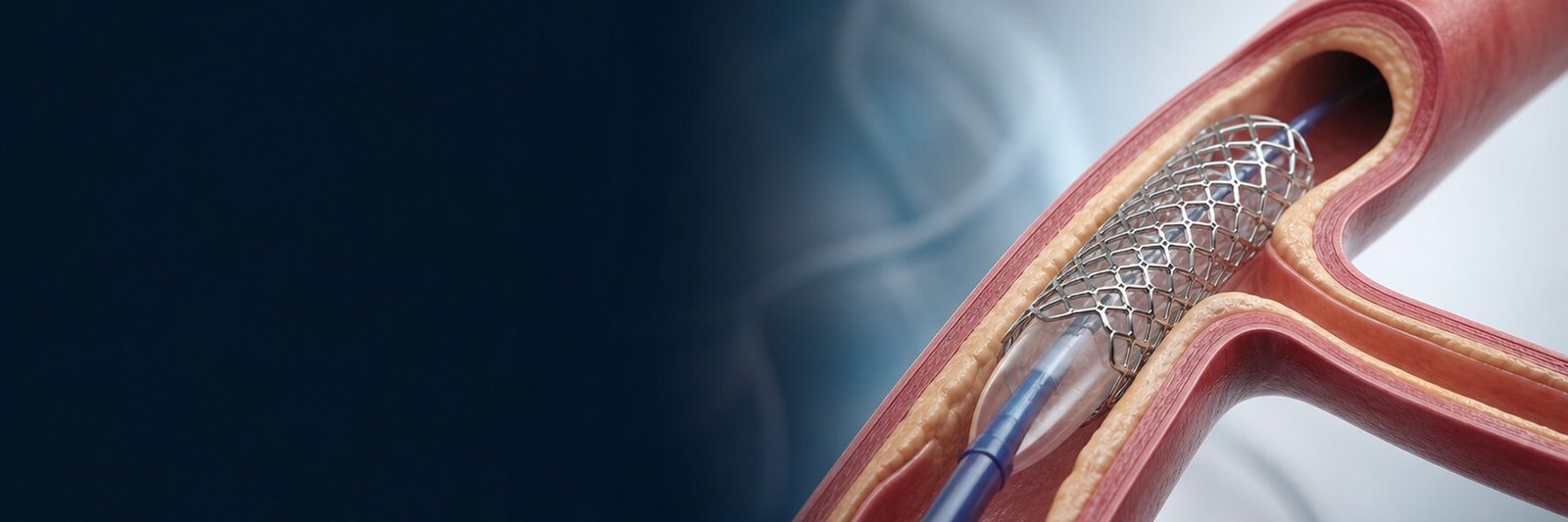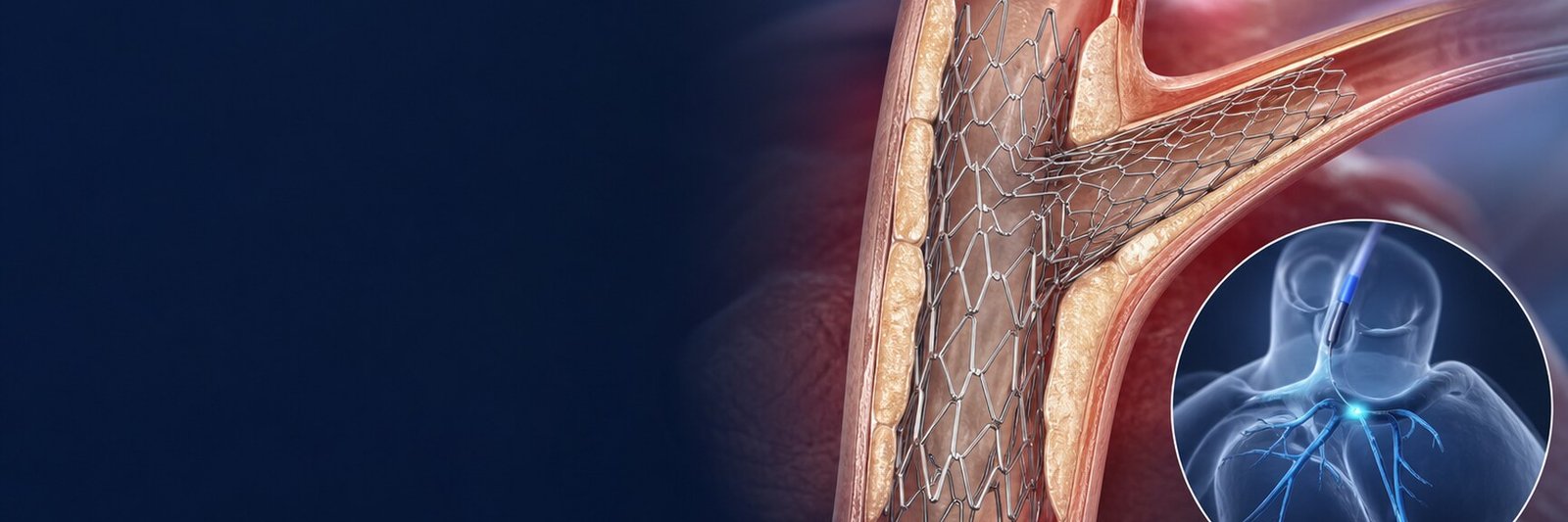
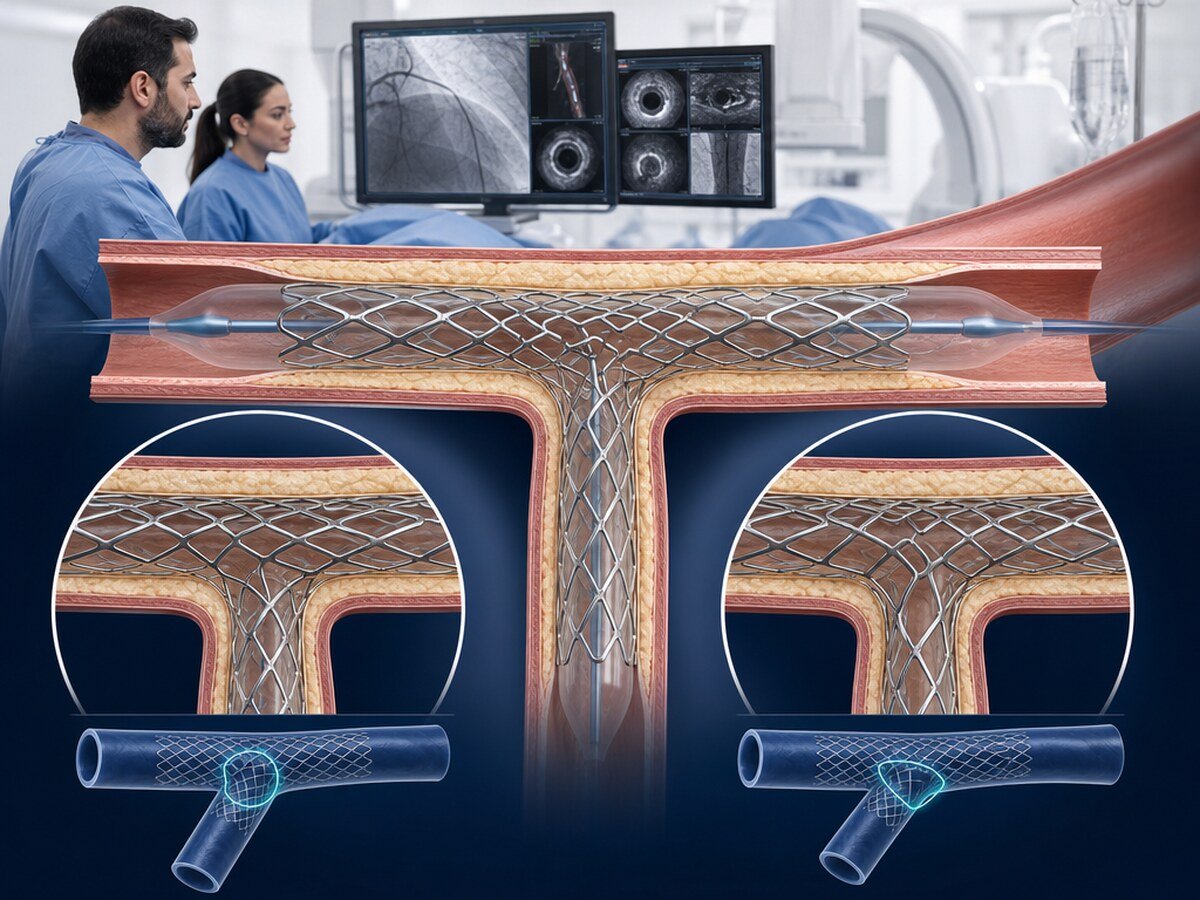
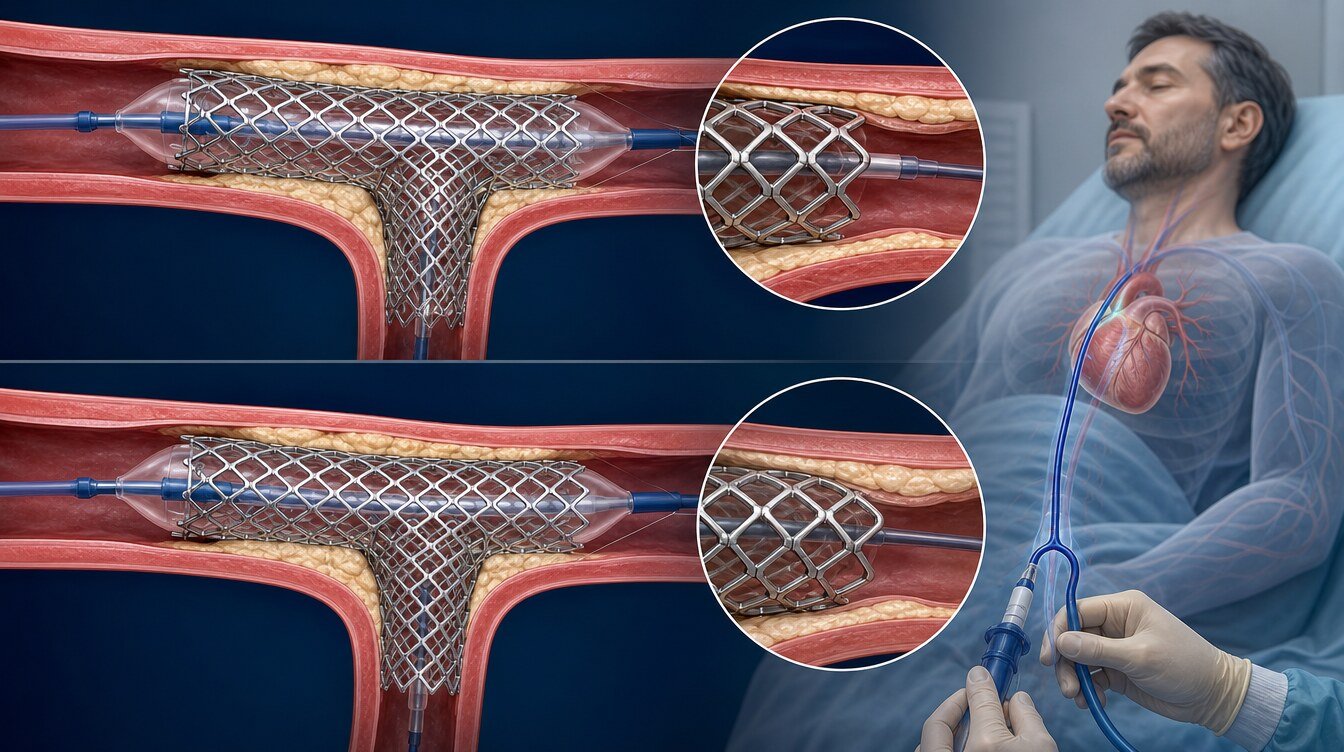
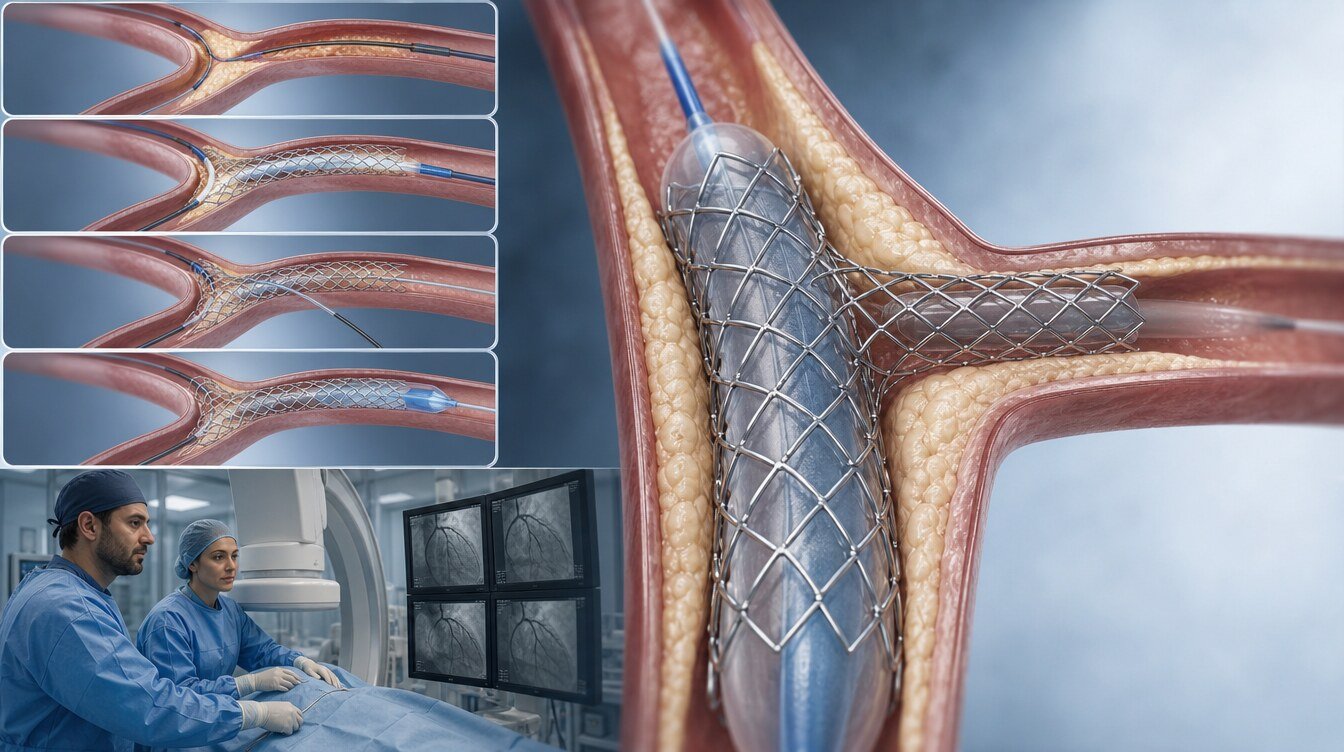
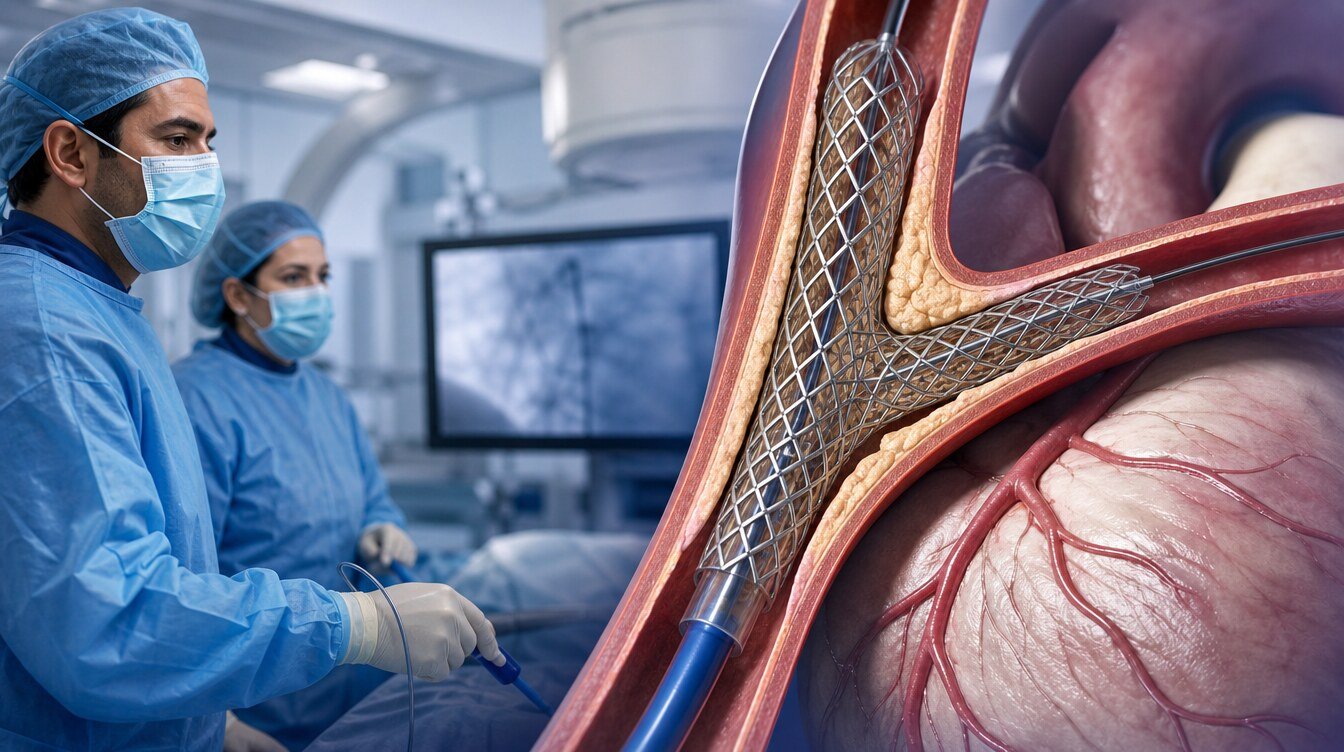
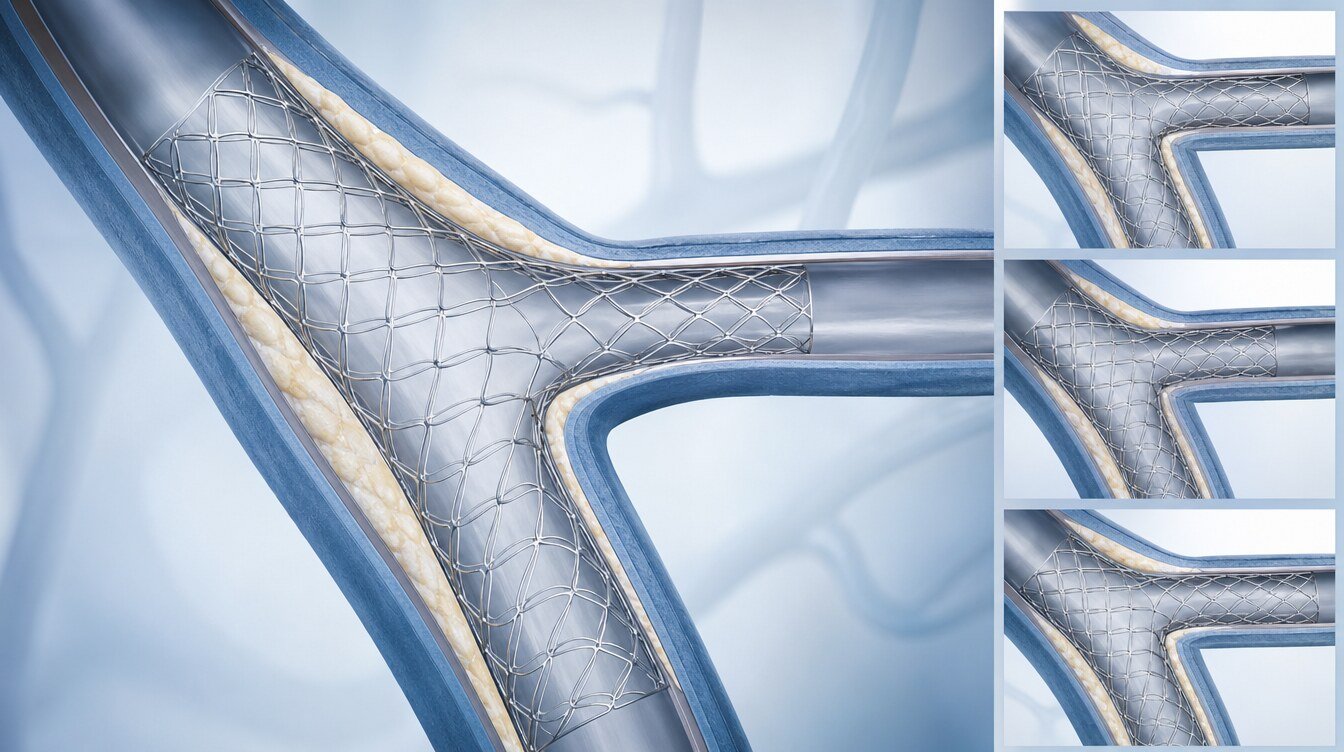
T-stenting is a two-stent layout in which the side-branch stent sits roughly at a right angle to the main-vessel stent. TAP (T and small protrusion) is that layout adapted for bailout side-branch stenting inside a provisional pathway: the stent protrudes slightly into the main vessel to cover the ostium fully and may create a single-layer strut neocarina of variable length. The menu name remains T-Stenting; this page explains T and TAP together.[1,2]
Parent: bifurcation and LMCA interventions. When a second stent is considered: provisional stenting.
How are T and TAP related?
Classic T seats the side-branch stent at a T to the main-vessel stent when angle and ostium allow. TAP adds a controlled small protrusion so the ostium stays covered; the original description was a bench test plus early clinical experience.[1,9] The technical review states plainly that no large trial has investigated the technique. TAP is not presented as a validated superior bailout strategy.[1]
Where is it used?
The EBC 18th consensus lists T, TAP and culotte as options when a second stent becomes necessary within stepwise provisional treatment. In those procedures, distal rewiring close to the carina is described as more favourable. That is technical placement, not comparative clinical superiority.[2]
A suitable angle and ostium can make T/TAP feasible in selected anatomy. No angle or stent-size recipe is published.
What results have been reported?
A prospective TAP registry enrolled 266 patients, 9% with unprotected left main disease. Only 19 patients (7.1%) ultimately received stents in both branches. One-year MACE occurred in 22 patients (8.2%): 1 cardiac death (0.4%), 11 myocardial infarctions (4.1%), 2 probable stent thromboses and 12 target-vessel revascularisations (4.5%). There is no control arm.[3]
A retrospective series of 95 TAP patients reported 100% procedural success and 3-year rates of MACE 12.9%, cardiac death or follow-up MI 3.1%, TVR 9.7% and TLR 5.1%. First-generation drug-eluting stents were used in 55.8%; transfer to current practice is limited. There is no control group.[4]
EBC TWO used provisional T-stenting as the comparator against systematic culotte and found no significant difference at 12 months or 5 years. That is not TAP equivalence to DK crush.[5,6]
Has TAP been compared directly with DK crush?
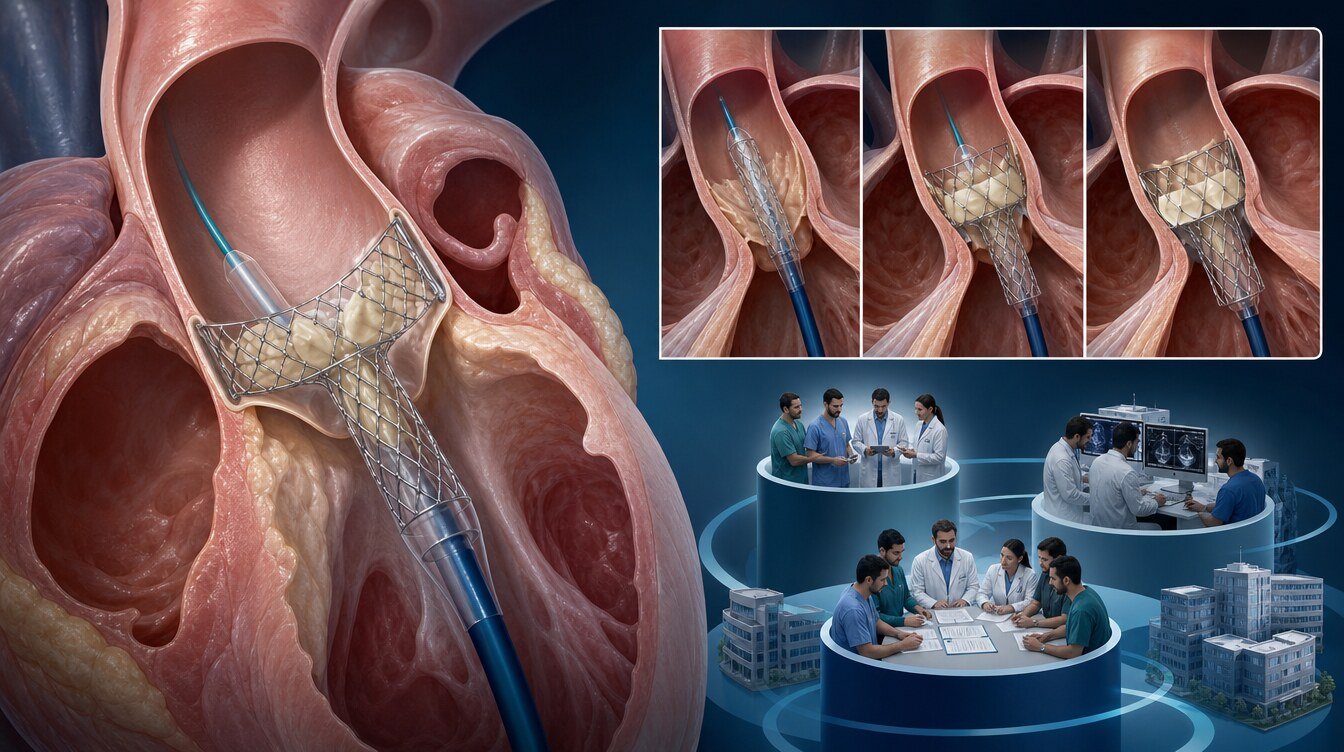
No adequately powered randomised TAP-versus-DK crush comparison in left main disease was identified in this search. The TAP technical review states that no large trial has investigated the technique. EVOLUTE-CRUSH II is a retrospective registry, not randomised superiority. TAP must not be called as good as, or worse than, DK crush.[1,7]
DK crush and culotte keep their own evidence frames.
Risks and emergency warnings
T/TAP carries the risks of stent treatment. No Class/LOE is invented. Call 112 for bleeding that will not stop, severe chest pain that does not settle, or impaired circulation in the access limb.[8]
Frequently asked questions
TAP is a modification of T-stenting aimed at covering the ostium fully; the menu name remains T-Stenting.[1]
No. There is no large trial.[1]
The share of first-generation DES is high; transfer is limited.[4]
It is one option when a second stent is needed during a provisional procedure and the angle/ostium are suitable.[2]
For bleeding that will not stop, severe chest pain that does not settle, or a cold or numb limb on the puncture side.[8]
Assessment and decision
T-stenting and TAP are options when a second stent is needed in stepwise treatment. The evidence base is the thinnest of the four techniques. No superiority ranking is made. The decision is taken with anatomy and the provisional stenting plan.[1,2]
Literature
References
Burzotta F, Trani C. Technical aspects of the T and small protrusion (TAP) technique. EuroIntervention. 2015. DOI and PMID were not verified in this package.
Burzotta F, et al. EBC 18th consensus. EuroIntervention. 2024. DOI: 10.4244/eij-d-24-00160.
Burzotta F, et al. Provisional TAP-stenting registry. EuroIntervention. 2009. PMID: 19805841. DOI not verified in this package.
Naganuma T, et al. Long-term outcome of TAP. 2013. Journal, DOI and PMID were not verified in this package.
Hildick-Smith D, et al. EBC TWO. Circ Cardiovasc Interv. 2016. DOI: 10.1161/circinterventions.115.003643.
Arunothayaraj S, et al. EBC TWO 5-year. EuroIntervention. 2023. DOI: 10.4244/eij-d-23-00211.
Uzun F, et al. EVOLUTE-CRUSH II. Catheter Cardiovasc Interv. 2024. DOI: 10.1002/ccd.30986. PMID: 38415900. Retrospective registry.
NHS. Coronary angioplasty — Recovery. Official patient page. Accessed 27 August 2026.
Burzotta F, et al. TAP-stenting first description. Catheter Cardiovasc Interv. 2007. DOI: 10.1002/ccd.21194. PMID: 17585382. Bench and early clinical experience.
This content is for general information only and does not replace personalized medical advice. In emergencies call local emergency services.
Continue