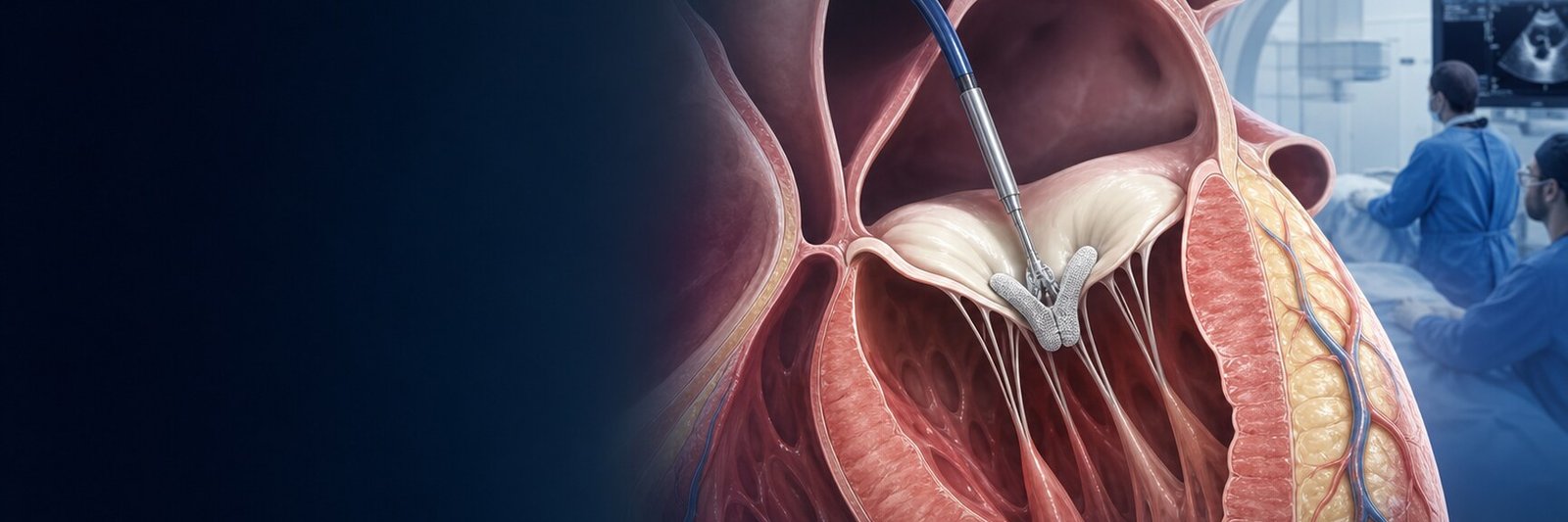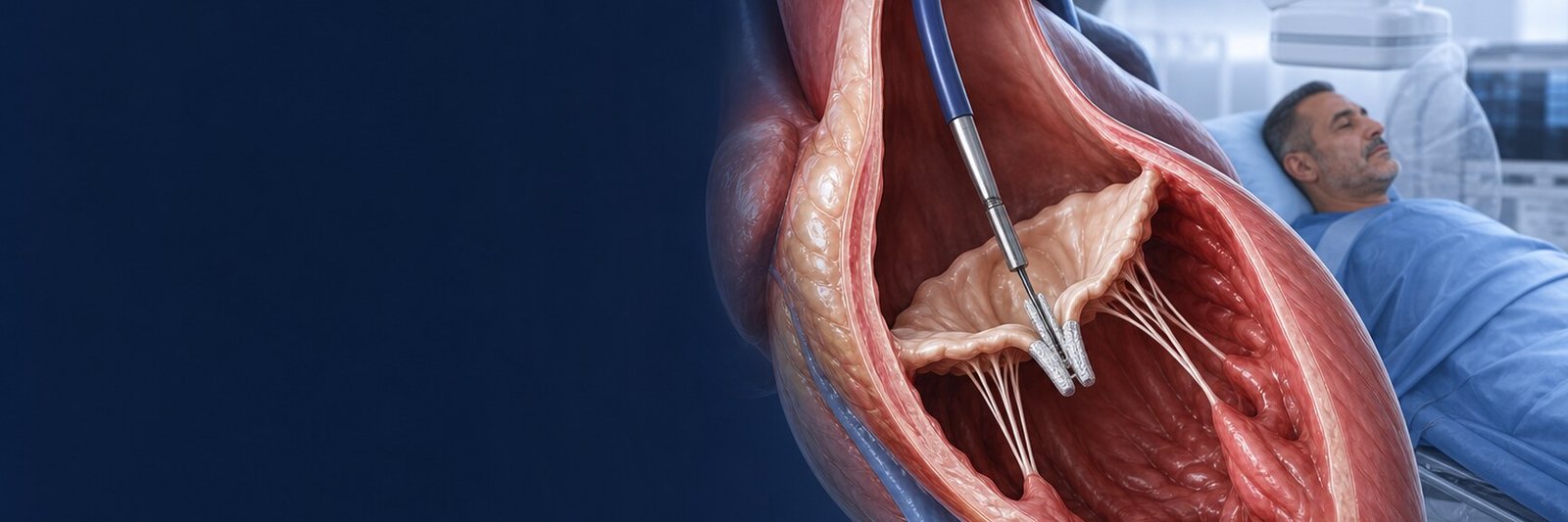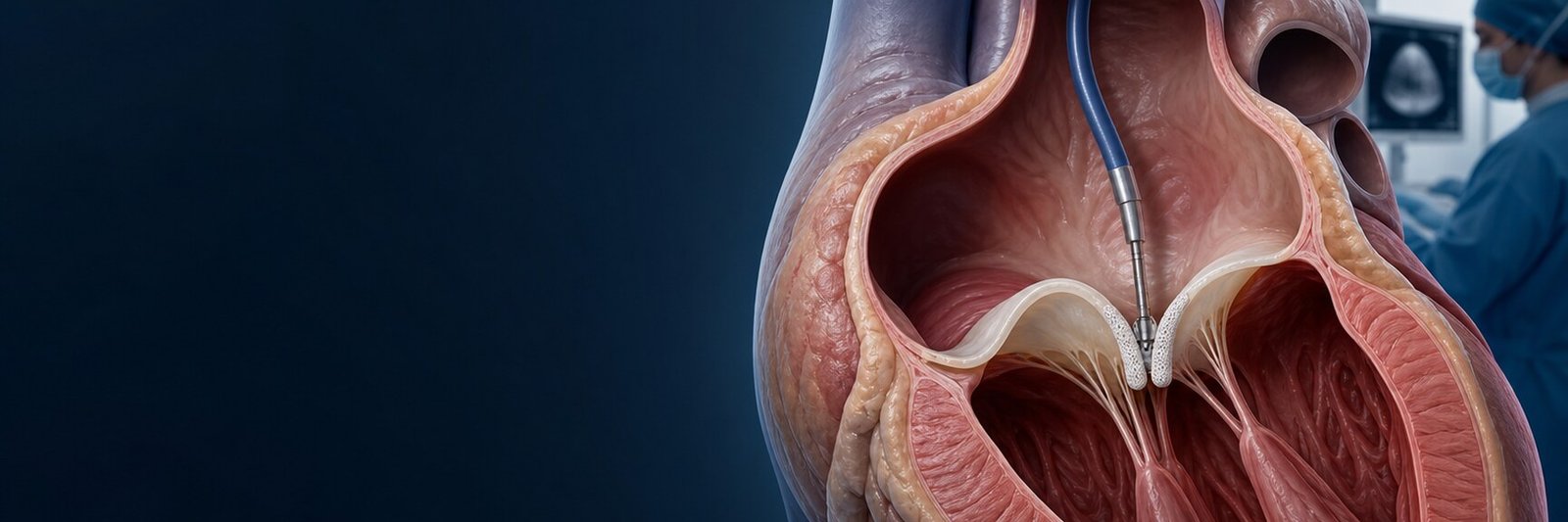
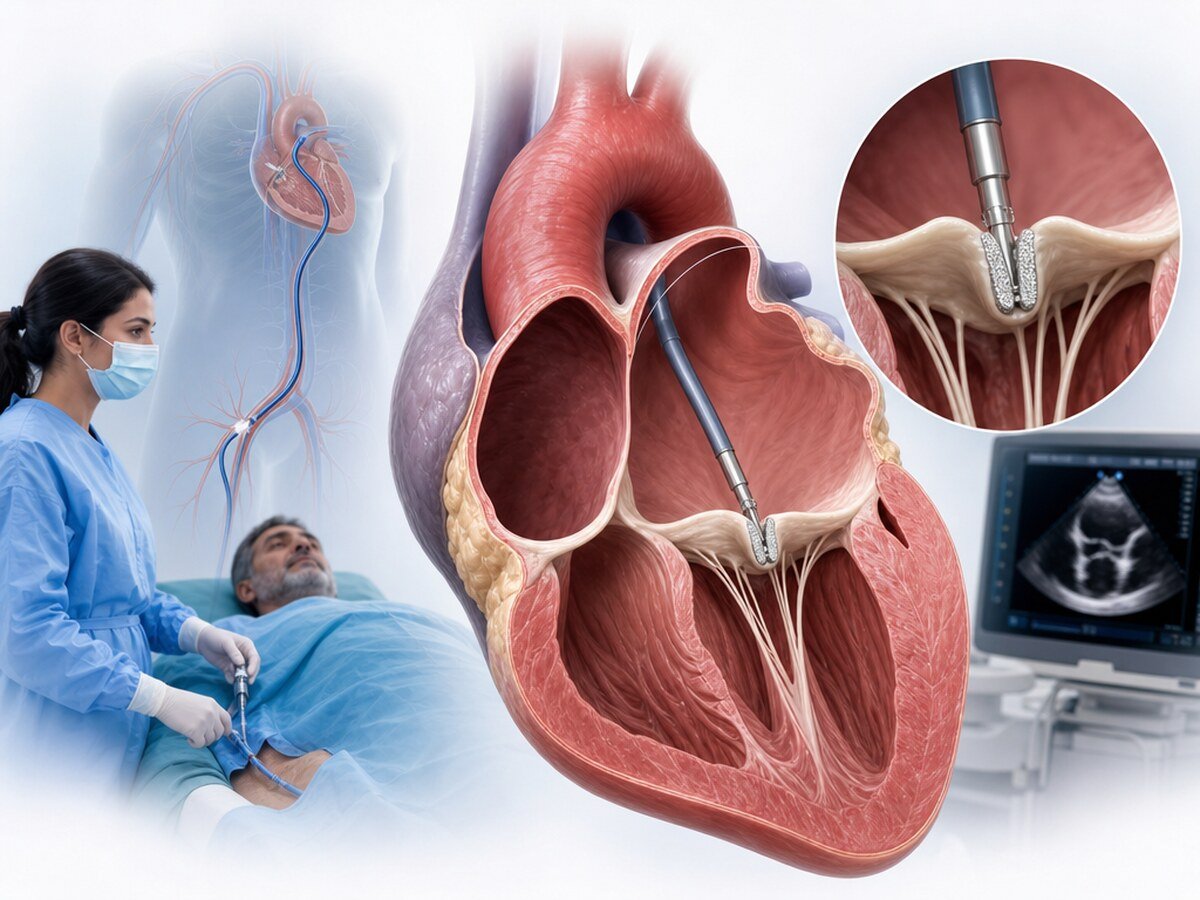
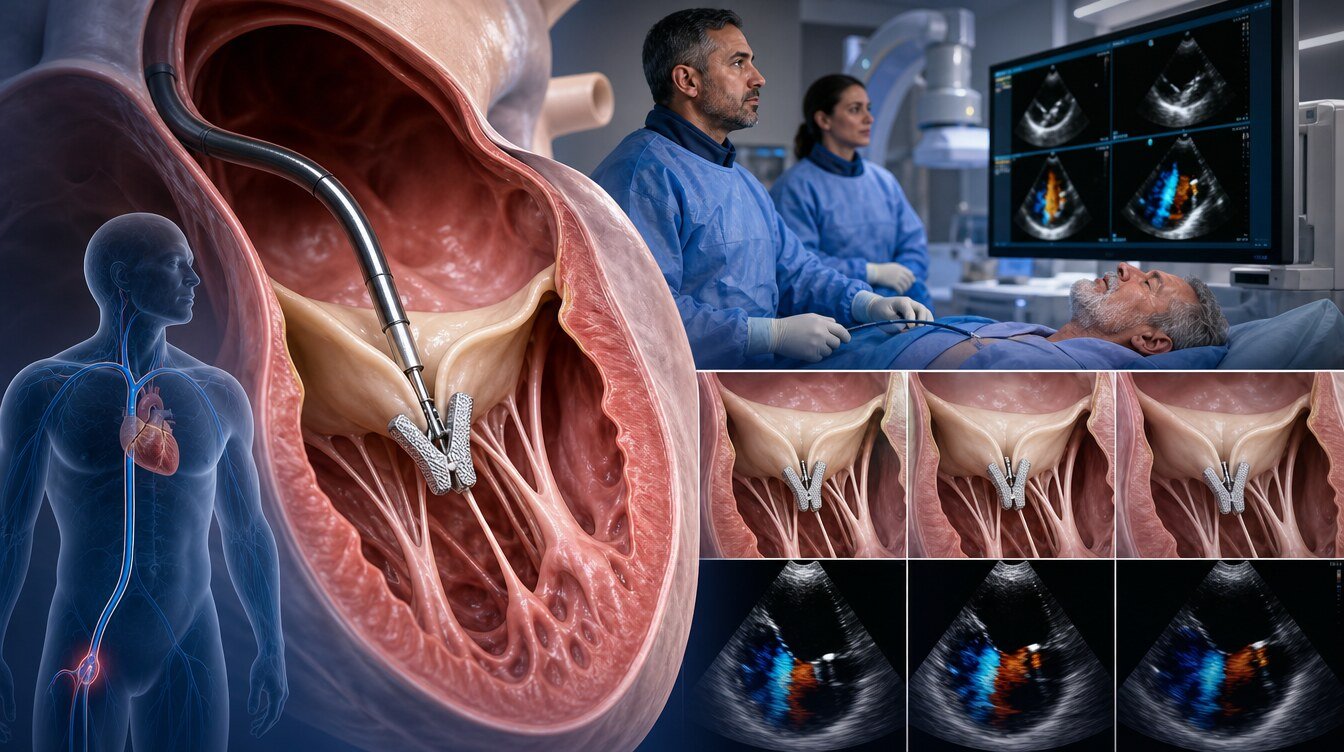
PASCAL is one of the device systems used for mitral transcatheter edge-to-edge repair (M-TEER). The native mitral valve is not removed; suitable leaflet segments are approximated under imaging guidance.[1–3]
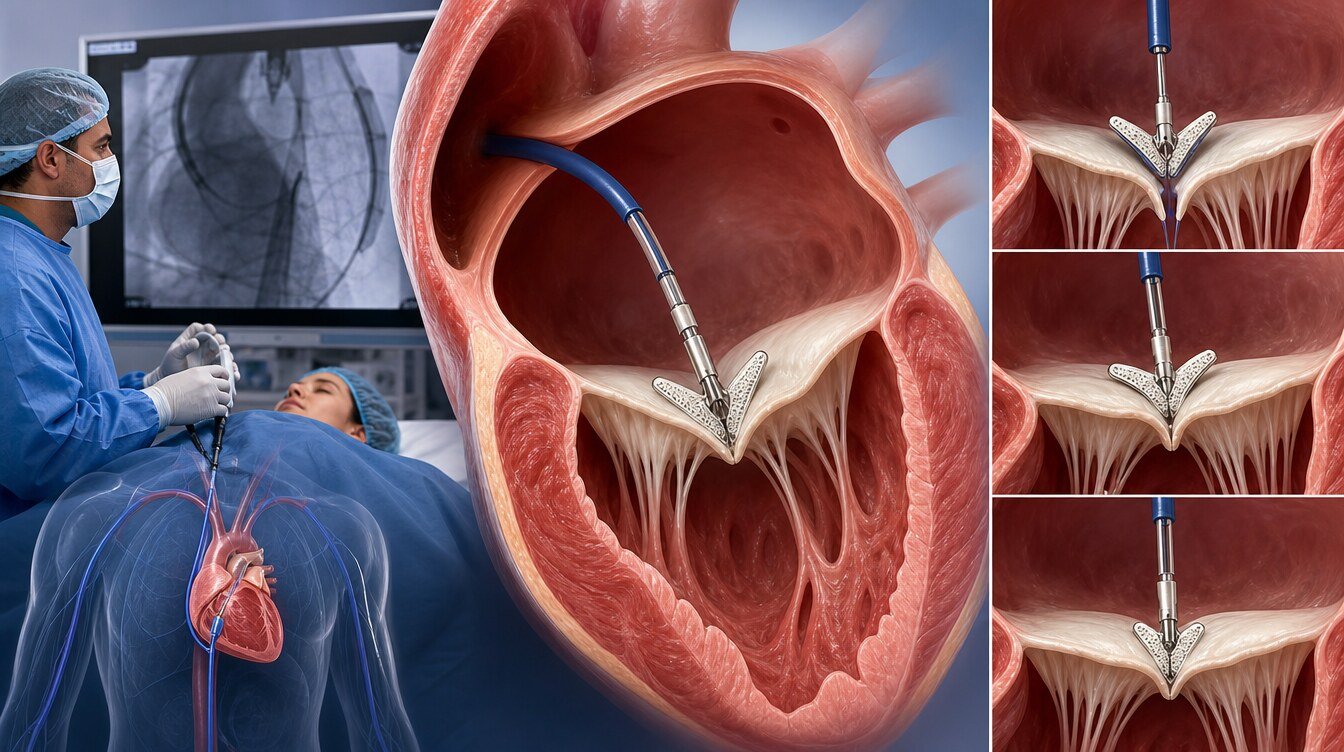
How does PASCAL differ from MitraClip?
Both systems perform M-TEER. Design differences include the PASCAL central spacer, independent leaflet capture and implant sizes. Design features alone do not prove clinical superiority.[3–5]
Why does the mechanism of mitral regurgitation matter?
In primary/degenerative MR, disease arises from the leaflets, chordae or other valve structures. Durable surgical repair remains the reference option for a suitable operable patient; M-TEER is generally considered when surgical risk is high and anatomy is suitable.[1,2]
In secondary/functional MR, regurgitation is usually driven by left-ventricular or atrial remodelling. Guideline-directed heart-failure therapy, CRT when indicated and coronary treatment are optimised first. CLASP IID directly compared devices in prohibitive-risk degenerative MR; its results should not be automatically transferred to all secondary MR or low-risk surgical patients.[3–5]
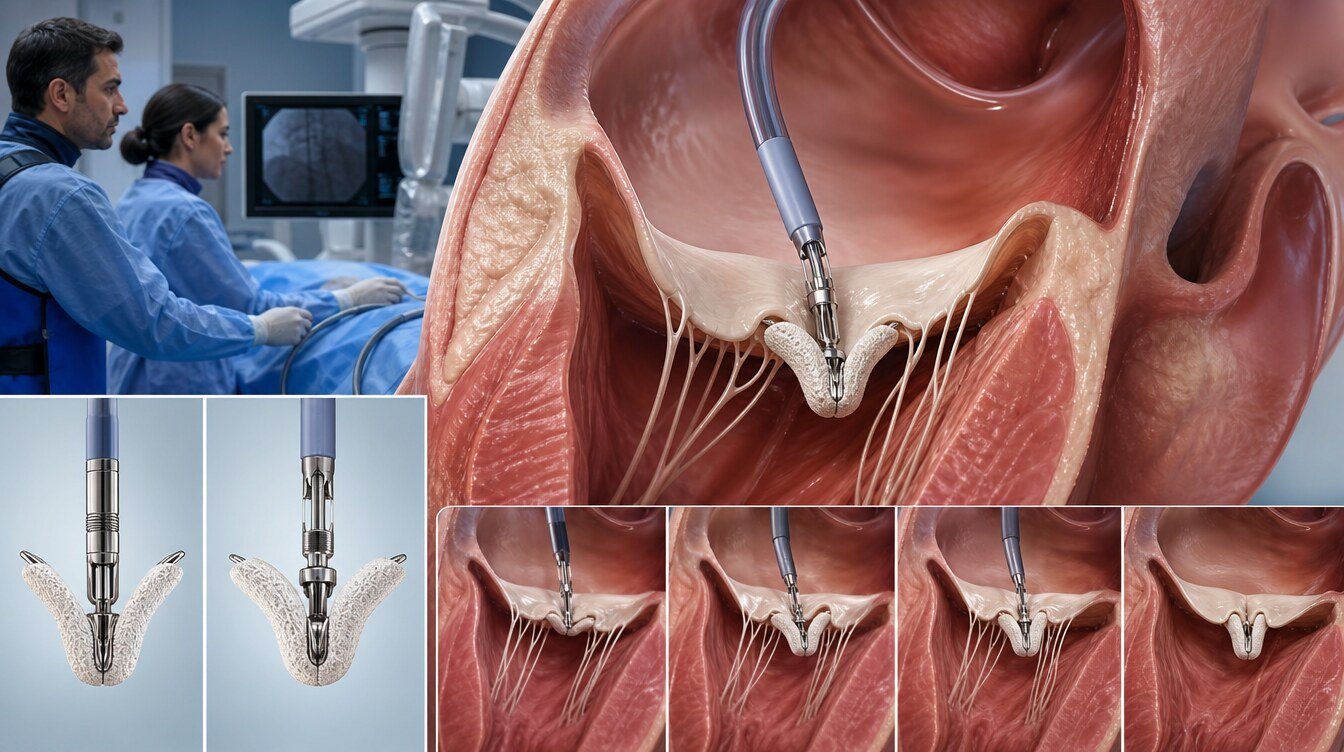
Who may be assessed for PASCAL?
M-TEER is considered in selected severe mitral regurgitation. Surgery remains the established option for suitable operable primary MR when durable repair is expected. In secondary MR, heart-failure therapy and CRT when indicated are optimised first.[1,2]
Leaflet length and motion, prolapse or flail, coaptation, jet location, calcification, valve area and baseline gradient affect device planning.
Imaging asks whether sufficient leaflet tissue can be captured, whether prolapse/flail or coaptation gap is challenging, whether calcium lies in the grasping zone, and whether reducing MR would create an excessive mitral gradient. Another valve or bypass requirement may favour surgery. Device selection is made from the complete anatomy and technical plan, not from a single marketed design feature.
Which alternatives may be considered?
Options include surgical mitral repair/replacement, MitraClip M-TEER, optimised medical/device therapy for secondary MR, other transcatheter therapies in selected M-TEER-ineligible patients, or surveillance before an intervention threshold is reached.[1,2]
How is the procedure performed?
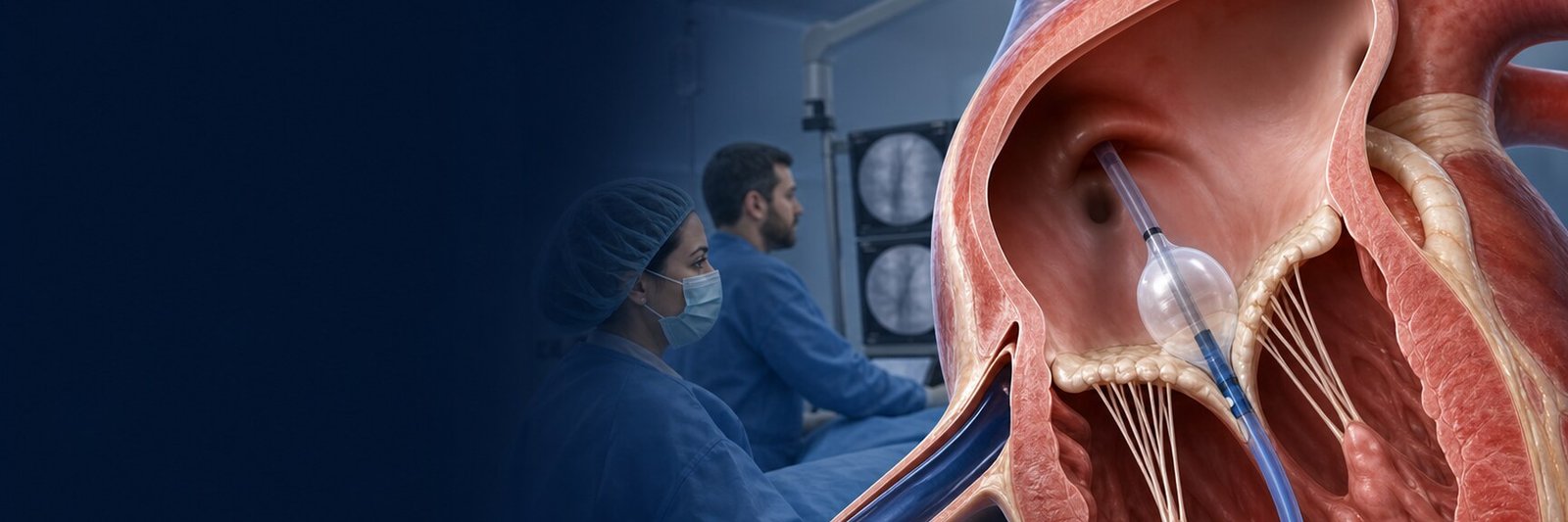
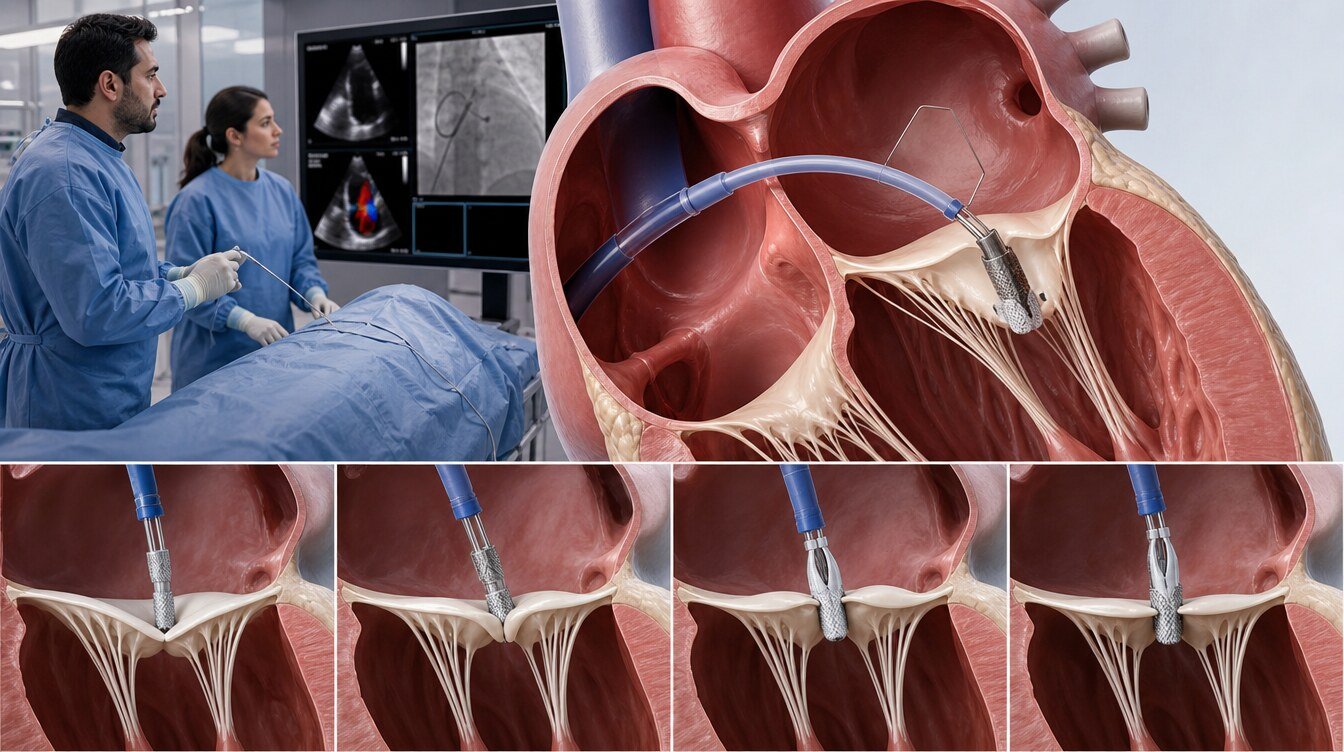
Venous access is obtained through the groin, followed by controlled transseptal passage. The system is guided to the mitral valve using TEE and fluoroscopy. Leaflets are captured, residual regurgitation and gradient are assessed, and more than one implant may be used.
What did CLASP IID show?
CLASP IID directly compared PASCAL and MitraClip in patients with 3+/4+ degenerative MR at prohibitive surgical risk. In the initial 180-patient analysis, 30-day major adverse events were 3.4% and 4.8%, while MR ≤2+ at six months was 96.5% and 96.8%, respectively. PASCAL met prespecified noninferiority criteria for both endpoints.[3]
In the full cohort, 30-day major adverse events were 4.6% versus 5.4% and six-month MR ≤2+ was 97.9% versus 95.7%. MR reduction remained largely sustained at one and two years; numerical differences did not establish universal superiority for death, heart-failure admission or reintervention.[4,5]
Noninferiority: This tests whether a treatment is not worse beyond a prespecified margin; it does not automatically prove superiority.
Reading the numbers: These are group outcomes from carefully selected patients considered anatomically suitable for both devices. They are not personal success rates and should not be generalised outside the trial population.
Risks, recovery and follow-up
Risks include bleeding, vascular injury, stroke, cardiac injury, leaflet damage or single-leaflet attachment, residual/recurrent MR, mitral stenosis, device migration, urgent surgery or reintervention, kidney injury, infection and death.[1–3]
Rhythm, access site, kidney function and the mitral result are monitored. Particularly in secondary MR, heart-failure medicines remain important.
Success is more than releasing an implant. It includes meaningful MR reduction, stable leaflet attachment, an acceptable residual valve area and gradient, absence of major complications and subsequent clinical improvement. Additional implants may reduce MR but also raise the gradient, so these goals are balanced during the procedure.
Follow-up reassesses residual or recurrent MR, mitral gradient, leaflet attachment, ventricular response, symptoms and medical therapy.
Questions to ask the Heart Team
- Is my MR primary or secondary, and how does that change treatment?
- Why is surgical repair suitable or unsuitable for me?
- Has heart-failure therapy and CRT, when relevant, been optimised?
- Which leaflet, calcium or gradient feature affects feasibility?
- What anatomical reason supports PASCAL or MitraClip selection?
- What residual MR and gradient would be acceptable?
- What is the next option if MR persists or returns?
Frequently asked questions
No. It is a transseptal catheter-based M-TEER procedure, but remains a major cardiac intervention.
Both are M-TEER systems, but device design and leaflet-capture features differ.
Many centres use general anaesthesia for TEE guidance, but practice varies.
Yes. Disease progression or leaflet/device changes can increase regurgitation; follow-up is required.
The plan depends on atrial fibrillation, coronary stents and bleeding risk; medicines should not be changed without advice.
Timing depends on access-site findings, valve result and overall health; follow the individual discharge plan.
Assessment and decision
The decision first asks whether M-TEER is the right treatment and then which system best matches anatomy and technical planning.
Literature
References
Praz F, et al. 2025 ESC/EACTS Guidelines. doi:DOI: 10.1093/eurheartj/ehaf194.
Otto CM, et al. 2020 ACC/AHA Guideline. doi:DOI: 10.1161/CIR.0000000000000923.
Lim DS, et al. CLASP IID. doi:DOI: 10.1016/j.jcin.2022.09.005.
Zahr F, et al. CLASP IID one-year outcomes. doi:DOI: 10.1016/j.jcin.2023.10.002.
Makkar R, et al. CLASP IID two-year outcomes. doi:DOI: 10.1016/j.jcin.2025.07.014.
This content is for general information only and does not replace personalized medical advice. In emergencies call local emergency services.
Continue