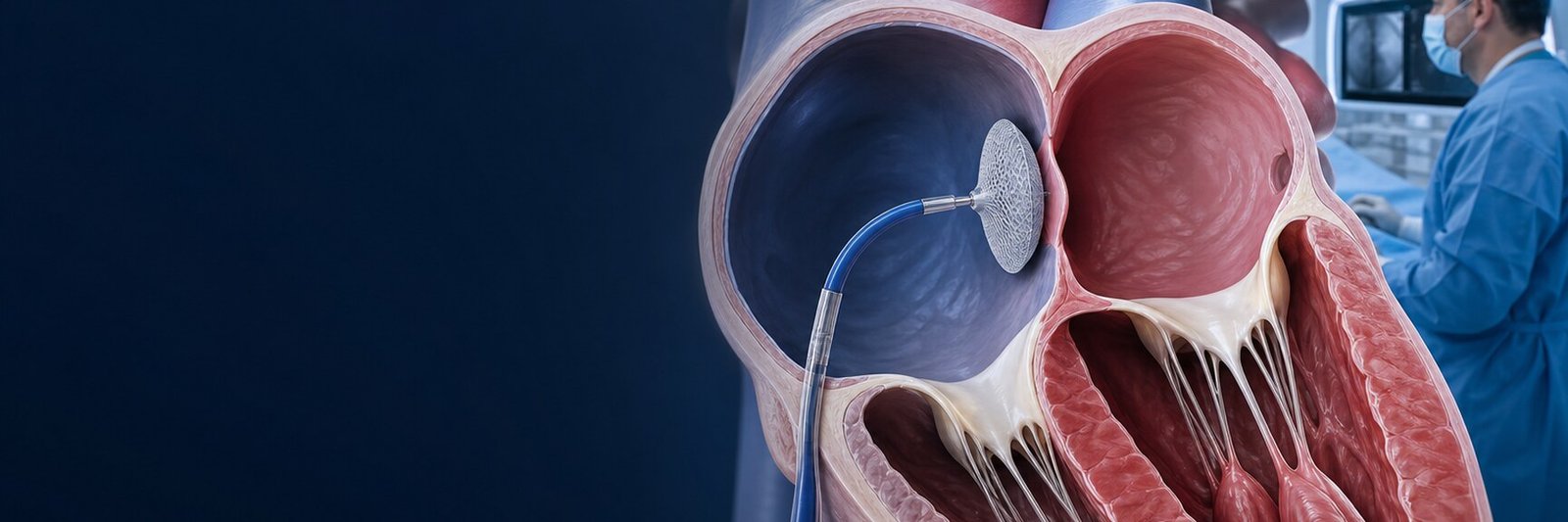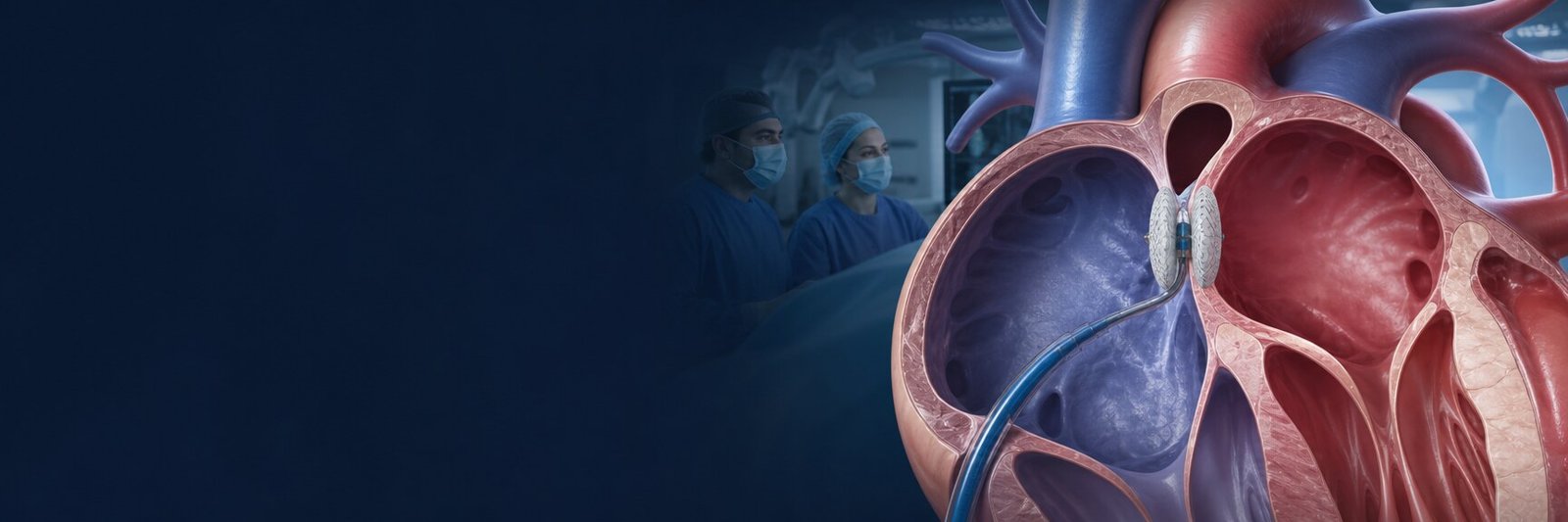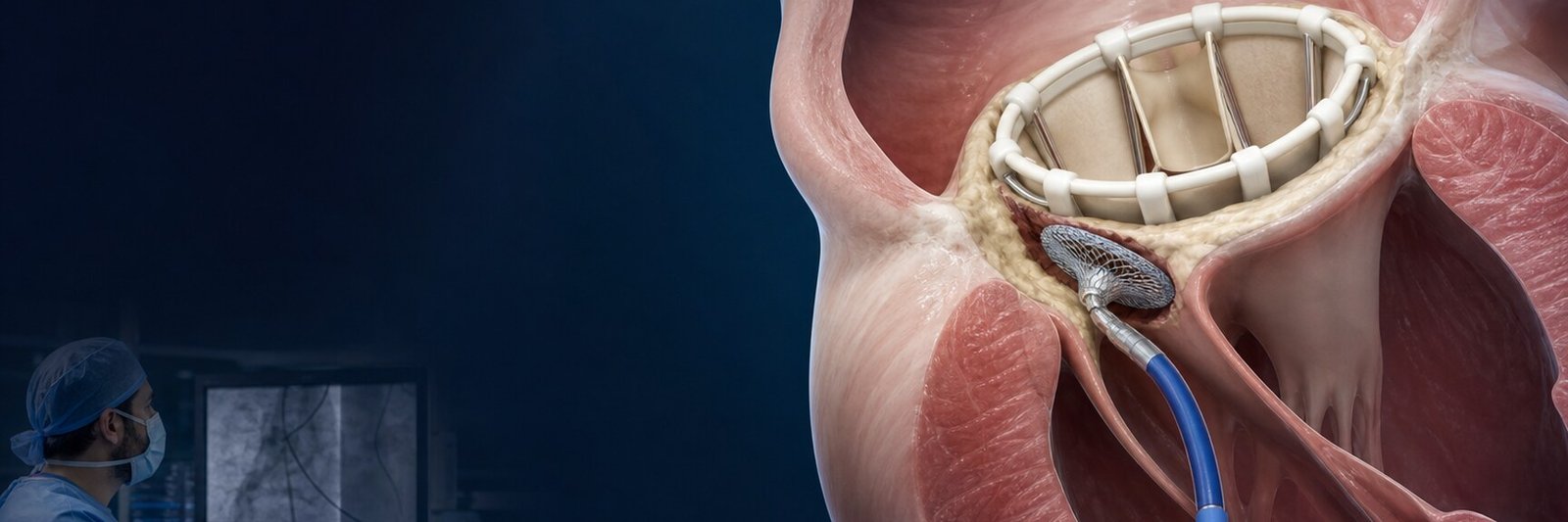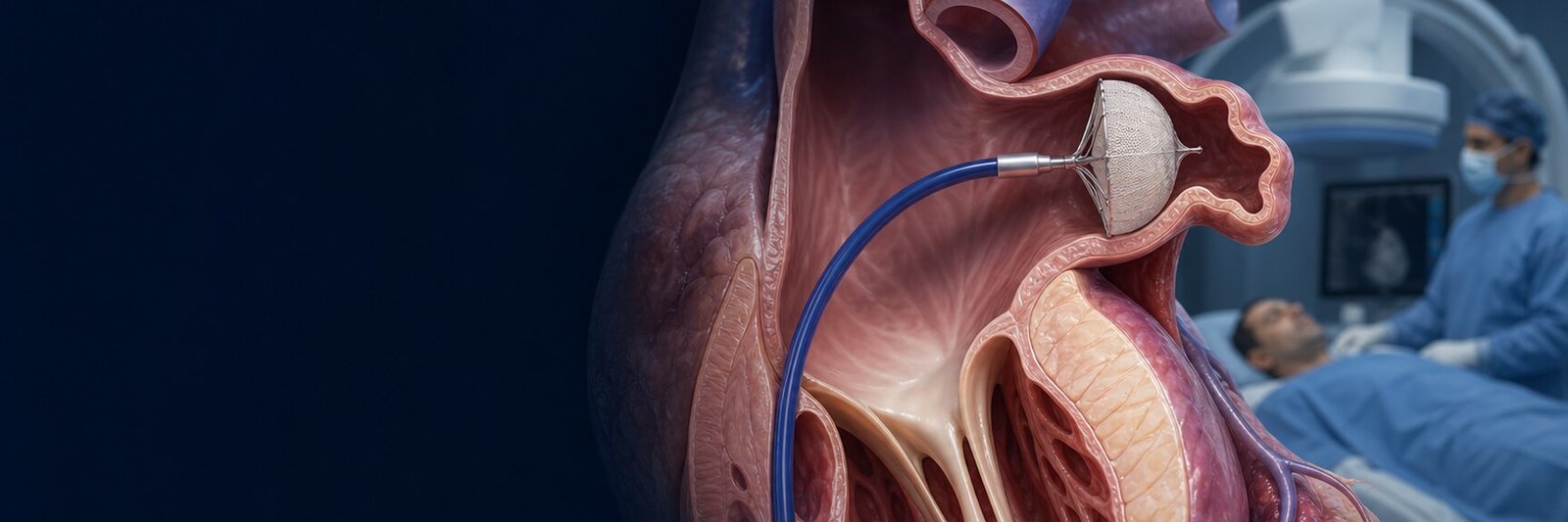
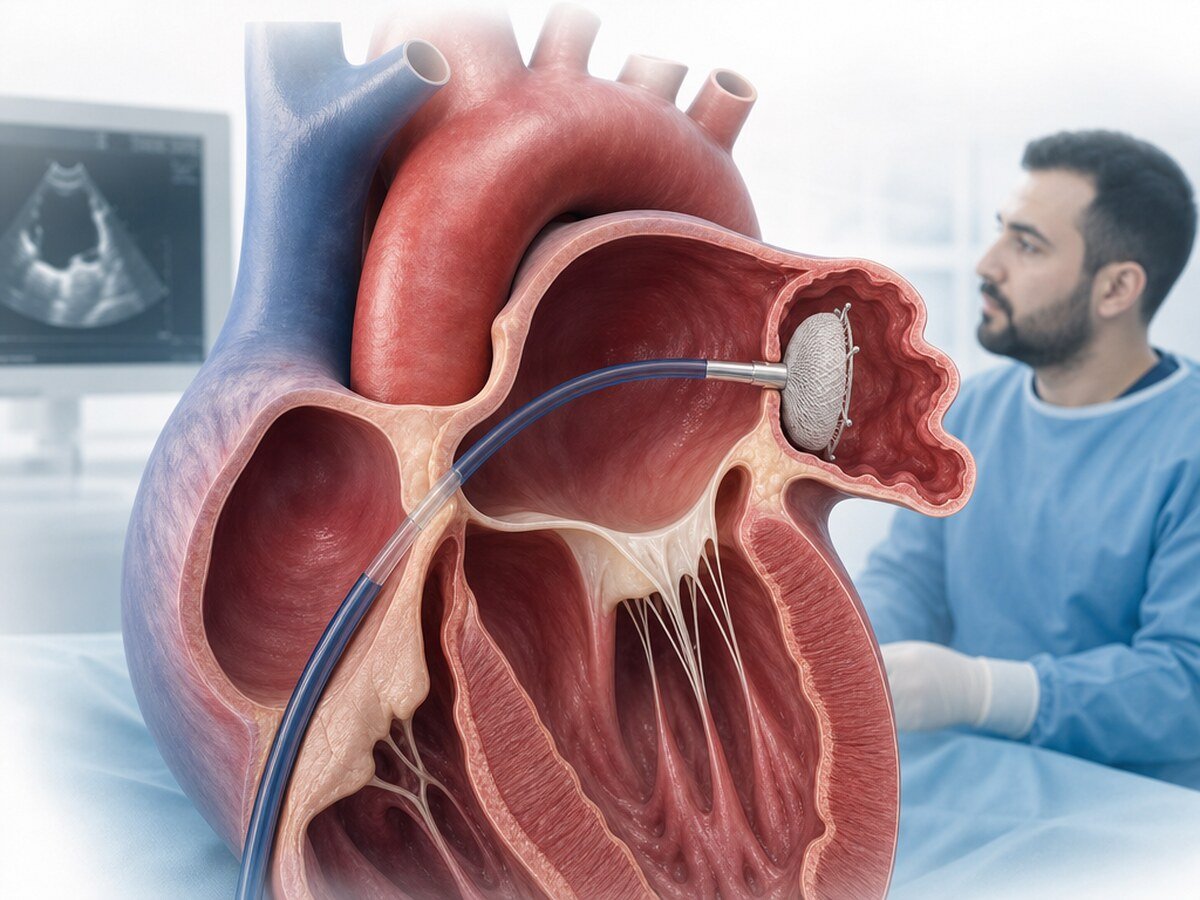
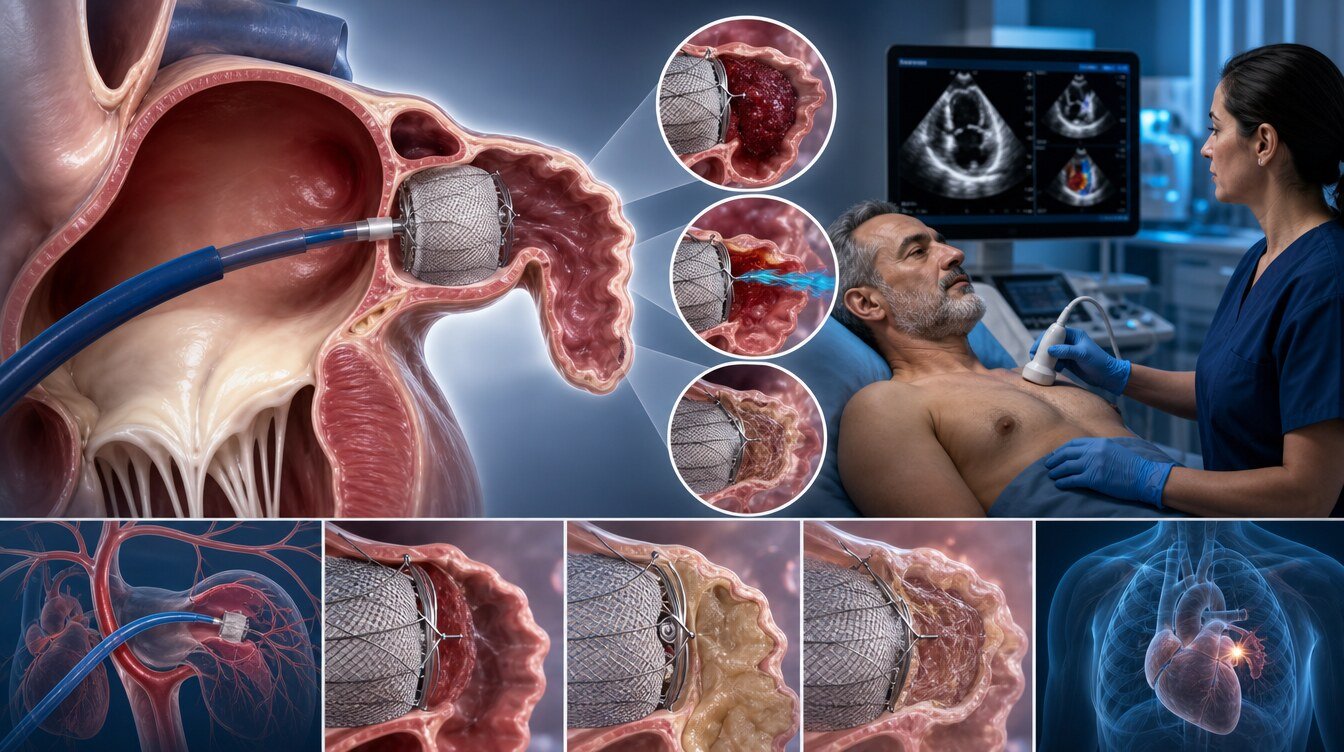
LAA closure is catheter placement of a device that seals the left atrial appendage, the finger-like pouch of the left atrium, in people with nonvalvular atrial fibrillation. The full name is left atrial appendage closure. The aim is to lower the chance that clot formed in this pouch travels to the brain or other organs. An AF diagnosis or a high score is not, by itself, a reason to close the appendage. For many eligible people, oral anticoagulation remains the standard way to prevent stroke.[1,3,4]
What is the LAA, and how does AF relate to stroke?
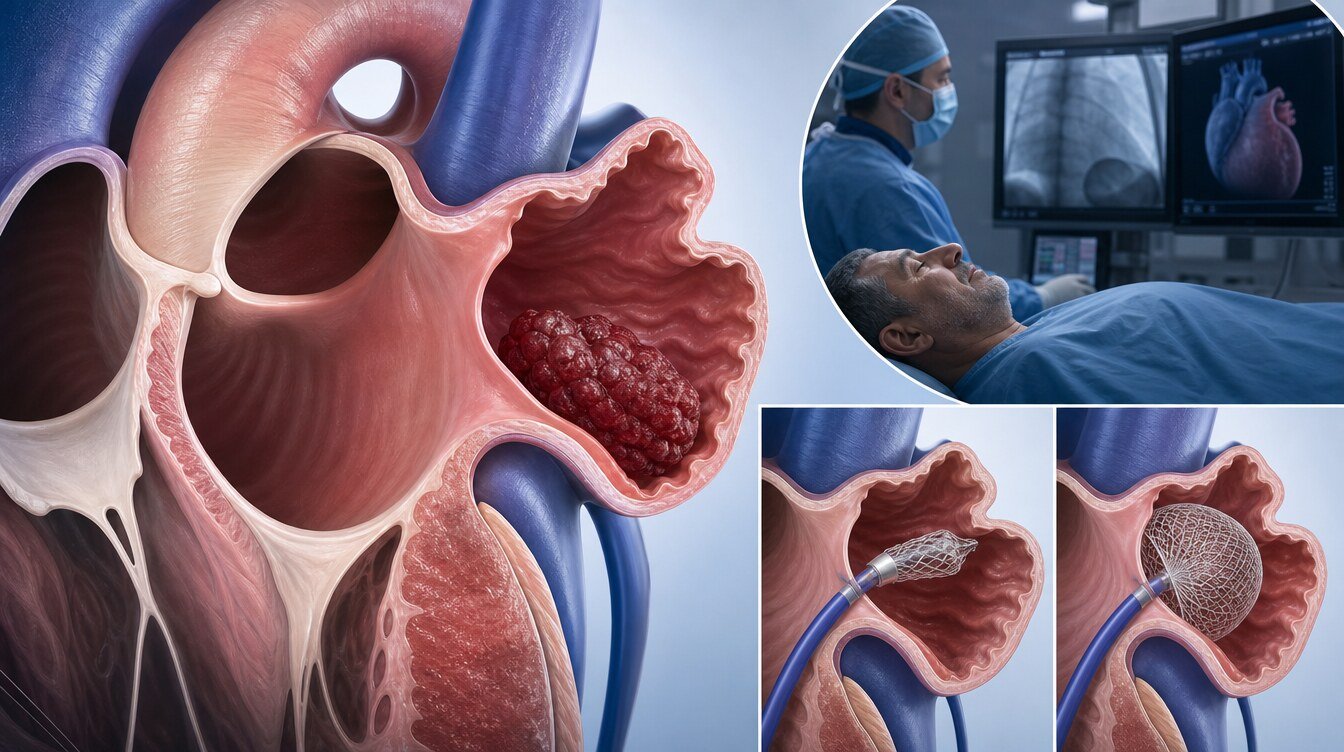
Atrial fibrillation is an irregular rhythm of the atria. When blood does not empty well, clot can form. In nonvalvular AF a large share of those clots form in the left atrial appendage. A fragment can cause stroke or systemic embolism.[1,4]
LAA closure aims to seal this pouch mechanically. It does not restore a regular rhythm. AF can continue; palpitations, breathlessness or heart-failure symptoms are managed separately.
How does LAA closure differ from other procedures?
LAA closure is one of the transcatheter closures in structural heart interventions, but the clinical question is different.
- PFO closure and ASD closure: they close a passage or opening in the wall between the atria. They do not occlude the LAA for stroke prevention.
- Catheter ablation: targets the rhythm source of AF; it does not automatically replace anticoagulation or LAA closure for stroke prevention.
- Cardioversion: aims to restore a regular rhythm; it does not close the LAA.
- Oral anticoagulation (OAC): suppresses clot formation with medicine. It remains standard for many people.
- Surgical LAA exclusion: is done with open-heart surgery or a surgical clip. Surgical closure during cardiac surgery sits in a different ESC 2024 class, used with anticoagulation; it is not the same as the transcatheter procedure on this page.[3,17]
PVL closure treats leak around a prosthetic valve; it is not LAA closure.
Who may be considered?
The frame is nonvalvular AF and raised stroke risk. 2025 SCAI/HRS conditionally suggests LAA closure rather than no therapy when long-term OAC is contraindicated; certainty is very low. A person who values avoiding procedural risk more than an uncertain stroke reduction may choose no therapy. LAA closure may be inappropriate if expected quality life expectancy is less than one year.[1]
For people seeking stroke prevention, the same guideline presents OAC or LAA closure as options. Most people are still offered OAC. High bleeding risk, prior bleeding or a preference to avoid long-term anticoagulation may favour LAA closure. That does not mean LAA closure replaces OAC for everyone.[1]
2023 ACC/AHA calls percutaneous LAA closure reasonable (Class 2a) when stroke risk is moderate to high and there is a non-reversible contraindication to long-term OAC. It may be reasonable (Class 2b) as an alternative to OAC when bleeding risk is high, after a careful discussion of procedural risk; it notes that the evidence for OAC is broader.[4]
ESC 2024 says percutaneous LAA occlusion may be considered (Class IIb, Level C) to prevent ischaemic stroke and thromboembolism in AF when long-term anticoagulation is contraindicated. Surgical LAA closure is listed in a separate table.[3]
PRAGUE-17 compared LAA closure with a DOAC in selected high stroke- and bleeding-risk patients. PINNACLE FLX reported outcomes of a next-generation device in a selected cohort. OPTION compared LAA closure with OAC in people who had catheter ablation and a raised stroke score. These studies are selected populations; they do not generalise to every person with AF.[5–7,11]
When is it not a routine option?
- Low stroke risk (low CHA₂DS₂-VA / CHA₂DS₂-VASc)
- People who can use and tolerate OAC and do not prefer LAA closure
- Valvular AF (a mechanical valve or moderate-to-severe mitral stenosis frame)
- LAA anatomy that does not fit a device
- Very short quality life expectancy or heavy competing risk
- A request based only on “there is AF” or “the bleeding score is high”
CHA₂DS₂-VASc (2023 ACC/AHA) and CHA₂DS₂-VA (2024 ESC, with the sex category removed) help estimate stroke risk. Bleeding scores such as HAS-BLED are also supporting tools; neither is an indication or contraindication on its own. ESC 2024 does not mandate one bleeding score because accuracy is uncertain.[3,4]

How is the assessment planned?
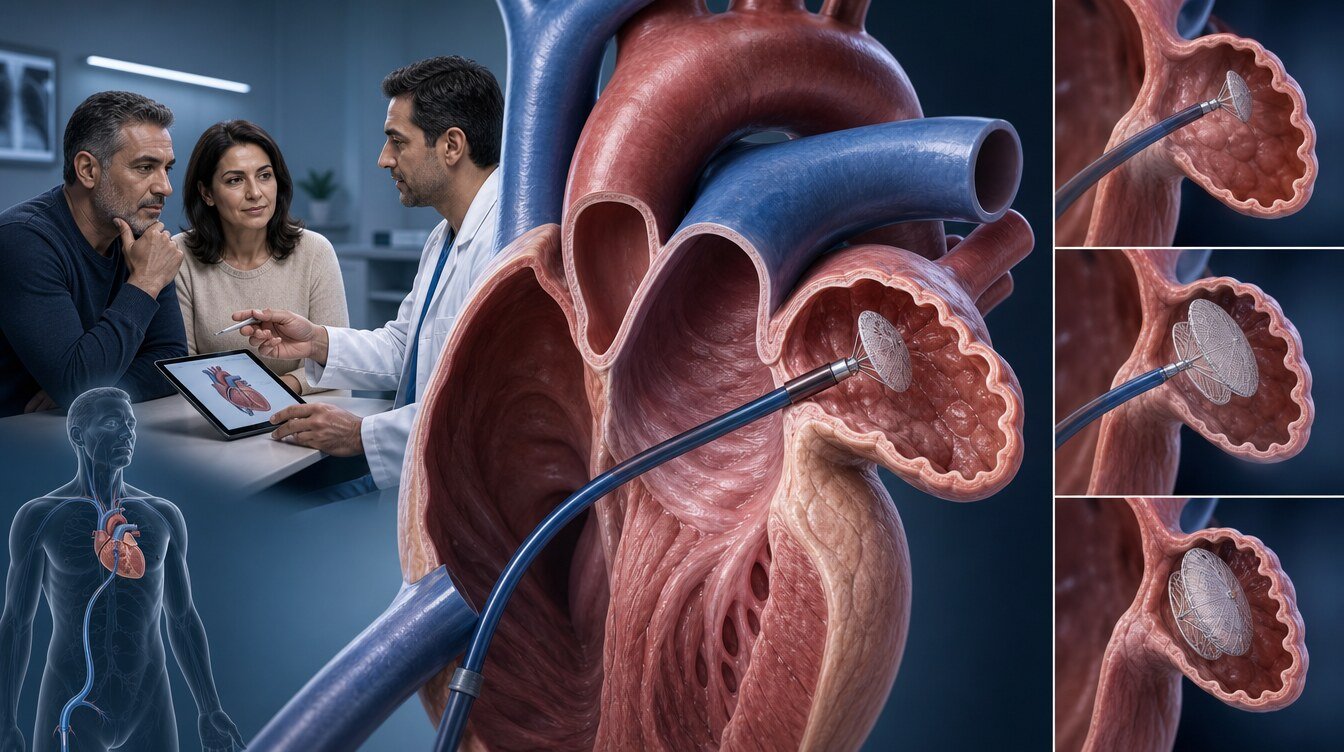
The decision is not made from one score or one image. Shared decision-making covers stroke risk, bleeding history, medicine adherence, life expectancy, values and anatomy.[1,3,4]
- TEE or cardiac CT: 2025 SCAI/HRS conditionally suggests TEE or CT before the procedure day to see LAA anatomy (very low certainty). Size, shape, clot and neighbouring structures are reviewed.[1,2]
- Intraprocedural imaging: TEE or ICE (intracardiac echocardiography) may be used; the guideline lists both as conditional options.[1]
- Rhythm and other illness: AF type, heart failure, kidney function, prior bleeding and other reasons for anticoagulation are reviewed.
How is the procedure performed?
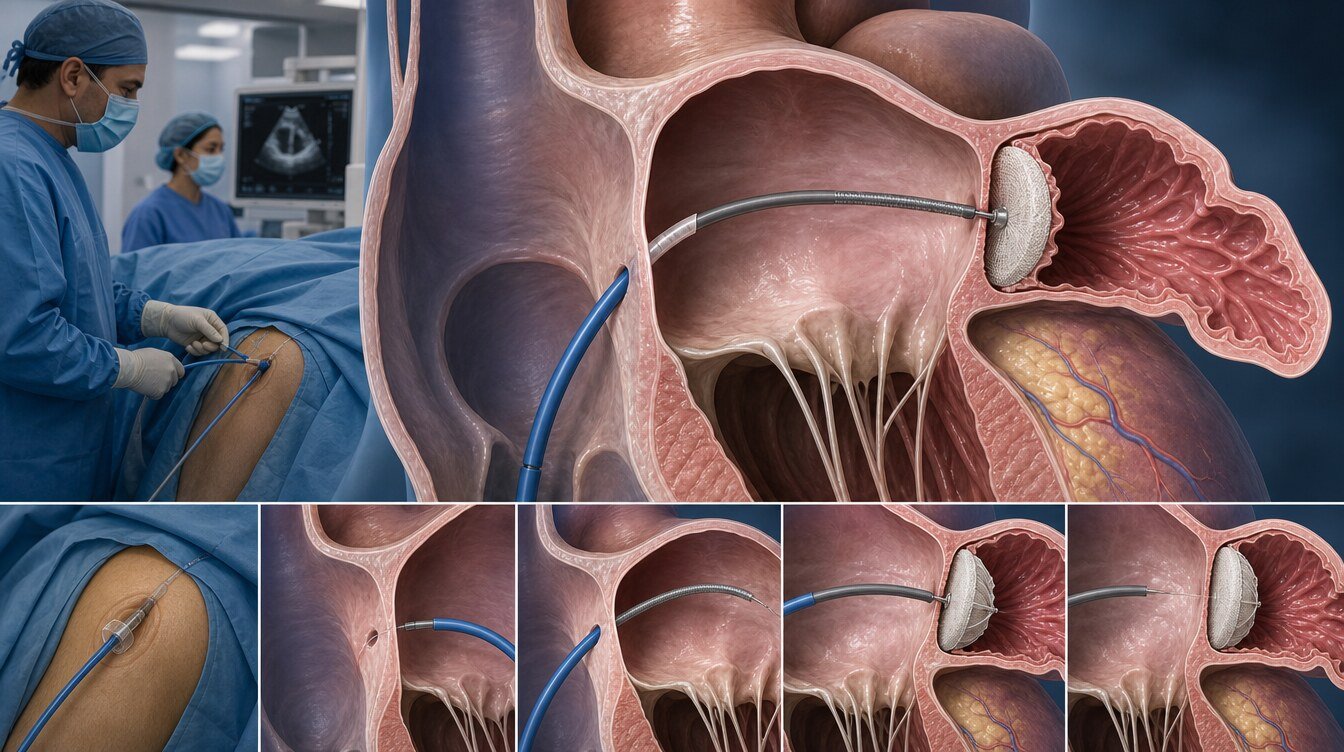
Details vary with the device and the centre. The usual sequence is:[1]
- The patient is reviewed again; the anaesthesia or deep-sedation plan is explained.
- Access is usually obtained from a femoral vein.
- The catheter is advanced to the right atrium.
- A transseptal crossing reaches the left atrium through the wall between the atria.
- Under imaging the device is placed at the LAA ostium and opened.
- Position, seal and neighbouring structures are checked; the device may not be released if the result is poor.
- The catheter is removed, pressure is applied at the access site and a period of observation follows.
This is not open-heart surgery. Avoiding a chest incision does not make the procedure risk-free or suitable for everyone. Duration, fasting time or discharge day should not be copied from this page.
What is the device?
A transcatheter LAA device is a permanent implant that occludes the appendage ostium. The aim is to reduce clot forming in this pouch and entering the circulation. Device choice depends on anatomy, imaging and the centre protocol. This page does not compare brands or give a sizing recipe.[1,7]
Surgical clip or suture exclusion is a different procedure. LAAOS III assessed surgical LAA closure during cardiac surgery together with anticoagulation; those results do not transfer directly to transcatheter LAAO.[17]
How should selected trial results be read?
PROTECT AF and PREVAIL compared a device with warfarin in selected people with nonvalvular AF. A five-year pooled analysis reported differences in some components such as bleeding and haemorrhagic stroke. PREVAIL’s first efficacy end point is debated. Percentages are not a personal success rate.[8–10]
PRAGUE-17 compared LAA closure with a DOAC in high-risk patients and reported non-inferiority for a composite event, with less non-procedure bleeding at four years. That is also a selected cohort.[5,6]
PINNACLE FLX is a single-arm follow-up of a next-generation device; it is not a randomised comparison versus OAC.[7]
OPTION compared LAA closure with OAC in people who had ablation and a raised CHA₂DS₂-VASc. At 36 months the death–stroke–embolism composite was non-inferior; non-procedure bleeding was lower. That does not apply directly to every person with AF who has not had ablation.[11]
Recent meta-analyses pool selected randomised data. Heterogeneous populations and end-point definitions mean they do not support “better than OAC in everyone”.[12,13]
What are the risks?
LAA closure is an invasive procedure whose complication risk is not zero.[1,2]
- groin bleeding, bruising or vessel injury
- pericardial effusion or tamponade
- device embolisation
- stroke or embolism during or after the procedure
- device-related thrombus (DRT)
- peridevice leak (PDL)
- infection
- contrast allergy or a temporary change in kidney function
DRT
Clot can form on the device surface. 2025 SCAI/HRS conditionally suggests OAC rather than no OAC when DRT is found (very low certainty). Duration and the timing of repeat imaging are a knowledge gap; bleeding and stroke risk are weighed together.[1,14]
PDL
A residual passage can remain between the device and the wall. Clinical meaning depends on size and follow-up. 2025 SCAI/HRS makes no recommendation on whether to use OAC after PDL (knowledge gap). “Leak means anticoagulation must restart” or “leak means a second device” does not follow from the guideline.[1,15]
How are medicines planned after the procedure?
The antithrombotic plan is not a universal prescription. 2025 SCAI/HRS conditionally offers post-procedure OAC or dual antiplatelet therapy (DAPT) (low certainty). People with a severe OAC contraindication may be directed toward DAPT. Duration is uncertain; earlier trials used about 45 days of OAC then DAPT, and current practice varies.[1,16]
The guideline makes no recommendation for single antiplatelet therapy (SAPT); it leaves this as a knowledge gap. “SAPT is enough” should not be taken from this page.[1]
Medicines should not be stopped without medical advice.
Follow-up and urgent symptoms
2025 SCAI/HRS conditionally suggests post-procedure TEE or CT rather than no imaging (very low certainty). The aim is to review position, DRT and PDL. The calendar is individual; the guideline makes no recommendation on optimal timing (knowledge gap).[1,2]
Rapidly enlarging swelling at the access site, ongoing bleeding, severe chest pain, breathlessness, fainting, fever or marked palpitations need medical review. Facial droop, arm or leg weakness, speech difficulty or sudden visual loss may be stroke symptoms. In Türkiye, call 112.

Older age and kidney disease
Older age is not, by itself, an indication or a barrier. Frailty, competing risk and life expectancy are weighed in 2025 SCAI/HRS.[1]
Contrast can affect kidney function. In chronic kidney disease the volume and hydration plan are individual; a universal eGFR cut-off should not be copied from this page.
What happens if LAA closure is not performed?
If OAC is suitable, stroke prevention usually continues with medicine. If OAC cannot be used, stroke risk may continue; LAA closure is a conditional option, not a guarantee. Closure does not replace ablation or every cause of stroke. Not every future stroke is prevented.[1,3,4]
Frequently asked questions
No. PFO and ASD closure seal a passage in the wall between the atria. LAA closure occludes the appendage pouch for stroke prevention. The anatomy and the clinical question differ.[1]
No. Ablation targets the rhythm; LAA closure closes a clot pouch. OPTION compared LAA closure with OAC in selected patients after ablation; that does not make ablation the same as LAA closure.[11]
No. Cardioversion aims to restore a regular rhythm. LAA closure is a mechanical procedure for stroke prevention.
2025 SCAI/HRS offers post-procedure OAC or DAPT as conditional options. It makes no recommendation for SAPT; that is a knowledge gap. Duration is individual.[1]
Assessment and decision
The LAA closure decision does not rest on the sentence “there is AF, so close it.” Nonvalvular AF, stroke risk, whether OAC is possible, the 2025 SCAI/HRS conditional and low-certainty frame, the class difference between ESC and ACC/AHA, anatomy, DRT/PDL uncertainty and the person’s values are read together.[1,3,4]
Literature
References
Goldsweig AM, et al. 2025 SCAI/HRS clinical practice guidelines on transcatheter left atrial appendage occlusion. Heart Rhythm. 2025. doi:DOI: 10.1016/j.hrthm.2025.05.048. The same document in JSCAI: doi:DOI: 10.1016/j.jscai.2025.103783 (not a separate body of evidence).
Cronin EM, et al. SCAI/HRS technical review on transcatheter left atrial appendage occlusion. Heart Rhythm. 2025. doi:DOI: 10.1016/j.hrthm.2025.05.049.
Van Gelder IC, et al. 2024 ESC Guidelines for the management of atrial fibrillation. European Heart Journal. 2024. doi:DOI: 10.1093/eurheartj/ehae176.
Joglar JA, et al. 2023 ACC/AHA/ACCP/HRS Guideline for the Diagnosis and Management of Atrial Fibrillation. Circulation. 2024. doi:DOI: 10.1161/CIR.0000000000001193. The JACC version of the same document is not a separate body of evidence.
Osmancik P, et al. Left Atrial Appendage Closure Versus Direct Oral Anticoagulants in High-Risk Patients With Atrial Fibrillation. J Am Coll Cardiol. 2020. doi:DOI: 10.1016/j.jacc.2020.04.067.
Osmancik P, et al. 4-Year Outcomes After Left Atrial Appendage Closure Versus Nonwarfarin Oral Anticoagulation for Atrial Fibrillation. J Am Coll Cardiol. 2022. doi:DOI: 10.1016/j.jacc.2021.10.023.
Doshi SK, et al. Two-Year Outcomes With a Next-Generation Left Atrial Appendage Device: Final Results of the PINNACLE FLX Trial. Journal of the American Heart Association. 2023. doi:DOI: 10.1161/JAHA.122.026295.
Holmes DR, et al. Prospective Randomized Evaluation of the Watchman Left Atrial Appendage Closure Device in Patients With Atrial Fibrillation Versus Long-Term Warfarin Therapy: The PREVAIL Trial. J Am Coll Cardiol. 2014. doi:DOI: 10.1016/j.jacc.2014.04.029.
Reddy VY, et al. Percutaneous Left Atrial Appendage Closure vs Warfarin for Atrial Fibrillation: A Randomized Clinical Trial. JAMA. 2014. doi:DOI: 10.1001/jama.2014.15192.
Reddy VY, et al. 5-Year Outcomes After Left Atrial Appendage Closure: From the PREVAIL and PROTECT AF Trials. J Am Coll Cardiol. 2017. doi:DOI: 10.1016/j.jacc.2017.10.021.
Wazni OM, et al. Left Atrial Appendage Closure after Ablation for Atrial Fibrillation. N Engl J Med. 2025. doi:DOI: 10.1056/NEJMoa2408308.
Kaisaier W, et al. Left atrial appendage closure vs oral anticoagulation for stroke prevention in atrial fibrillation: long-term outcomes from 4 randomized trials. Heart Rhythm. 2025. doi:DOI: 10.1016/j.hrthm.2025.07.051.
Oliva A, et al. Left Atrial Appendage Closure Compared With Oral Anticoagulants for Patients With Atrial Fibrillation: A Systematic Review and Network Meta-Analysis. Journal of the American Heart Association. 2024. doi:DOI: 10.1161/JAHA.124.034815.
Alkhouli M, et al. Device-Related Thrombus After Left Atrial Appendage Occlusion. JACC: Cardiovascular Interventions. 2023. doi:DOI: 10.1016/j.jcin.2023.10.046.
Alkhouli M, et al. Peridevice Leak After Left Atrial Appendage Occlusion. JACC: Cardiovascular Interventions. 2023. doi:DOI: 10.1016/j.jcin.2022.12.006.
Mesnier J, et al. Antithrombotic Management After Left Atrial Appendage Closure. Circulation: Cardiovascular Interventions. 2023. doi:DOI: 10.1161/CIRCINTERVENTIONS.122.012812.
Whitlock RP, et al. Left Atrial Appendage Occlusion during Cardiac Surgery to Prevent Stroke. N Engl J Med. 2021. doi:DOI: 10.1056/NEJMoa2101897.
Reddy VY, et al. Left Atrial Appendage Closure With the Watchman Device in Patients With a Contraindication for Oral Anticoagulation: The ASAP Study. J Am Coll Cardiol. 2013. doi:DOI: 10.1016/j.jacc.2013.03.035.
This content is for general information only and does not replace personalized medical advice. In emergencies call local emergency services.
Continue