
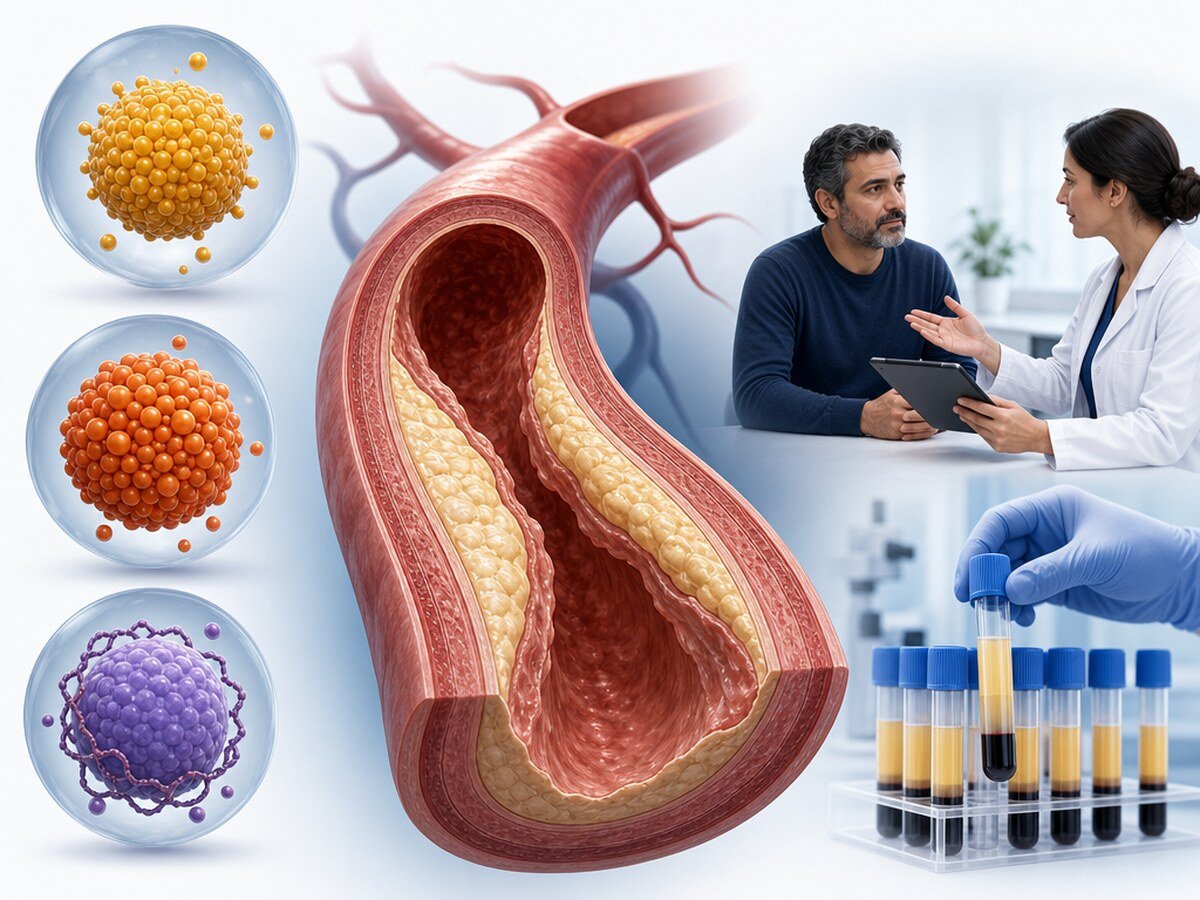
Hyperlipidaemia means that fats in the blood, such as cholesterol and/or triglycerides, are higher than usual. Treatment may include lifestyle measures, medicines that lower LDL cholesterol and, in some settings, triglyceride-lowering therapy. The plan depends on a person’s total cardiovascular risk, accompanying diseases and which guideline is being used. The aim is not only to change a laboratory number but to reduce the chance of events such as heart attack and stroke.[1,2]
This text is general patient education; it is not a diagnosis, a personal dose or a prescription. It requires a final physician review before publication.
What is hyperlipidaemia?
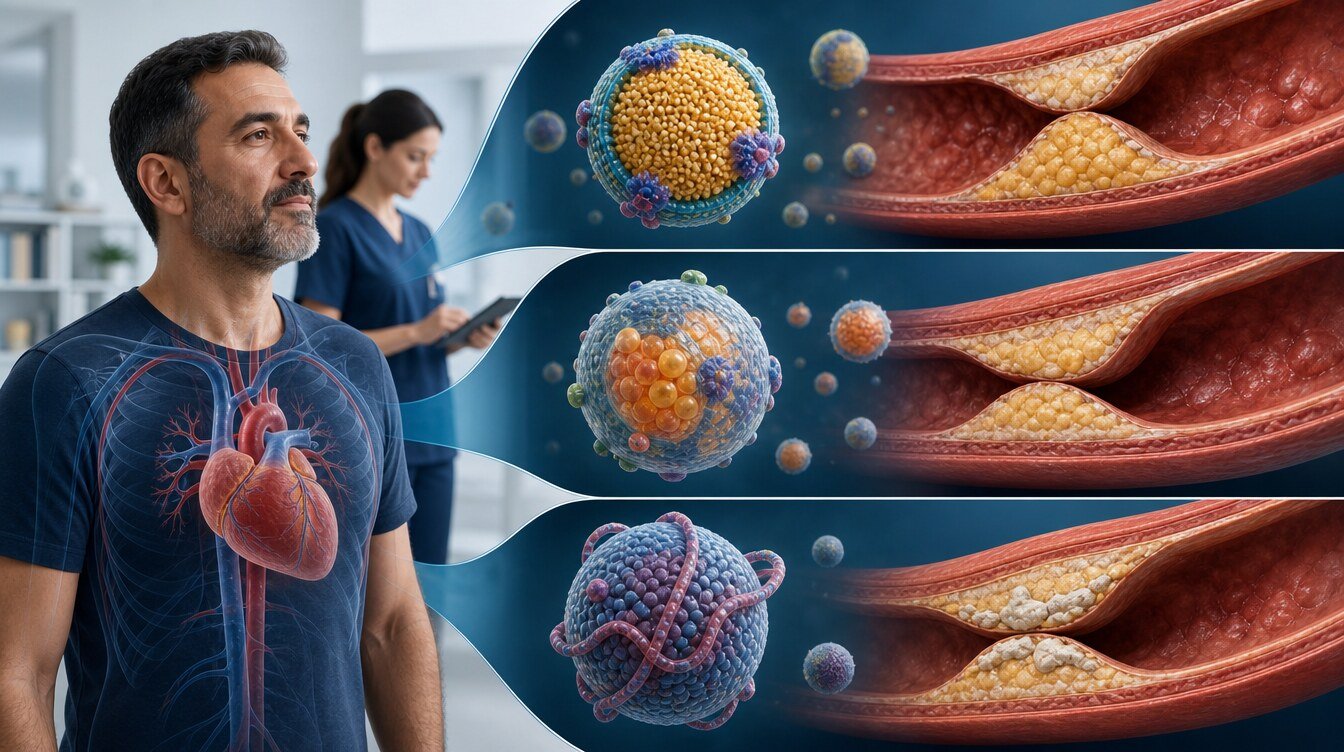
Much of the fat carried in blood travels inside particles called lipoproteins. Lipoproteins move fats through the bloodstream to tissues. Cholesterol itself is needed by the body for cell membranes and some hormones. If some lipoproteins stay high for a long time, fat can build up in the artery wall and make atherosclerosis more likely.
Atherosclerosis is the build-up of cholesterol, fat and inflammation-related deposits in the artery wall. It can affect the heart arteries, the brain arteries and the leg arteries. Leg-artery disease is discussed separately on the peripheral artery disease page.
What do lipid measurements mean?
LDL-C: “bad cholesterol”
LDL-C is the cholesterol carried by low-density lipoproteins. It is commonly called “bad cholesterol”. LDL particles can carry cholesterol into the artery wall, so a high LDL-C is an important risk factor for atherosclerosis.[1,2]
Treatment is not based on the current number alone. Cardiovascular risk, age, diabetes, kidney disease and whether a person has already had a heart attack or stroke are considered together.
Non-HDL-C
Non-HDL-C is calculated by subtracting HDL cholesterol from total cholesterol. HDL is high-density lipoprotein, often called “good cholesterol”. Non-HDL-C also includes other cholesterol-carrying particles that can contribute to atherosclerosis.
When triglycerides are high, or when LDL-C does not capture the whole risk, non-HDL-C can be a useful complementary measure.[1]
Triglycerides
A triglyceride is a type of fat found in blood and in adipose tissue. High triglycerides can be linked to excess weight, poorly controlled diabetes, alcohol, some medicines, kidney or thyroid disease and inherited traits.
High triglycerides are a different problem from high LDL-C. When they rise very high, the risk of acute pancreatitis, a sudden painful inflammation of the pancreas, can increase. Severe hypertriglyceridaemia is often used for values of 500 mg/dL or more; clinical review may include a repeat measurement and a search for secondary causes.[1]
ApoB
Apolipoprotein B (apoB) is the main protein on the surface of LDL, very-low-density lipoprotein and other atherogenic particles. An apoB measurement can describe the number of artery-risk particles in the blood.
LDL-C and apoB usually move in the same direction; in high-triglyceride, diabetes, metabolic-syndrome or low-HDL states the particle number can be higher than LDL-C suggests.[1,2]
Lp(a): a risk marker separate from LDL
Lipoprotein(a), or Lp(a), resembles LDL but also carries apolipoprotein(a). Lp(a) is independently linked to cardiovascular risk and its level is largely inherited.
Lp(a) is not another name for LDL-C. A high Lp(a) can add risk even when LDL-C is not high. LDL-C treatment does not reliably correct Lp(a). How it is interpreted is discussed on the lipoprotein(a) page. There is no routine treatment that has been shown to lower Lp(a) and thereby reduce cardiovascular events; new therapies are under study.[1]
Why do treatment targets differ from person to person?
The target is based on a person’s total cardiovascular risk. Age, blood pressure, smoking, diabetes, kidney disease, family history, existing vascular disease and the lipid measurements are read together.
ESC/EAS and ACC/AHA guidelines share the same core idea but differ in risk classification, when to start treatment and how LDL-C targets are used.[1,2] Therefore:
- There is no single LDL-C target for everyone.
- The same LDL-C value can mean different things in different people.
- The approach after a heart attack or stroke differs from the approach in a person without known vascular disease.
- The guideline used is considered together with local practice and the clinical picture.
Why does absolute benefit depend on starting risk?
The absolute benefit of treatment depends on the risk a person would face without treatment and on the absolute fall in LDL-C. The same LDL-C reduction can prevent more events in a person whose starting risk is already high.
In a large statin meta-analysis, each 1 mmol/L fall in LDL-C was associated with about a one-fifth relative reduction in major vascular events over about five years. The absolute benefit for one person still depends on starting risk and the reduction achieved.[3]

The main parts of treatment
Lifestyle changes
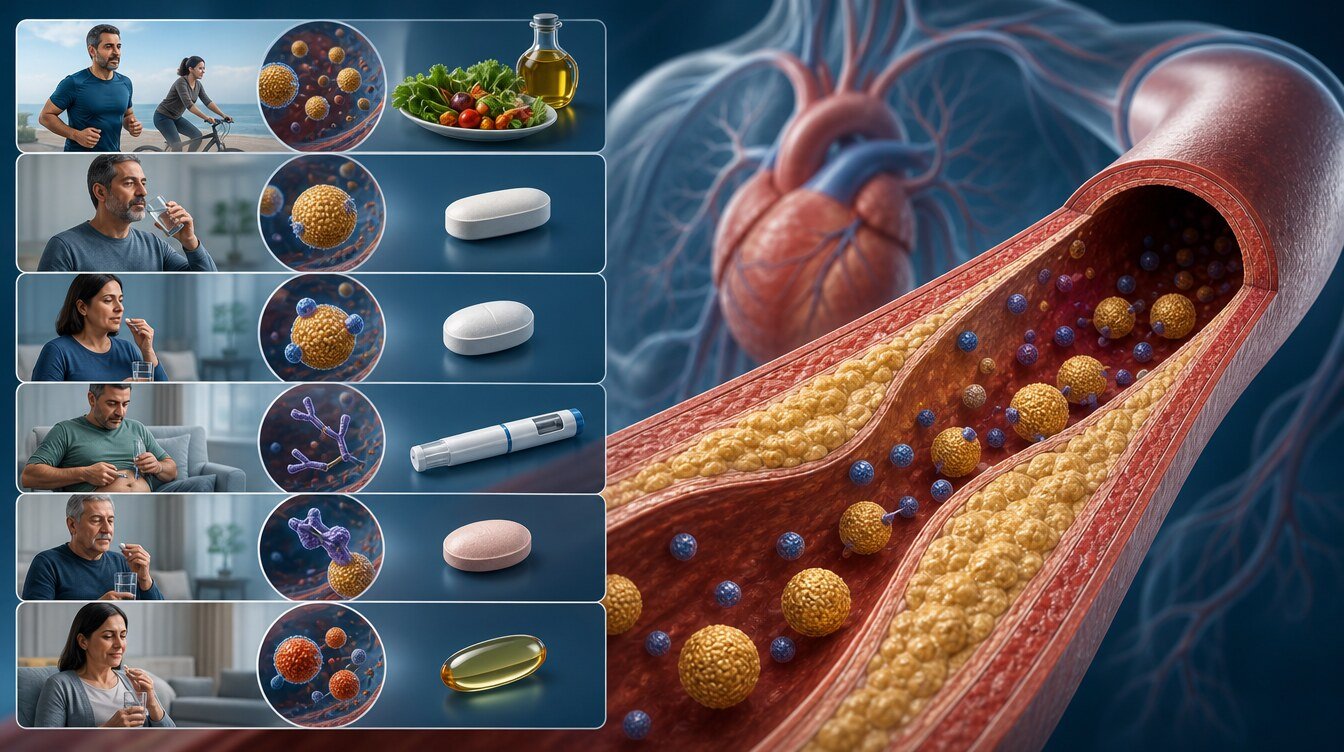
Lifestyle measures remain the base of care whether or not a medicine is used. A balanced diet with vegetables, fruit, legumes, whole grains, nuts and fish; less saturated fat and industrial trans fat; fewer sugary drinks and refined carbohydrates; less alcohol or none; regular physical activity; sustainable weight loss if needed; stopping smoking; and suitable care of diabetes, blood pressure and thyroid disease are generally advised.[1,2]
Lifestyle change does not always bring LDL-C down far enough on its own. Delaying medicine may be unwise in known vascular disease, familial hypercholesterolaemia or a very high LDL-C.
Statins
Statins reduce cholesterol production in the liver and increase clearance of LDL-C from the blood. Besides lowering LDL-C they have the strongest and longest evidence for reducing important cardiovascular events such as heart attack, stroke and vascular procedures.[1–3]
Intensity is chosen according to risk and what a person can tolerate. This page does not recommend a personal medicine or dose.
Ezetimibe
Ezetimibe reduces cholesterol absorption from the gut. It can be used alone or added to a statin, especially when the intended LDL-C reduction is not reached at a tolerated statin intensity.
In IMPROVE-IT, adding ezetimibe to a statin after a heart attack in high-risk people improved clinical outcomes. That finding shows ezetimibe is not only a laboratory-value treatment; event-reduction evidence exists in the right clinical context.[4]
PCSK9 monoclonal antibodies
PCSK9 increases the breakdown of LDL receptors, the structures that help the liver clear LDL particles from the blood. The PCSK9 monoclonal antibodies evolocumab and alirocumab block this protein and lower LDL-C substantially.
They are usually considered in very-high-risk people when LDL-C remains too high despite a statin and suitable add-on therapy, or when options are limited. In FOURIER and ODYSSEY OUTCOMES, adding them to a statin in high-risk people with known vascular disease reduced important cardiovascular events.[5,6]
In the alirocumab trial, main cardiovascular events were 9.5% with alirocumab and 11.1% with placebo in people with a recent acute coronary syndrome; that result belongs to that high-risk trial population and does not mean the same benefit for everyone.[6]
Inclisiran
Inclisiran is an RNA-based treatment that reduces PCSK9 production in the liver. Trials have shown about a 50% reduction in LDL-C.[7]
Its LDL-C-lowering effect is proven, but a reduction in clinical outcomes such as heart attack, stroke or death has not yet been established. Outcome trials are ongoing. LDL-C lowering should not be confused with proven event reduction.[7]
Bempedoic acid
Bempedoic acid lowers LDL-C by acting at a different step of cholesterol production in the liver. It may be considered in people who cannot take or tolerate statins and who have cardiovascular disease or high risk.
In CLEAR Outcomes, among people with statin intolerance, bempedoic acid was associated with fewer major cardiovascular events. Gout, gallstones and a rise in uric acid were reported more often.[8]
Fibrates
Fibrates mainly lower triglycerides and can raise HDL cholesterol in some people. The decision considers the triglyceride level, pancreatitis risk, kidney function and interactions with other medicines.
Fibrates are not an automatic substitute for LDL-C-lowering treatment. Evidence that they reduce cardiovascular events in people with high triglycerides is not the same as the evidence for statins or some LDL-lowering add-on medicines. Some fibrate–statin combinations can raise the risk of muscle and other adverse effects; medical supervision is needed.[1]
Prescription omega-3 fatty acids
Prescription omega-3 fatty acids can be used to lower high triglycerides. Products that contain EPA and DHA can lower triglycerides substantially; some formulations can raise LDL-C. EPA-predominant treatments may not show the same LDL-C rise.
A fall in triglycerides does not automatically mean fewer cardiovascular events. In REDUCE-IT, pure EPA added to a statin reduced major cardiovascular events in a defined high-risk group; that finding applies to the trial population and the treatment studied.[9] Non-prescription supplements should not be treated as equivalent to prescription products tested in trials.
Treatment in special groups
Primary prevention
Primary prevention aims to prevent a first event in people who have not had a heart attack, stroke or known vascular disease.
The decision brings together LDL-C, age, blood pressure, smoking, diabetes, kidney disease, family history and estimated total cardiovascular risk. Lifestyle care is the base; a statin may be considered in higher-risk people.[1,2]
A person should not judge their own risk from a single cholesterol number.
Known ASCVD: secondary prevention
Atherosclerotic cardiovascular disease (ASCVD) is heart attack, ischaemic stroke or known coronary, brain or leg-artery disease caused by atherosclerosis. Secondary prevention aims to prevent further events after one of these has occurred.
These people are usually at high or very high risk. Continuity of LDL-C-lowering treatment, adherence and combination therapy when needed matter. Adding ezetimibe to a statin in IMPROVE-IT, and PCSK9 monoclonal antibodies in suitable high-risk groups, have event-reduction evidence.[4–6]
Diabetes
Diabetes can raise cardiovascular risk and often travels with high triglycerides. The decision follows the duration of diabetes, age, kidney function, existing vascular disease and other risk factors.[1,2]
LDL-C-lowering treatment comes into view for a substantial share of people with diabetes as part of risk assessment. Better diabetes control, diet, activity and weight management can also help triglycerides.
A small signal of higher blood glucose or new diabetes has been reported with statins. That risk is usually weighed together with the benefit of preventing cardiovascular events; the medicine decision is individual.[1,3]
Chronic kidney disease
Chronic kidney disease is a structural or functional kidney abnormality lasting at least three months. It can raise cardiovascular risk and can change medicine choice.[1,2]
Kidney function, medicine safety and possible interactions are considered. Advanced kidney disease, an unexplained lipid disorder or a poor treatment response may justify nephrology and cardiology or lipidology review.
Familial hypercholesterolaemia
Familial hypercholesterolaemia (FH) is an inherited condition in which LDL-C is genetically very high. Clues that raise the chance of FH include:[10]
- A very high LDL-C from a young age
- Heart attack or vascular disease at a young age in the family
- Tendon xanthomas, firm lumps from cholesterol in tendons
- Corneal arcus, a whitish ring of fat around the coloured part of the eye
- Similar high cholesterol in first-degree relatives
FH is not diagnosed from a single laboratory result. Medicines, thyroid disease, kidney disease and other secondary causes are also reviewed. Genetic testing can support the diagnosis in some people.
Lipid screening of first-degree relatives — parents, siblings and children — is important after an FH diagnosis. This is called cascade screening. Early treatment, regular follow-up and, often, more than one medicine together may be needed.[10]
Severe hypertriglyceridaemia and pancreatitis risk
When triglycerides reach 500 mg/dL or more, pancreatitis risk becomes important.[1] Secondary causes such as diabetes, alcohol, kidney and thyroid disease are sought; diet and weight management are planned; and whether a triglyceride-lowering medicine is needed is reviewed. LDL-C and other cardiovascular risks are handled separately.
Lowering triglycerides and lowering LDL-C are not the same treatment goal. When triglycerides are very high, reducing pancreatitis risk may come first.
Pregnancy
The safety of the mother and the baby comes first. Many cholesterol-lowering medicines are reviewed again when pregnancy is planned, during pregnancy or while breastfeeding.[1,2]
Anyone planning pregnancy, who is pregnant or who is breastfeeding should discuss all prescription and non-prescription medicines with their clinicians. Stopping or restarting a medicine should not be decided without personal medical review. In FH or very high triglycerides, obstetrics, cardiology and lipidology may need to work together.
Older age and frailty
Older age alone is not a reason to withhold treatment. Frailty — reduced physical reserve, muscle strength and daily function — can change the balance of benefit and harm.[1,2]
Life expectancy, other diseases, cognitive and physical state, other medicines, fall risk and the person’s preferences are considered.
Statin intolerance
Statin intolerance means muscle symptoms or other problems during statin use that make it hard to continue. Muscle pain and weakness are real symptoms that should be taken seriously; they should not be dismissed.
Not every muscle symptom in a person taking a statin is caused by the statin. Trials have shown a nocebo effect, in which expectation can amplify real symptoms. That does not mean the complaints are invented; it means the cause should be investigated carefully.[1,8]
If a clinician judges it appropriate, the timing of symptoms relative to the statin can be reviewed; thyroid disease, heavy exercise, vitamin deficiency or other medicines can be considered; a CK test can be requested when needed; a different statin, a different schedule or a lower tolerated intensity can be tried; and non-statin LDL-C-lowering treatments can be added.
This controlled reassessment is called a rechallenge. Severe muscle pain, marked weakness or dark urine should lead to prompt medical care.
Safety, follow-up and laboratory checks
Muscle symptoms and CK
Muscle pain, tenderness or weakness can occur during statin treatment. Most of these symptoms are not serious, but severe or progressive symptoms should be reviewed.
CK (creatine kinase) is a blood test that can inform about muscle injury. CK is not usually measured automatically on a fixed schedule in everyone; it is requested when there are symptoms, a particular risk or clinical suspicion. Heavy exercise can also raise CK, so results are read with the clinical picture.[1]
Liver tests
Liver enzymes may be checked when a statin or another lipid medicine is started, according to the clinical picture. How often they are repeated depends on the person and the treatment. Unexplained jaundice, dark urine, marked fatigue or abdominal pain should lead to medical review.
Blood glucose and drug interactions
A limited signal of higher blood glucose or new diabetes has been reported with statins. The signal may matter more in people already at risk of diabetes; in high cardiovascular risk the benefit of lowering LDL-C is often weighed together with it.[1,3]
Some antibiotics, antifungal medicines, heart-rhythm medicines, immunosuppressants, anticoagulants and herbal products can interact with lipid medicines. All medicines, vitamins and herbal products should be reported. A person should not stop, change the dose or switch a medicine on their own.
Adherence and combination therapy
Lipid treatments are often long term. Irregular use or early stopping can let LDL-C rise again.
Follow-up usually reviews the baseline lipid profile and accompanying risks; checks the lipid profile at a suitable time after starting or changing treatment; reads LDL-C, non-HDL-C, triglycerides and, when needed, apoB together; and reviews adverse effects, interactions and adherence. If LDL-C has not fallen enough, combination therapy or specialist review is considered.[1,2]
Combination therapy means using medicines that work by different mechanisms together. The aim is more LDL-C lowering with the most suitable safety and adherence.

When is specialist review useful?
Cardiology, endocrinology, nephrology or lipidology review may be considered when:
- LDL-C has been very high from a young age
- FH is suspected or there is early cardiovascular disease in the family
- There has been a heart attack, stroke or known vascular disease
- LDL-C stays high despite treatment
- A target is not reached despite more than one medicine
- Statin-related symptoms are recurrent or severe
- Triglycerides are very high or there is a history of pancreatitis
- There is FH or severe hypertriglyceridaemia in pregnancy
- There is advanced kidney or liver disease
A risk-based decision path
The path below is for general education; it does not replace a personal decision.
- The lipid profile is confirmed; non-HDL-C, apoB and Lp(a) are added when needed.
- If there has been a heart attack, ischaemic stroke or known vascular disease, secondary prevention is considered.
- Diabetes, chronic kidney disease, FH, very high triglycerides, pregnancy, older age or frailty and statin intolerance are noted separately.
- An ESC/EAS or ACC/AHA approach is chosen for the clinical context; a single universal LDL-C target is not used.
- LDL-C-lowering treatment is kept separate from triglyceride-lowering treatment.
- The lipid profile, adherence, muscle symptoms, liver and kidney function and interactions are reviewed.
- If the response is not enough, adherence and secondary causes are checked first; then ezetimibe, PCSK9 monoclonal antibodies, bempedoic acid or other options in the right context are considered. Inclisiran lowers LDL-C; its clinical-event benefit is not yet established.[1,2,7]
Common myths and facts
Myth: “Cholesterol is entirely harmful.” Fact: Cholesterol is needed by the body. The problem is when lipoproteins linked to atherosclerosis stay high for a long time.
Myth: “Only people who are overweight have high cholesterol.” Fact: Thin people can also have high cholesterol because of genetics, diabetes, thyroid disease or other causes.
Myth: “If I start a medicine I no longer need a diet.” Fact: Lifestyle measures matter for LDL-C, triglycerides and overall cardiovascular risk.
Myth: “Muscle pain means a definite statin allergy.” Fact: Muscle pain can be a real symptom, but it is not always a direct drug effect. The cause should be investigated and a safe reassessment made.
Myth: “Because inclisiran lowers LDL, it has been proven to prevent heart attacks.” Fact: LDL-C lowering has been shown; evidence that it reduces clinical events is not yet complete.[7]
Myth: “If triglycerides fall, all cardiovascular risk disappears.” Fact: Lowering triglycerides can matter for pancreatitis risk when values are very high; LDL-C and other risks still need their own review.
Questions to ask a clinician
- What is my total cardiovascular risk?
- How are my LDL-C, non-HDL-C, triglyceride and, if needed, apoB results being read?
- Is an Lp(a) measurement appropriate for me?
- Which guideline and treatment target are being used?
- What absolute benefit is expected from treatment?
- Which symptoms should I report while taking a statin?
- Do I need a CK or liver test?
- Do my medicines or supplements interact?
- Could this be familial hypercholesterolaemia, and should relatives be screened?
- Could a secondary cause explain my high triglycerides?
- When will the response to treatment be checked?
- If LDL-C does not fall enough, which add-on options would be considered?
- How do pregnancy plans, kidney disease or older age change the plan?
Academic context of Prof. Dr. Hakan Uçar
Among the sources that could be verified for this package, no confirmed hyperlipidaemia outcome paper by Prof. Dr. Hakan Uçar was found. No specific treatment volume, medicine or success rate is therefore attributed to him.
Frequently asked questions
No. Hyperlipidaemia often causes no symptoms and is usually found on a blood test. People at risk should be reviewed at suitable intervals.
No. A high HDL cholesterol does not cancel a high LDL-C. The treatment decision follows the whole risk profile.
No. Lp(a) is a separate, largely inherited, independent risk marker. It is discussed in more detail on a dedicated page.
No. Muscle symptoms occur in some people. The symptoms can be real, but a statin is not the cause of every muscle ache. A nocebo effect can also contribute; symptoms should still be investigated without being dismissed.[1]
A CK test is usually requested when there are muscle symptoms or a particular risk. The result is read together with recent heavy exercise and other causes.
Inclisiran’s LDL-C-lowering effect is proven, but a reduction in cardiovascular events has not yet been established. LDL lowering and proven event reduction are not the same concept.[7]
LDL-C, family history and, when appropriate, Lp(a) should be reviewed. If familial hypercholesterolaemia is suspected, screening of first-degree relatives can be discussed.[10]
Very high triglycerides need professional assessment. Severe upper abdominal pain, nausea or vomiting should prompt emergency care because of the risk of pancreatitis.
Hyperlipidaemia often causes no symptoms, so feeling well does not mean treatment is no longer needed. Stopping or changing a medicine should be decided with a clinician.
Literature
References
Mach F, Baigent C, Catapano AL, et al. 2019 ESC/EAS Guidelines for the management of dyslipidaemias. European Heart Journal. 2020;41:111–188. DOI: 10.1093/eurheartj/ehz455 PMID: 31504418.
Grundy SM, Stone NJ, Bailey AL, et al. 2018 AHA/ACC/AACVPR/AAPA/ABC/ACPM/ADA/AGS/APhA/ASPC/NLA/PCNA Guideline on the Management of Blood Cholesterol. Circulation. 2019;139:e1082–e1143. DOI: 10.1161/CIR.0000000000000625 PMID: 30586774.
Cholesterol Treatment Trialists’ (CTT) Collaborators. Efficacy and safety of cholesterol-lowering treatment: prospective meta-analysis of data from 90 056 participants in 14 randomised trials of statins. Lancet. 2005;366:1267–1278. DOI: 10.1016/S0140-6736(05)67394-1 PMID: 16214597.
Cannon CP, Blazing MA, Giugliano RP, et al. Ezetimibe Added to Statin Therapy after Acute Coronary Syndromes. New England Journal of Medicine. 2015;372:2387–2397. DOI: 10.1056/NEJMoa1410489 PMID: 26039521.
Sabatine MS, Giugliano RP, Keech AC, et al. Evolocumab and Clinical Outcomes in Patients with Cardiovascular Disease. New England Journal of Medicine. 2017;376:1713–1722. DOI: 10.1056/NEJMoa1615664 PMID: 28304224.
Schwartz GG, Steg PG, Szarek M, et al. Alirocumab and Cardiovascular Outcomes after Acute Coronary Syndrome. New England Journal of Medicine. 2018;379:2097–2107. DOI: 10.1056/NEJMoa1801174 PMID: 30403574.
Ray KK, Wright RS, Kallend D, et al. Two Phase 3 Trials of Inclisiran in Patients with Elevated LDL Cholesterol. New England Journal of Medicine. 2020;382:1507–1519. DOI: 10.1056/NEJMoa1912387 PMID: 32187462.
Nissen SE, Lincoff AM, Brennan D, et al. Bempedoic Acid and Cardiovascular Outcomes in Statin-Intolerant Patients. New England Journal of Medicine. 2023;388:1353–1364. DOI: 10.1056/NEJMoa2215024 PMID: 36876740.
Bhatt DL, Steg PG, Miller M, et al. Cardiovascular Risk Reduction with Icosapent Ethyl for Hypertriglyceridemia. New England Journal of Medicine. 2019;380:11–22. DOI: 10.1056/NEJMoa1812792 PMID: 30415628.
Nordestgaard BG, Chapman MJ, Humphries SE, et al. Familial hypercholesterolaemia is underdiagnosed and undertreated in the general population: guidance for clinicians to prevent coronary heart disease. European Heart Journal. 2013;34:3478–3490. DOI: 10.1093/eurheartj/eht273 PMID: 23934773.
This content is for general information only and does not replace personalized medical advice. In emergencies call local emergency services.
Continue