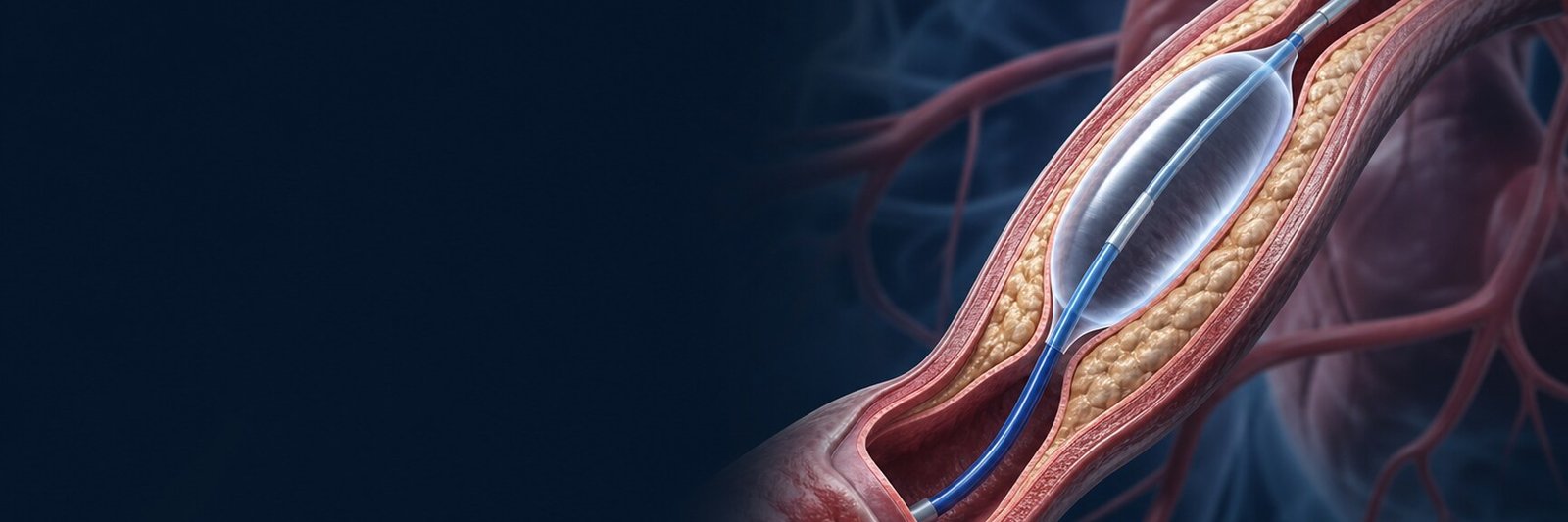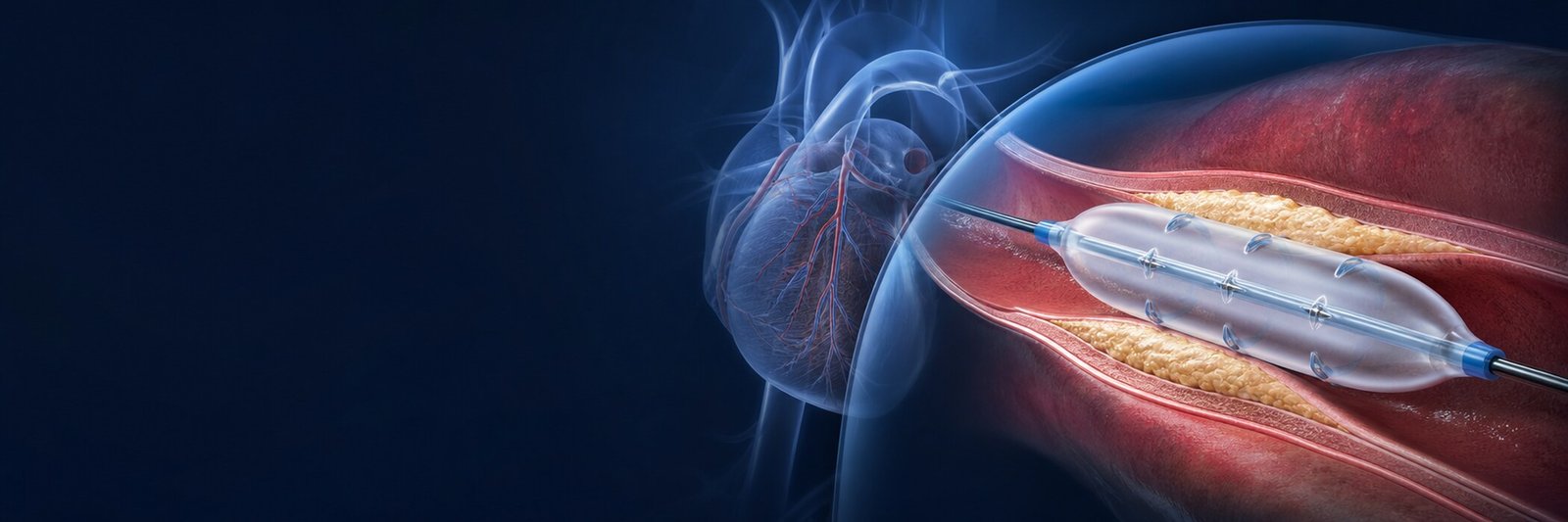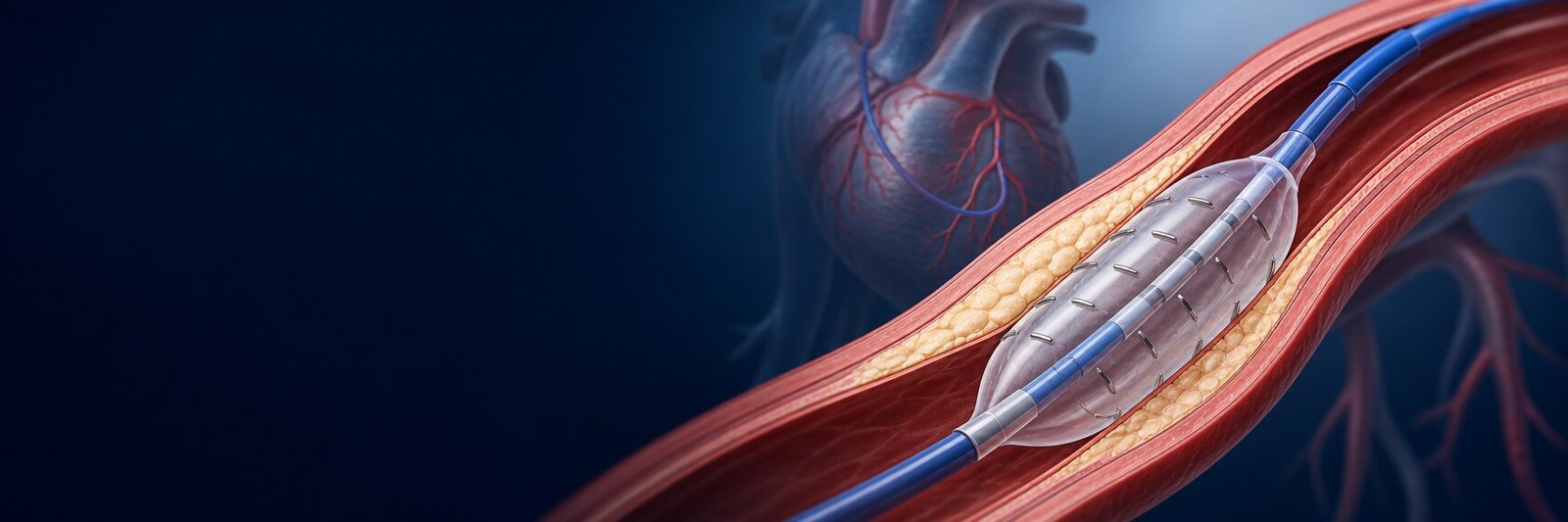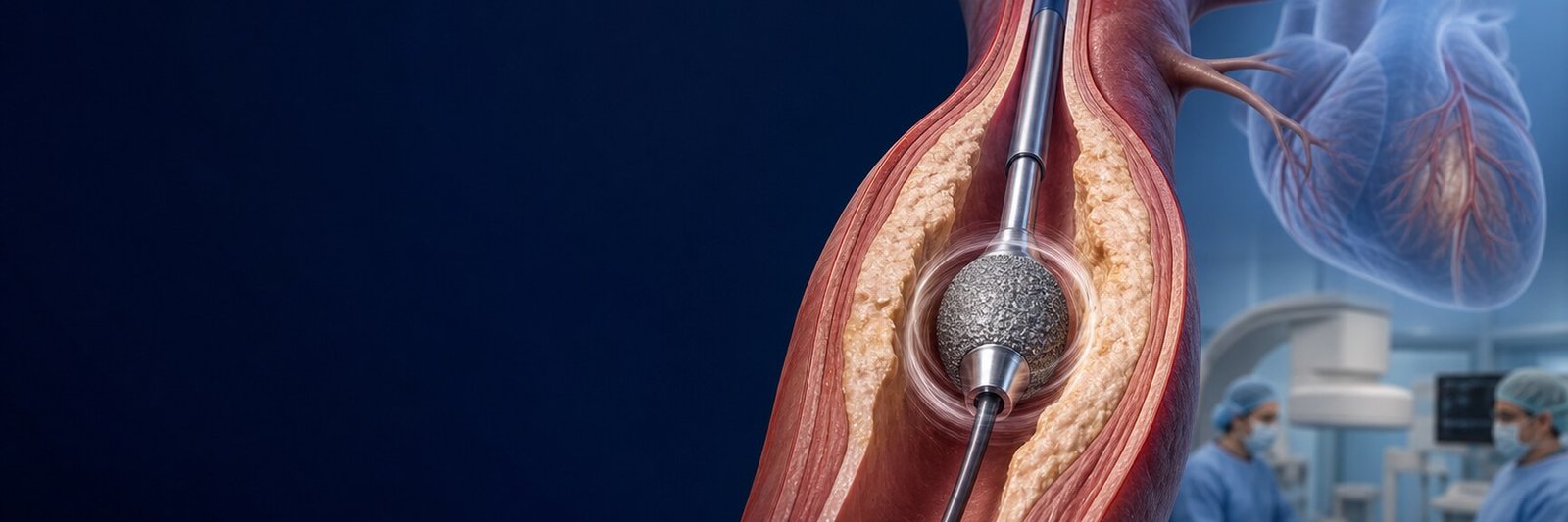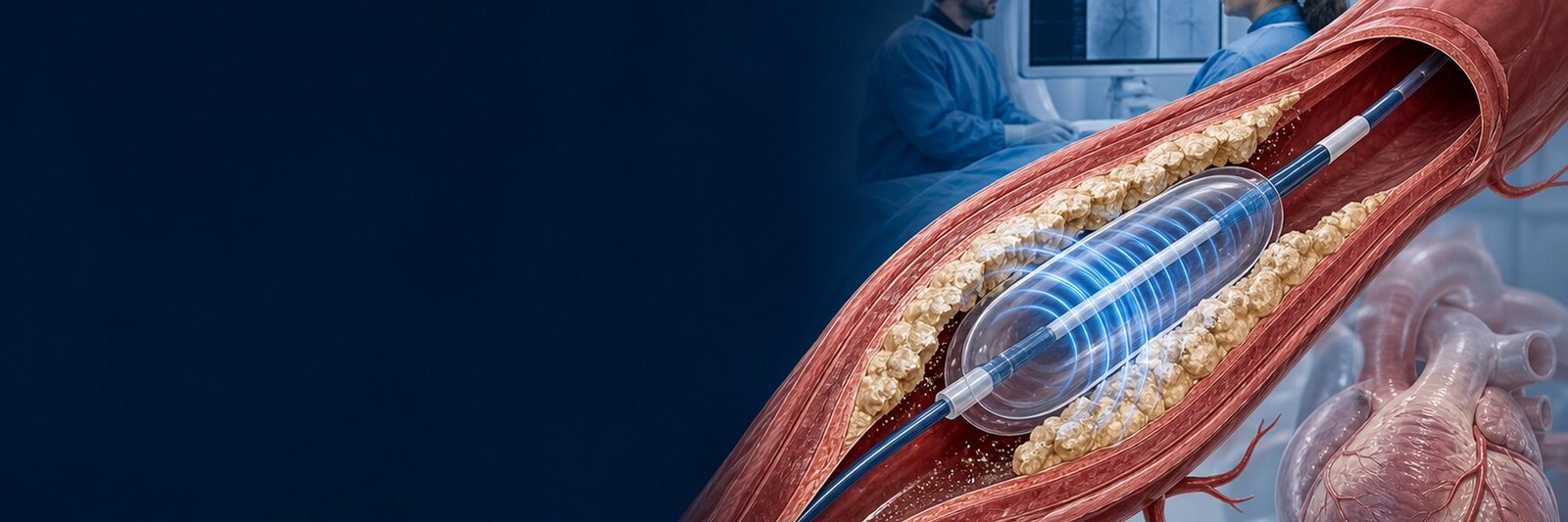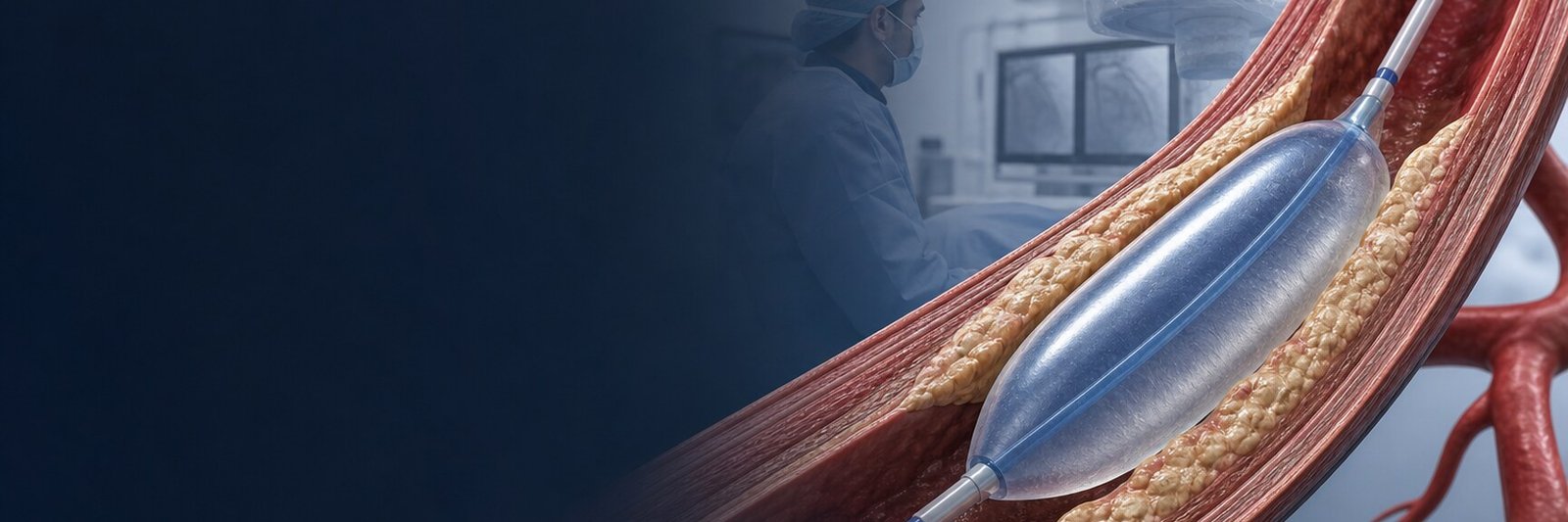
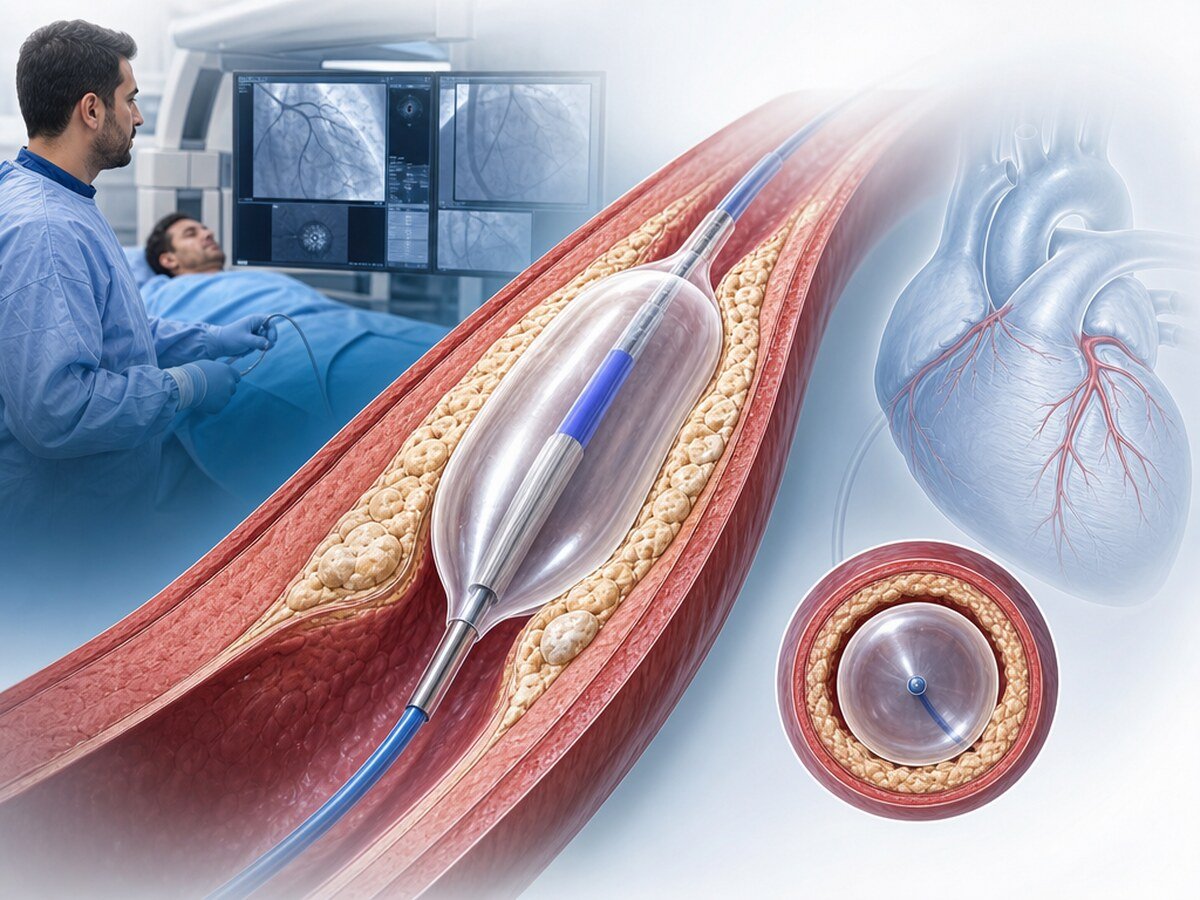
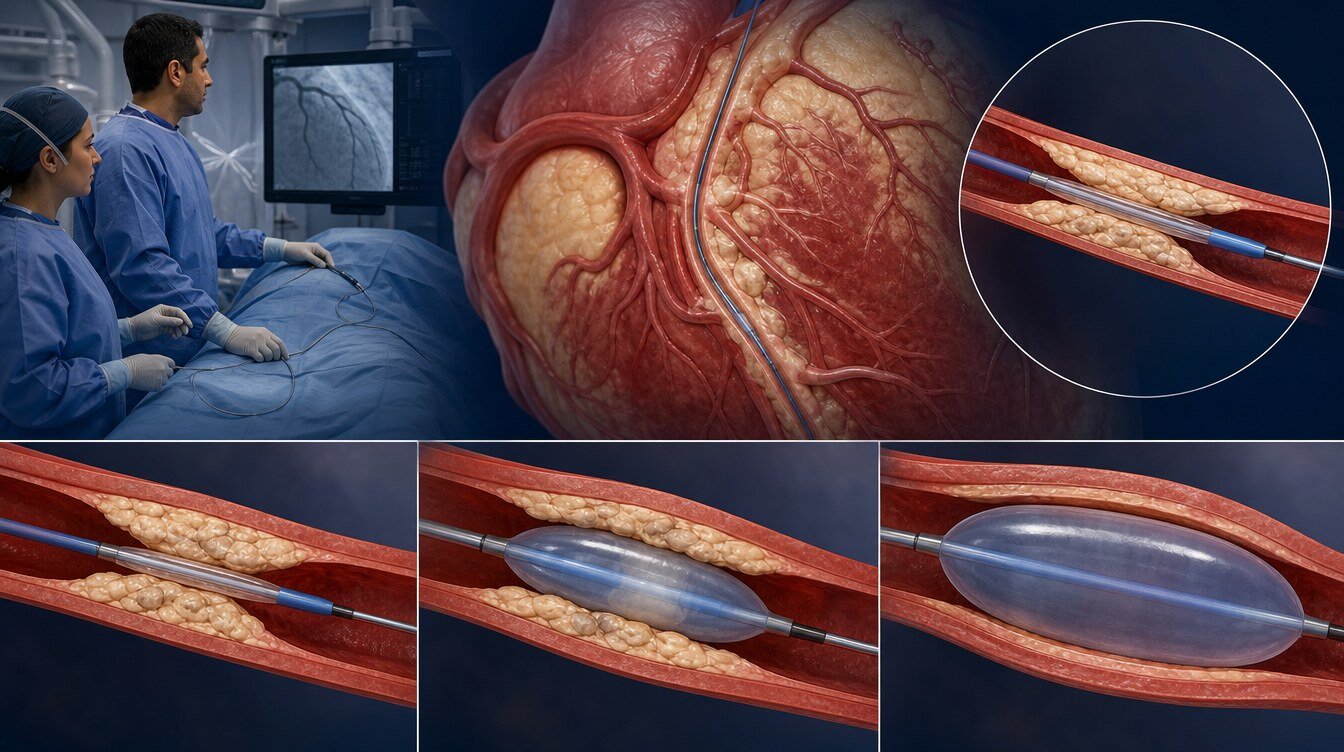
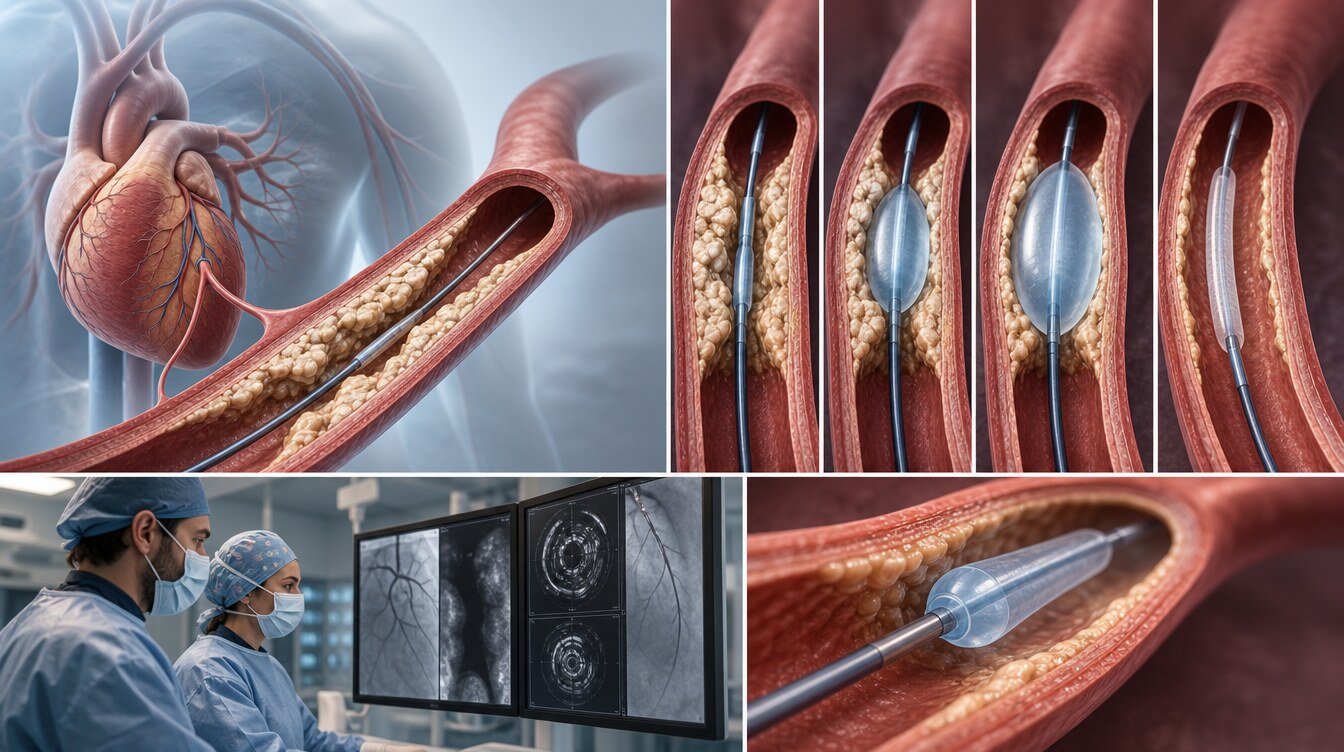
Super high-pressure non-compliant coronary balloon is a temporary balloon catheter used in some rigid or calcified coronary stenoses that cannot be expanded adequately with a standard non-compliant (NC) balloon. It may help prepare the artery for a stent or, in selected cases, expand an under-expanded stent. It is not required for every calcified stenosis and has not been shown to be superior to other methods for every patient.[3–5]
What does a super high-pressure coronary balloon mean?
Dense calcium can stiffen the vessel wall and stenosis so that a standard balloon or stent cannot expand fully. Super high-pressure non-compliant balloons are designed to apply expansion force while keeping diameter more controlled in selected resistant lesions.[3–5]
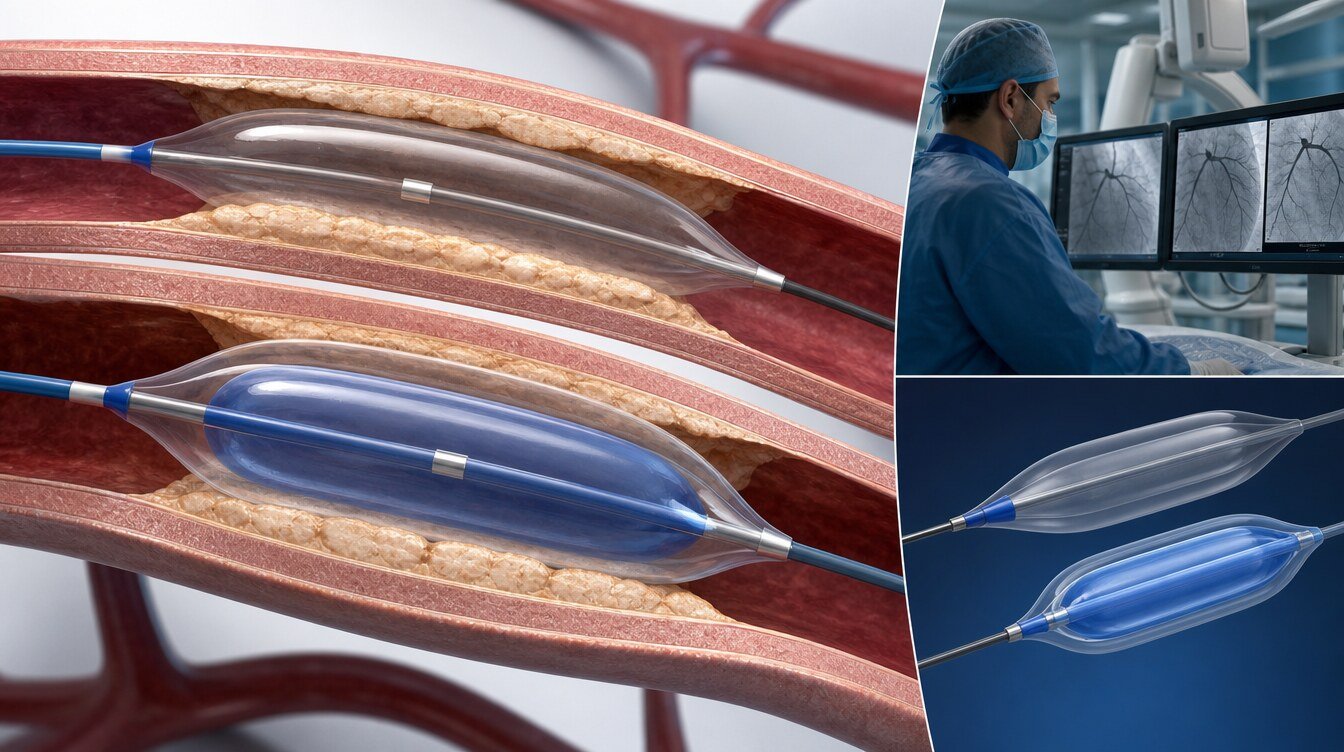
OPN NC, often seen in the literature, is a specific device/platform name—not the generic method name. Its double-layer or “balloon-in-balloon” design aims for different pressure tolerance than a standard NC balloon.[5,22] That design does not mean the device scrapes, drills or clears all calcium from the artery.
The balloon is temporary and removed with the catheter. If a stent is placed, the lasting structure is the stent, not the balloon.[20,21]
How does it differ from a standard NC balloon?
Both standard NC and super high-pressure balloons are designed so diameter changes only modestly as pressure rises. The key difference is that the super high-pressure device is developed for selected resistant lesions. This does not mean a standard NC balloon is inadequate or unnecessary; many lesions respond well to a standard NC balloon.[3,4]
| Feature | Standard NC balloon | Super high-pressure non-compliant balloon |
|---|---|---|
| Main use context | Lesion preparation and controlled post-stent expansion | Selected resistant lesions not adequately opened by a standard NC balloon |
| Structure | Single-layer products are common | Certain platforms are described as double-layer designs |
| Needed in every patient? | No; chosen by lesion | No; a specialised, selected tool |
| Removes calcium? | No | No |
| Remains in the artery? | No | No |
| Main evidence focus | Broad PCI experience | Procedural and imaging endpoints; comparative long-term clinical evidence is more limited |
When may it be considered?
When the balloon crosses but the stenosis does not open
The clearest use case is a lesion that a balloon can cross but a standard NC balloon cannot expand adequately (“balloon-crossable but balloon-undilatable”). Failure to cross at all is a different problem and may need other devices first.[3–5,8,9]
In heavily calcified de novo lesions
ISAR-CALC compared a super high-pressure balloon with a scoring balloon after inadequate NC-balloon preparation in severe calcium (74 patients). OCT stent-expansion index was similar. Some secondary angiographic measures favoured the super high-pressure balloon, but the trial was not sized to show fewer deaths, infarctions or repeat procedures.[5]
In under-expanded stents or in-stent restenosis
Calcium-related stent underexpansion matters for restenosis and thrombosis risk. Super high-pressure balloons have been reported in selected underexpansion or ISR cases.[12,13,23] Applying higher pressure alone without identifying the mechanism is not appropriate.
When it may not be enough alone
- Lesions that balloons or imaging catheters cannot cross
- Long, diffuse or superficial calcium needing another modification method
- Heavy stent underexpansion where calcium lies outside the stent
- Vessel size, tortuosity or location making balloon use unsuitable
- Dissection or flow-limiting vessel injury during the procedure
Rotational atherectomy, intravascular lithotripsy (IVL), scoring/cutting balloons, laser or a combined strategy may then be considered.[3,4]
Why may IVUS or OCT be used?
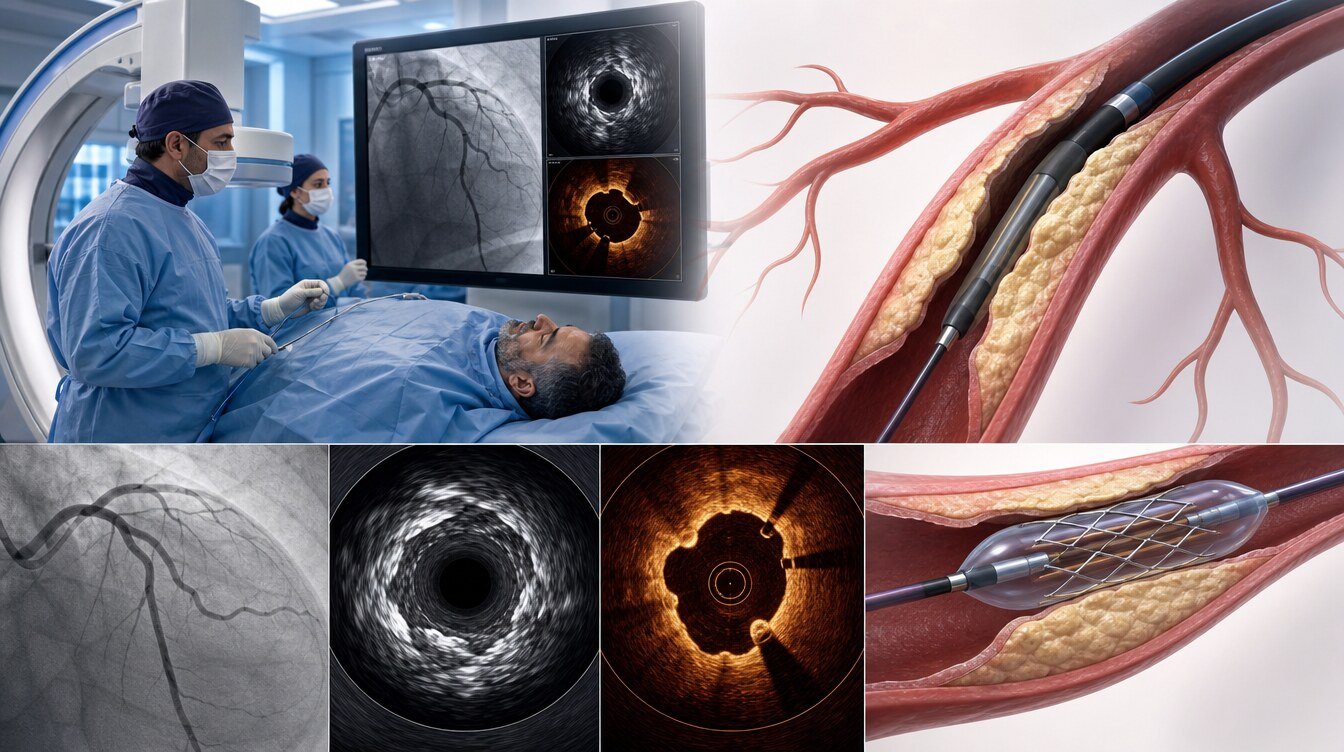
Angiography can underestimate calcium thickness and circumferential extent. IVUS and OCT provide cross-sectional views that help assess calcium depth and distribution, stent expansion and whether resistance is truly calcific.[3–5,11]
Imaging is not always feasible and does not guarantee better long-term outcomes by itself.[11]
How is the procedure performed?
The procedure is done in a catheter laboratory equipped for coronary angiography and PCI:[20,21]
- Preparation: History, medicines, blood tests, kidney function and contrast risk are reviewed.
- Access: Radial or femoral artery under local anaesthesia.
- Angiography and wire: The artery is imaged; a fine wire is advanced beyond the stenosis.
- Lesion assessment: Standard balloon behaviour and, when used, IVUS/OCT findings are reviewed.
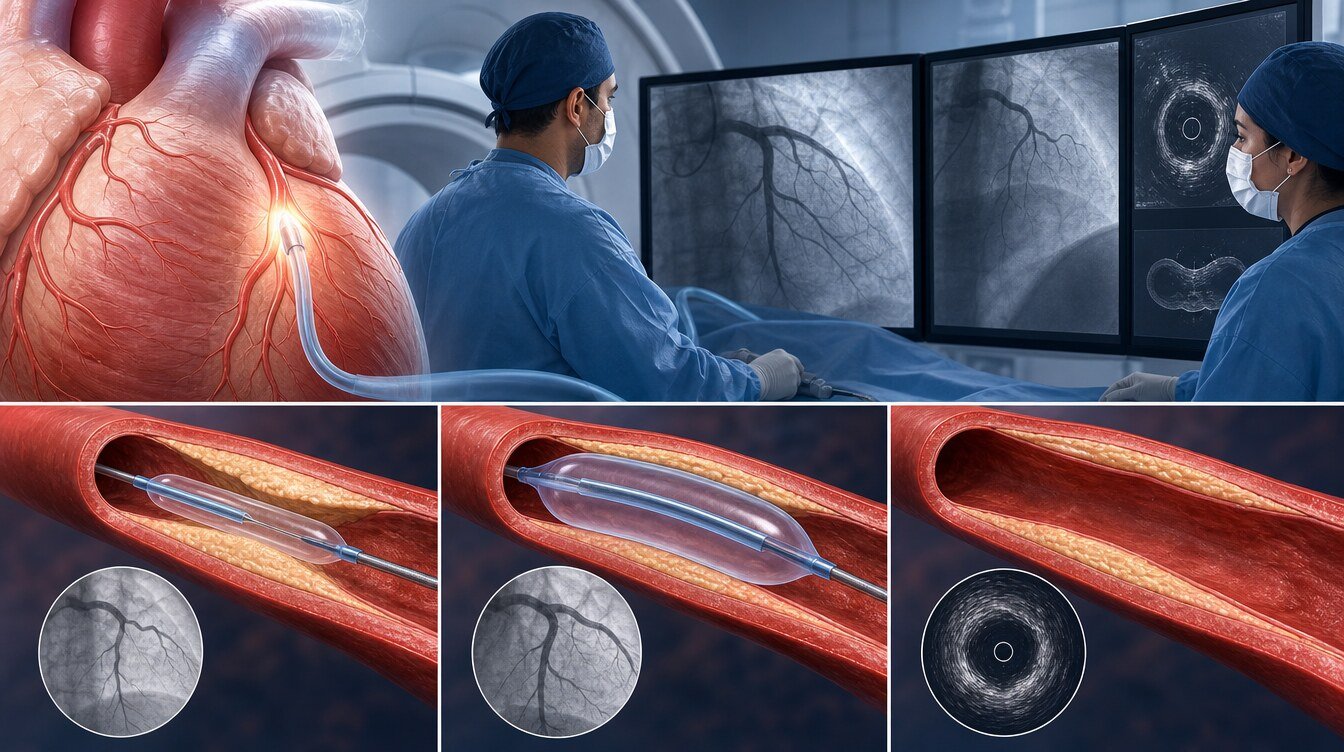
- Balloon use: A suitable super high-pressure balloon is positioned and inflated temporarily according to device instructions and the clinical plan.
- Result check: Flow, wall integrity, residual stenosis and stent expansion are reassessed; another method may follow.
- Removal: Balloon, wire and related catheters are removed; the access site is controlled.
Most patients remain awake. Brief chest discomfort during inflation should be reported if new or severe.[21]
What does the scientific evidence show?
Randomised evidence
ISAR-CALC found similar OCT stent-expansion index for super high-pressure versus scoring balloons after inadequate NC preparation; it was not powered for hard clinical endpoints.[5]
Observational studies
Series and registries report feasibility and procedural success in undilatable or resistant lesions, but lack of controls and mixed device use limit causal attribution.[6–9,11–13]
Systematic review and meta-analysis
A 2025 meta-analysis reported high pooled procedural success with substantial heterogeneity and mostly non-randomised designs; pooled rates are not personal success guarantees or proof of safety superiority.[14]
Ongoing or unpublished results
ISAR-CALC 2 completed on ClinicalTrials.gov without posted results as of 26 August 2026; VICTORY likewise lacks publishable comparative results for patient pages. Completion of a trial registry is not clinical-outcome evidence.[16–18]
What are possible benefits and limitations?
| Possible benefit / purpose | Limitation / required caveat |
|---|---|
| Extra expansion tool after failed standard NC balloon | The balloon must be able to cross; uncrossable lesions need another strategy |
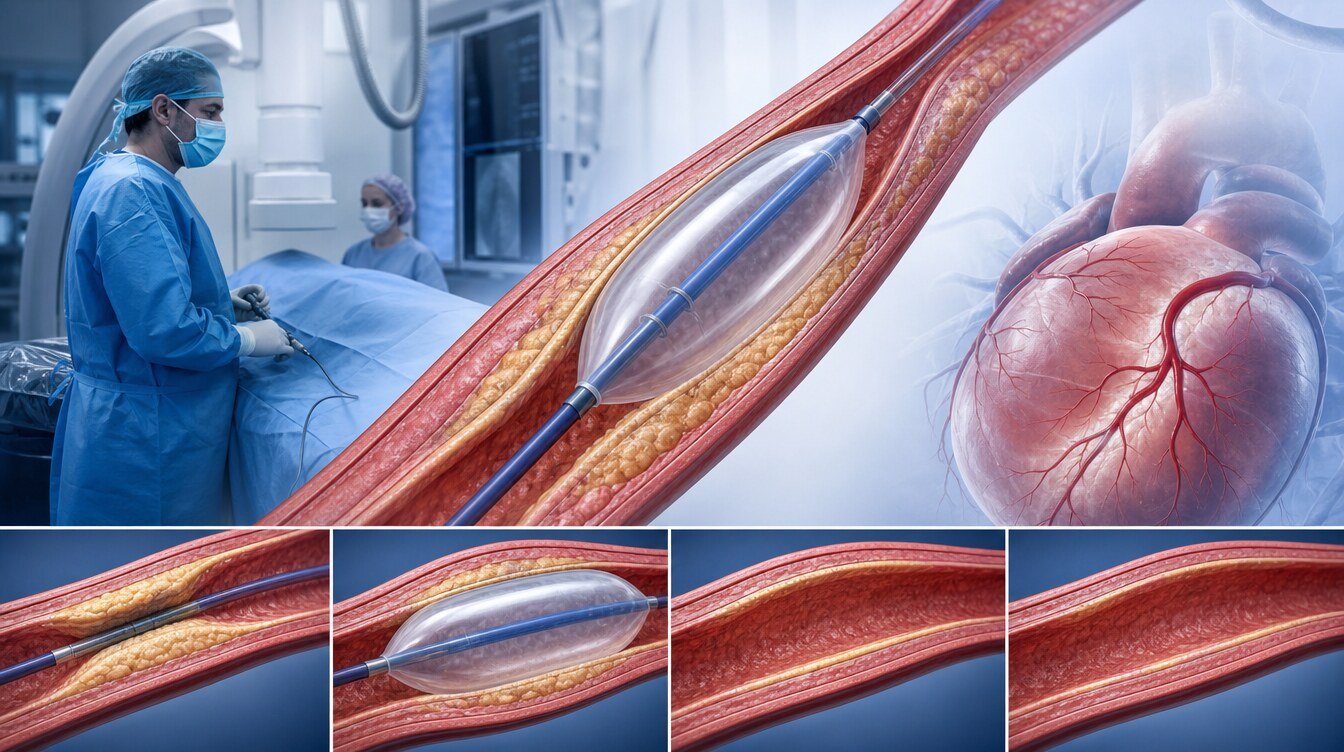
| May help lumen and stent expansion before stenting | Good imaging or procedural results are not long-term clinical superiority |
| May be considered in selected underexpansion or ISR | ISR and underexpansion are not one disease; mechanism must be identified |
| Balloon is removed and adds no new permanent implant | Most de novo calcified PCI plans still include a stent |
| May reduce need for other tools in some cases | Not shown to make atherectomy or IVL unnecessary for everyone |
What are the risks?
Possible complications in complex PCI include dissection, perforation, balloon damage, slow flow/no-reflow, abrupt closure, myocardial infarction or arrhythmia, access-site bleeding, contrast-related kidney injury or allergy, and later stent thrombosis or restenosis if a stent is used.[5,8,9,11–14]
Not all events are balloon-specific. Anatomy, calcium, prior stents, other devices, clinical setting and comorbidities change total risk. Low rates in selected observational cohorts are not personal risk calculators.[9,12–14]
What are the alternatives?
| Method | Core approach | Key difference from super high-pressure balloon |
|---|---|---|
| Standard NC balloon | Controlled pressure expansion | Often the first and sufficient balloon option |
| Scoring balloon | Concentrates force along external elements | Aims for focused mechanical effect on plaque |
| Cutting balloon | Small blades for controlled linear modification | Not the same device as scoring; different profile and context |
| Rotational atherectomy | Burr modifies superficial hard tissue | May create a path when balloons cannot cross |
| Intravascular lithotripsy (IVL) | Pressure waves fracture calcium | Different mechanism; balloon must still cross |
| Excimer laser | Light energy in selected resistant settings | Not routine for every calcified stenosis |
Methods may be combined; combined use is not routine for every patient.[3,4,19]
Preparation, discharge and recovery
Preparation depends on elective versus urgent setting, kidney function, bleeding risk, medicines, contrast history and access route. Do not stop prescribed medicines without advice.[20,21]
Same-day or next-day discharge may be possible after uncomplicated elective PCI; complex cases may need longer stays.[20]
Antiplatelet duration is not set by the balloon alone; it depends on stenting, acute coronary syndrome and bleeding–clotting risk. Stopping antiplatelets without advice can cause serious stent thrombosis.[20]
When should emergency services be called?
Call emergency services without delay for persistent or worsening chest pain, access-site bleeding that continues despite pressure, coldness/colour change/numbness in the treated limb, fainting, severe breathlessness or sudden weakness.[20]
Seek care for increasing access-site pain, swelling, redness, discharge or fever. Do not drive yourself with emergency symptoms.[20]
Frequently asked questions
Timing depends on elective versus urgent setting, access route, stent and adjunct devices, complications and overall health. Follow personal discharge advice for activity and return to work.[20]
Assessment and decision
A super high-pressure coronary balloon is a specialised option when a standard NC balloon cannot expand selected resistant lesions. Planning is broader than “is higher pressure needed?” and includes treatment need, device crossability, calcium morphology, stent status, IVUS/OCT findings and alternatives.[1–5]
Literature
References
Lawton JS, et al. 2021 ACC/AHA/SCAI Guideline for Coronary Artery Revascularization. Circulation. 2022. DOI: 10.1161/CIR.0000000000001038.
Vrints C, et al. 2024 ESC Guidelines for chronic coronary syndromes. Eur Heart J. 2024. DOI: 10.1093/eurheartj/ehae177.
Barbato E, et al. EAPCI consensus on heavily calcified coronary stenoses. Eur Heart J. 2023. DOI: 10.1093/eurheartj/ehad342.
Riley RF, et al. SCAI Expert Consensus on Calcified Coronary Lesions. JSCAI. 2024. DOI: 10.1016/j.jscai.2023.101259.
Rheude T, et al. ISAR-CALC randomised trial. EuroIntervention. 2021. DOI: 10.4244/EIJ-D-20-01000.
Raja Y, et al. Catheter Cardiovasc Interv. 2010. DOI: 10.1002/ccd.22430.
Díaz JF, et al. Tex Heart Inst J. 2012. PMID: 23109756.
Secco GG, et al. EuroIntervention. 2016. DOI: 10.4244/EIJY15M06_04.
Secco GG, et al. Cardiovasc Revasc Med. 2019. DOI: 10.1016/j.carrev.2019.02.026.
Rheude T, et al. JACC Cardiovasc Interv. 2022. Publisher record linked from master.
Pinilla-Echeverri N, et al. Cardiovasc Revasc Med. 2023. DOI: 10.1016/j.carrev.2023.02.020.
Seiler T, et al. Cardiovasc Revasc Med. 2023. PMID: 36085285.
Kumaraguruparan LD, et al. Sci Rep. 2025. DOI: 10.1038/s41598-025-20488-7.
Kumar S, et al. Meta-analysis of super high-pressure balloon PCI. Catheter Cardiovasc Interv. 2025. DOI: 10.1002/ccd.31403.
Kladou E, et al. Best practices review. Am J Cardiol. 2026. DOI: 10.1016/j.amjcard.2026.01.009.
Scalamogna M, et al. ISAR-CALC 2 design. Cardiovasc Revasc Med. 2023. DOI: 10.1016/j.carrev.2022.12.008.
ClinicalTrials.gov. ISAR-CALC 2 NCT05072730.
ClinicalTrials.gov. VICTORY NCT05346068.
Scalamogna M, et al. Modified balloons meta-analysis. Clin Res Cardiol. 2024. PMID: 37930402.
NHS. Coronary angioplasty — Recovery. Accessed 26 August 2026.
NHS. Coronary angioplasty — How it's performed. Accessed 26 August 2026.
SIS Medical. OPN NC product information (device identity only).
Klein LW, et al. SCAI consensus on ISR and stent thrombosis. JSCAI. 2023. DOI: 10.1016/j.jscai.2023.100971.
Continue