
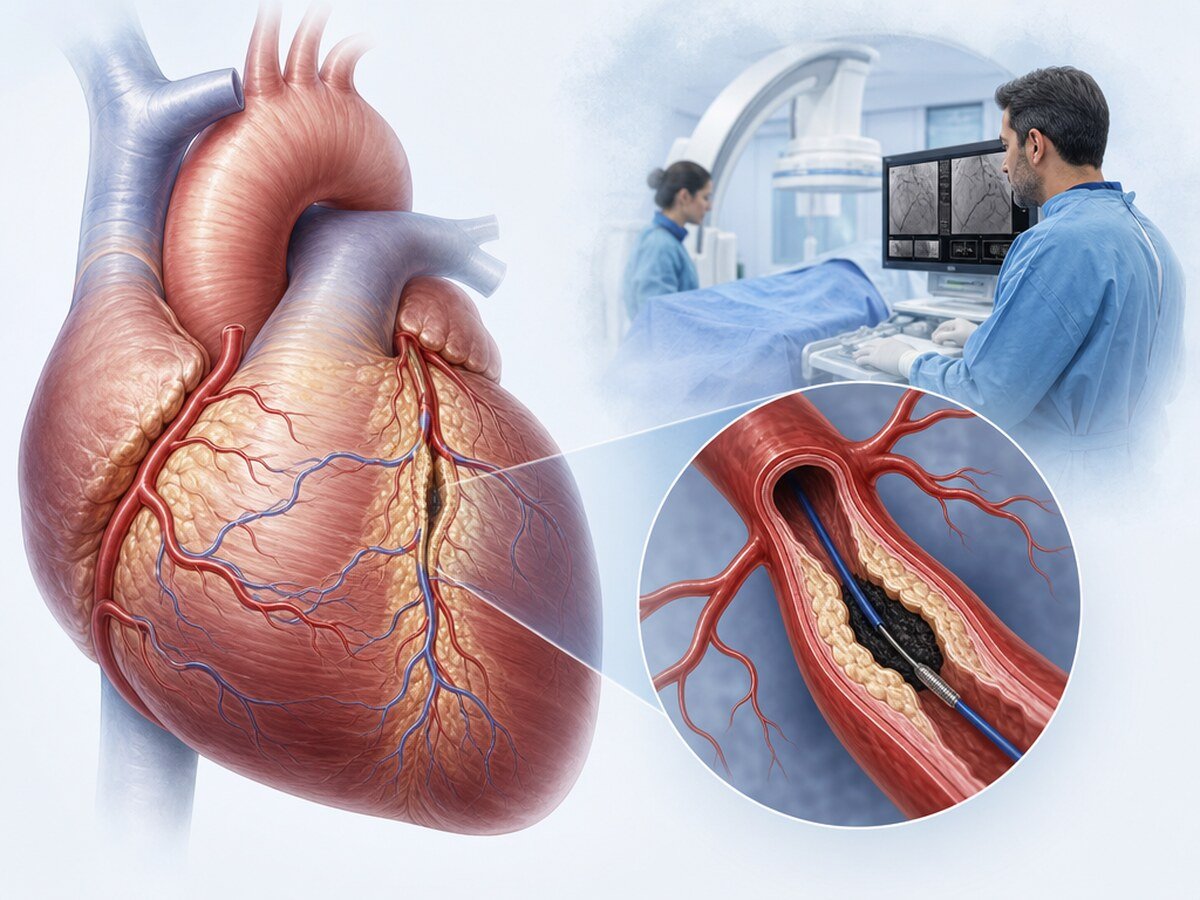
Chronic total occlusion (CTO) is a coronary artery that is completely blocked, with no forward flow on angiography (TIMI 0), and has been blocked for more than about three months. This is not the fresh blockage of a sudden heart attack. In selected people whose symptoms can be linked to the CTO, a stent procedure (CTO PCI) may improve chest pain and quality of life; randomised trials have not shown that it reduces death, myocardial infarction or stroke, or that it improves pumping function.[1,5,9]
What does CTO mean?
A CTO is a 100% stenosis with no forward flow (TIMI grade 0) lasting more than about three months. EURO-CTO used the same definition in a major coronary artery of at least 2.5 mm diameter. Occlusion age is often estimated rather than measured. Consensus grades certainty as certain, likely or possible.[1,6]
This is distinct from a severe narrowing that still has forward flow, from a functional pseudo-occlusion, and from blockage inside a prior stent. Angiography is not always unambiguous at a glance.[1]
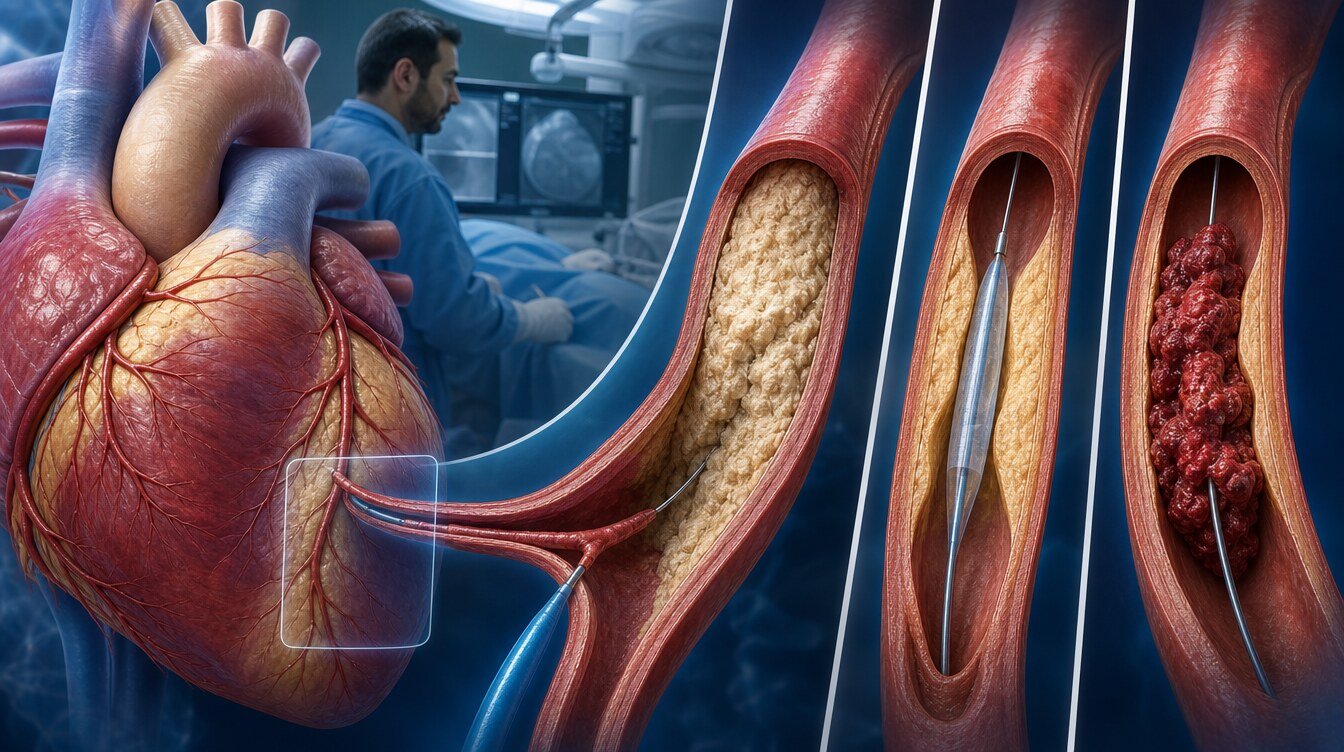
How does it differ from the blockage in a heart attack?
It is not the same thing. In ST-elevation myocardial infarction the occlusion is recent and needs emergency treatment. A concurrent CTO in a different artery is found in roughly 10–15% of those patients; that is the EXPLORE population, not the population of planned CTO treatment. EXPLORE results must not be presented as evidence about elective symptom treatment.[27]
Sudden, severe, persistent chest pain is not an outpatient appointment: call 112.
Among people with coronary disease who undergo angiography, CTOs are seen in roughly 15–25%; one guideline synopsis mentions about a quarter of angiography patients. That figure must not be applied to the general population or to people with prior bypass, in whom CTO prevalence is reported at about 90%. The right coronary artery is the most common site (about half of cases); among 396 randomised EURO-CTO patients the right coronary artery was 61.5%, the left anterior descending artery 26.0% and the circumflex 12.5%.[1,3,6]
How are symptoms assessed?
A CTO is not a screening diagnosis. Symptoms (exertional chest pain or breathlessness), symptoms that persist despite medical therapy, how much muscle is short of blood, whether that muscle is still viable, and heart function are reviewed together. The decision uses coronary angiography, stress imaging when needed, and individual clinical assessment.[1,2]
Do collaterals settle the treatment decision on their own?
No. Collaterals form in about 90% of CTOs. They can protect the muscle at rest but cannot increase flow enough during exertion. A review of invasive physiology states that more than 90% of people with a well-collateralised occlusion still experience ischaemia during exercise.[1,17]
In 150 CTO patients studied with stress cardiac MRI, well-developed and poorly developed collaterals did not differ in viability or in whether ischaemia was present (ischaemia 74% versus 75%; groups of 74 and 76). In 76 CTO patients with preserved pumping function, 96% still had impaired stress perfusion in the target territory. Absent collaterals equally do not mean the muscle is dead.[15,16,34]
Collateral function can decline after successful recanalisation, so a later re-occlusion may be less well tolerated. A “good-looking” collateral network on the angiogram therefore neither closes nor opens treatment on its own.[1,17]

How is the treatment decision made?
Two separate questions are asked. First: should this territory be opened at all? Inputs are persistent symptoms despite medical therapy, documented ischaemic burden, viability if regional function is abnormal, and left ventricular function. Consensus indicates that recanalisation may be considered in asymptomatic patients if ischaemia involves at least 10% of left ventricular mass; that is a general statement applied case by case, not a fixed rule. Second: if yes, by which route — CTO PCI (usually with a stent), coronary bypass, or continued guideline-directed medical therapy? Anatomy, completeness of achievable revascularisation, prior bypass, surgical risk, kidney and bleeding risk, centre experience and the patient’s preferences are reviewed together. Except for isolated non-LAD CTO, consensus asks the Heart Team to endorse the revascularisation modality. No randomised head-to-head comparison of CTO PCI versus bypass was identified in this package; one must not be written as better than the other.[1,2]

What do international guidelines say?
The 2021 ACC/AHA/SCAI revascularization guideline gives one graded CTO recommendation: in patients with suitable anatomy and refractory angina on medical therapy, after non-CTO lesions have been treated, the benefit of opening the CTO to improve symptoms is uncertain (Class 2b, Level B-R). Shared decision-making should guide treatment. That is not “guidelines recommend CTO PCI.”[3]
The retrieved full text of the 2024 European chronic coronary syndromes guideline contains no dedicated Class or level-of-evidence row for CTO. The narrative states that randomised trials improved angina and quality of life but did not reduce mortality or myocardial infarction. This page does not invent a European class.[4]
Are consensus statements the same as guidelines?
No. The EAPCI/EACVI document and the EuroCTO Club texts are clinical consensus statements, not graded guideline recommendations. They may be cited; they must not be presented as a “guideline Class/LOE.”[1,2]
Does CTO PCI reduce symptoms, and does it prolong life?
Symptoms and quality of life must be kept apart from death and myocardial infarction. Benefit is described in selected patients with symptoms attributable to the CTO despite medical therapy; it is not generalised to everyone.[5,6,9]
The blinded (placebo-controlled) trial
ORBITA-CTO randomised 50 patients with a single-vessel CTO and no other significant coronary disease to CTO PCI or a placebo procedure (25/25). Blinding was maintained. The PCI arm improved the angina symptom score (odds ratio 4.38; 95% credible interval 1.57–12.69), corresponding to about 30.6 additional angina-free days over six months. The trial is small and the population is narrow; it was not powered for death, myocardial infarction or stroke.[5]
Open-label trials and why they disagree
EURO-CTO assigned 396 patients 2:1 to PCI or optimal medical therapy in an open-label design (448 enrolled; 52 excluded, 41 because randomisation assignment was not respected at one centre). Significant non-CTO lesions were treated before randomisation. At 12 months, angina frequency (+5.23 points; 95% CI 1.75–8.71) and quality of life (+6.62; 95% CI 1.78–11.46) improved more with PCI. Complete freedom from angina was 71.6% versus 57.8%. A placebo effect cannot be excluded by design; 396 of a planned 600 patients were recruited. The trial was supported by unrestricted grants from Biosensors Europe SA and ASAHI Intecc.[6]
DECISION-CTO randomised 834 people; after 19 withdrew consent the analysis arms were 417 and 398. At a median 4.0 years the primary composite was 22.3% versus 22.4%. Both arms improved in health status with no between-group difference. The authors state that power for clinical endpoints was low and crossover was high. The design difference: in EURO-CTO non-CTO lesions were finished before randomisation; in DECISION-CTO multivessel disease was common and non-CTO PCI could be done after randomisation in both arms — the EURO-CTO investigators argue that this explains the improved SAQ scores in that trial’s control arm. That is an interpretation, not a demonstrated subgroup effect.[6,8]
COMET-CTO reported a symptom signal in the same direction in 100 patients (open-label, single country, small sample).[24]
A post-hoc pool of 518 patients with a single CTO drawn from EURO-CTO and DECISION-CTO adds no new randomised comparison and no new patients.[33]
Death, myocardial infarction and pumping function
A meta-analysis of five randomised trials in 1,790 patients found no difference in death or major cardiac events up to four years and no improvement in heart function (all-cause mortality risk ratio 1.14; 95% CI 0.38–3.40). Fewer target-lesion revascularisations (risk ratio 0.28) and more freedom from angina at one year (risk ratio 0.65) were reported; SAQ subscale scores were comparable. Fewer repeat procedures is a revascularisation endpoint, not a hard outcome, and is partly driven by crossover in the medical arm. The European guideline also states that randomised trials did not reduce mortality or myocardial infarction. Absence of a demonstrated benefit is not proof of no benefit; the trials were not powered for these endpoints.[4,9]
Three-year follow-up of EURO-CTO is the same 396-person cohort. Cardiovascular death or non-fatal myocardial infarction did not differ (medicine 3.7%, PCI 6.2%; p=0.29). MACE was more frequent with medicine, largely because of ischaemia-driven revascularisation.[7]
A larger randomised trial designed for hard outcomes (ISCHEMIA-CTO) was still recruiting at the evidence cut-off and has published no results. A separate planned blinded trial (SHINE-CTO) was withdrawn and generated no data; neither may be named as evidence of benefit.[30,31]
Studies that compare patients whose procedure succeeded with those whose failed make the benefit look much larger than randomised trials do. In a synthesis of 58 publications and 54,540 patients, the apparent observational mortality reduction disappeared in randomised trials (odds ratio 0.72; 95% CI 0.39–1.32). In a 1,612-patient registry the crude MACE difference did not survive multivariable adjustment. A successful-versus-failed contrast must not be presented as the effect of the procedure.[10,39]
REVASC found no difference in wall thickening in the CTO territory. EXPLORE, in a post-heart-attack population with a concurrent CTO, found no difference in pumping function or volumes at four months; that is not elective CTO evidence. In long-term EXPLORE follow-up (median 3.9 years) cardiac death was more frequent in the CTO-PCI arm (6.0% versus 1.0%; p=0.02); all-cause mortality did not differ (12.9% versus 6.2%; p=0.11). The numbers are small; they must not be used to claim harm or benefit from elective CTO PCI.[25,27,28]

Is procedural success a clinical benefit?
No. Technical success in the literature is guidewire crossing and an acceptable angiographic result. Procedural success adds the absence of in-hospital major events. The J-CTO score was built to predict guidewire crossing within 30 minutes; that endpoint was deliberately a technical step, not a patient outcome.[18]
Technical success at experienced centres
At experienced centres the artery can usually be opened. Technical success was 86% in a 1,000-procedure US registry; 89.1% in a contemporary European registry of 8,673 procedures; and 91% technical / 90% procedural in a 1,079-procedure regional registry that included Turkish centres. “Success” means the artery was opened, not that the patient lived longer. The EuroCTO Club reports that operators who have performed more than 300 CTO procedures and maintain at least 50 a year achieve success above 85%. In the same European registry, high-volume operators had higher antegrade success (93.4% versus 91.2%), higher retrograde success (81.5% versus 69.0%) and lower MACCE (1.47% versus 2.41%) despite more complex lesions. Volume is an observational association, not proof of cause. No personal or centre-level outcome statistic is verified in this package, and none is published.[1,11,13,14]
J-CTO and other scores
Scores such as J-CTO, PROGRESS-CTO and CASTLE describe how technically difficult a blockage is likely to be. In the J-CTO derivation set (494 lesions), guidewire crossing within 30 minutes was 87.7%, 67.1%, 42.4% and 10.0% for scores 0, 1, 2 and ≥3. Consensus states plainly that the indication for treatment should be clinical and not based on any score that predicts technical success.[1,18]
How is the procedure performed?
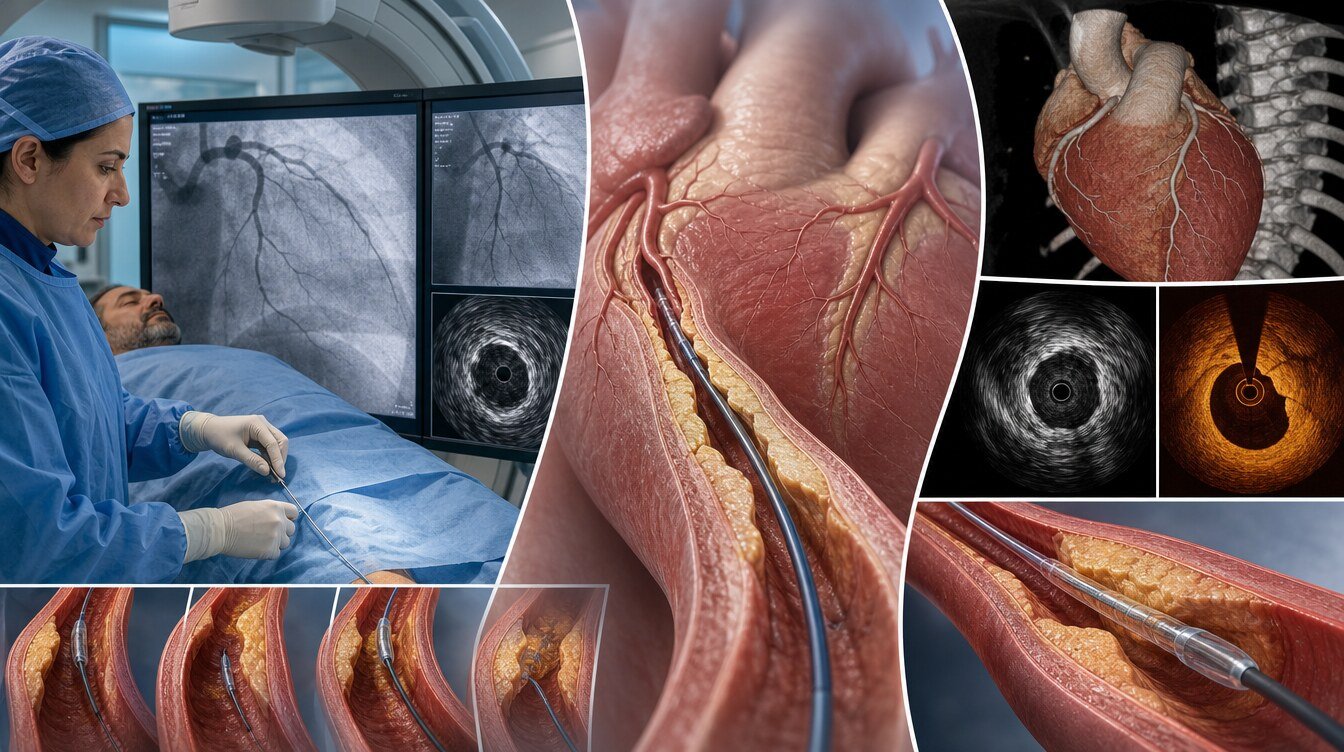
The procedure is done through catheters from the wrist or groin in a laboratory equipped for coronary angiography and percutaneous coronary intervention (PCI). It is not open-heart surgery. Two access points are often used so that contrast can be injected into both arteries and the vessel beyond the blockage can be shown. The route across the blockage is chosen for that lesion; no universal wire, balloon or device sequence is published.[1]
- Preparation: History, medicines, kidney function, bleeding and contrast history are reviewed.
- Access: Radial and/or femoral artery under local anaesthesia.
- Dual injection and strategy: The near and far ends of the occlusion are assessed together.
- Crossing and treatment: An attempt is made to cross by the chosen route; a stent is placed when appropriate.
- Result check: Flow and, when used, intravascular imaging.
- The option to stop: If time, contrast or radiation reach defined operator limits, the procedure may be deliberately stopped and planned for another day; that is a care decision, not a “failure” label. Re-attempts in experienced hands have shown similar success and complication rates.[1]
Most patients remain awake. CTO procedures generally take longer than a routine stent procedure and use more contrast and X-ray. A safety consensus asks that the team be familiar with CTO equipment, radiation limitation, pericardiocentesis and resuscitation; that is not a how-to protocol.[14,38]
What do antegrade and retrograde mean?
Antegrade means working forward from the near side of the blockage; it is the most common approach and is used in roughly three-quarters of procedures. Retrograde means reaching the far side through natural collateral channels; it may be chosen when the near end is unclear or the far end is difficult. The retrograde route carries more risk and needs specific complication-management skills. Techniques are not ranked as better or worse; they are chosen for the lesion.[1]
Why are intravascular imaging and cardiac CT used?
Intravascular ultrasound (IVUS) and optical coherence tomography (OCT) can help clarify wire position during the procedure and guide stent expansion. A CT scan before the procedure can describe occlusion length, calcium and vessel size more accurately than angiography.
CTO-IVUS randomised 402 patients with successfully crossed CTOs: 12-month MACE was 2.6% versus 7.1% (HR 0.35; 95% CI 0.13–0.97); cardiac death did not differ. AIR-CTO randomised 230 patients and found lower in-stent late lumen loss, with comparable two-year clinical events. A meta-analysis of five randomised trials in 1,296 patients found MACE 7.2% versus 13% over one to three years (RR 0.55; 95% CI 0.35–0.88); the difference was driven by target-vessel revascularisation, with no difference in myocardial infarction or death. CT-CTO randomised 400 patients and reported successful recanalisation of 93.5% versus 84.0% (absolute difference 9.5 points; 95% CI 3.4–15.6); cardiac death, target-vessel myocardial infarction and target-vessel revascularisation did not differ at one year. Imaging or CT does not show that CTO PCI reduces death or myocardial infarction.[20–22,37]
Preparation tools for calcified stenoses (balloons, rotational atherectomy, intravascular lithotripsy) are not the same question as CTO itself; calcified lesion treatment is described on a separate specialty page.
What are the risks?
CTO procedures are longer and more complex than routine stent procedures. In 1,000 procedures at twelve expert US centres the in-hospital complication rate was 9.7% (97/1,000), perforation 8.8%, periprocedural myocardial infarction 2.6% and in-hospital death 0.9%. One-month mortality in the same cohort was 1.3%. Those investigators describe the rates as more frequent than reported for non-CTO PCI. The European consensus states that major complications have fallen below 2% and now appear close to PCI of non-occluded arteries. No matched head-to-head comparison with common definitions was identified; this page does not assert a risk ratio. These figures belong to expert-centre cohorts; they are not an individual patient’s risk.[1,12]
In a separate 10,480-procedure registry, in-hospital MACE was 2.05% and mortality 0.45%.[35]
Perforation and donor-vessel injury
Perforation is the most CTO-specific complication. It occurred in 4.9% of 10,454 procedures (503/10,454); 14% of those (69/503) needed drainage of fluid from around the heart. In-hospital MACE was 18% versus 1.3% in perforation versus non-perforation cases. A Japanese registry found angiographic perforation more often but tamponade in 0.4%. In LATAM-CTO, perforation occurred in 3.7% of 2,054 patients; one-year MACE was 24.9% versus 13.3% in those with perforation. Observation windows are the index procedure, in-hospital or one year; they are not mixed.[19,26,36]
Injury to the artery that supplies collaterals is uncommon. In a 12,349-procedure, abstract-level analysis it occurred in 0.5% (59/12,349). Among those 59 injured patients, in-hospital MACE was 22%, acute myocardial infarction 11% and death 4/59 (6.8%). The 6.8% denominator is the 59 injured patients, not all patients. The source is a conference abstract.[40]
Contrast and X-ray
In a regional registry that included Turkish centres, median contrast was 300 mL, fluoroscopy 40 minutes and air kerma 3.7 Gy. In RECHARGE, median contrast was 250 mL and air kerma 1.6 Gy. Contrast-induced nephropathy was 1.2% in the J-CTO registry. Kidney risk depends on baseline function, hydration and total contrast, not on the CTO alone. Operator stop thresholds are not published as patient instructions.[1,14,36]

In-stent occlusion, prior bypass and reduced pumping function
In-stent CTO is a distinct situation; it accounts for 5–25% of all CTO procedures and has been associated with lower success in some studies. In-stent CTO outcome figures could not be verified in this package; general CTO rates must not be copied onto it.[32]
Anatomy and the decision after bypass are different; prior bypass is one of the factors that makes a CTO procedure technically harder. De-novo elective CTO results must not be transferred to this group.[1]
In a single-arm registry of 762 patients treated successfully, health-status scores improved in every pumping-function group; those with severely reduced function improved less than those with normal function (SAQ summary difference −5.2 points). This is not a randomised comparison. Randomised trials found no improvement in pumping function.[9,25,29]
CTO is not the same question as bifurcation or left-main interventions.
Preparation, discharge and recovery
Preparation is individual. Bring a current medicine list; tell the team about kidney problems, bleeding, allergies and previous contrast reactions. Follow the fasting and medicine instructions given to you. Do not stop prescribed medicines on your own. This page does not publish hours, doses or hold rules.
After a planned, non-emergency, uncomplicated angioplasty most people can leave hospital the same day or the following day. Heavy lifting and strenuous activity are usually avoided for about a week or until the access site has healed. After emergency angioplasty for a heart attack, full recovery may take weeks or months. CTO procedures may be longer than routine ones. This frame comes from official patient information; it is not a fixed rule for every hospital in Türkiye. Discharge timing is decided by the treating team.[23]
Blood-thinning (antiplatelet) medicine is usually needed after stenting. The NHS states that most people need it for up to a year after angioplasty; after CTO PCI the optimal duration is not established in consensus and is individualised according to the clinical picture and ischaemic versus bleeding risk. A fixed number of months is not published. These medicines must not be stopped without medical advice.[1,23]
When should 112 be called?
Call emergency services (112 in Türkiye) without delay; do not drive yourself:[23]
- Access-site bleeding that does not stop after ten minutes of direct pressure or that starts again
- Severe chest pain that does not ease or is worsening
- Paleness, coldness or numbness in the arm or leg used for access
- Fainting, severe breathlessness, sudden weakness or a change in consciousness
Contact the treating unit for increasing wound pain, swelling or a high temperature. Not every bruise is an emergency. Unverified driving rules are not published here.[23]
Frequently asked questions
A coronary CTO is a heart artery that is completely blocked, with no forward flow on angiography, and has been blocked for more than about three months.[1]
No. A CTO is a long-standing blockage. In ST-elevation myocardial infarction the blockage is acute and needs emergency treatment. A concurrent CTO in a different artery is a separate problem.[27]
In a blinded trial of 50 people with a single-vessel CTO and no other significant disease, PCI reduced angina versus a placebo procedure and added about 30 angina-free days over six months. An open-label European trial also showed a quality-of-life signal. That does not mean pain disappears in everyone.[5,6]
This has not been shown. A pool of 1,790 randomised patients found no difference in death or major events, and no improvement in pumping function. Technical success is not survival.[9]
Assessment and decision
A CTO is a coronary artery that has been completely blocked for a long time. The decision weighs whether symptoms can be linked to the CTO, ischaemia and viability, medical therapy, anatomy, centre experience and the patient’s priorities. CTO PCI is an option for symptoms and quality of life in selected patients; randomised evidence has not shown that it reduces death or myocardial infarction. The graded guideline recommendation is weak and states the uncertainty plainly.[1–3,5,9]
The institutional profile of cardiologist Prof. Dr. Hakan Uçar lists CTO among clinical services and records EuroCTO Club membership. These are identity and practice facts, not personal success, complication or volume statistics, and no directly relevant coronary CTO publication was verified in this package.
Literature
References
Galassi AR, Werner GS, Boukhris M, et al. Percutaneous recanalisation of chronic total occlusions: 2019 consensus document from the EuroCTO Club. EuroIntervention. 2019;15(2). Consensus document. Not a graded guideline.
Galassi AR, Vadalà G, Werner GS, et al. Evaluation and management of patients with coronary chronic total occlusions considered for revascularisation. A clinical consensus statement of EAPCI, EACVI and the ESC Working Group on Cardiovascular Surgery. EuroIntervention. 2024;20(3):e174–e184. DOI: 10.4244/EIJ-D-23-00749. PMID: 38343372. PMCID: PMC10836390. Consensus; no Class/LOE.
Lawton JS, Tamis-Holland JE, Bangalore S, et al. 2021 ACC/AHA/SCAI Guideline for Coronary Artery Revascularization. Section 10.7, treatment of CTO: Class 2b, Level B-R. Guideline text. A DOI was not verified in this package (NA).
Vrints C, Andreotti F, Koskinas KC, et al. 2024 ESC Guidelines for the management of chronic coronary syndromes. Guideline PDF. No dedicated CTO Class/LOE row was verified in the retrieved full text.
Khan SA, Sajjad U, Fawaz S, et al. Randomized, Placebo-Controlled Trial of Chronic Total Occlusion Percutaneous Coronary Intervention in Stable Angina: The ORBITA-CTO Trial. 2026. Trial: NCT05142215. A DOI was not verified in this package (NA).
Werner GS, Martin-Yuste V, Hildick-Smith D, et al. A randomized multicentre trial to compare revascularization with optimal medical therapy for the treatment of chronic total coronary occlusions. Eur Heart J. 2018;39(26):2484. DOI: 10.1093/eurheartj/ehy220. Trial: NCT01760083. Forty-one patients were excluded because randomisation assignment was not respected at one centre.
Werner GS, et al. Three-year outcomes of a randomized multicentre trial comparing revascularization and optimal medical therapy for chronic total coronary occlusions (EuroCTO). EuroIntervention. 2023. PMCID: PMC10493774. Follow-up of the same EURO-CTO cohort. Trial: NCT01760083.
Lee SW, Lee PH, Ahn JM, et al. Randomized Trial Evaluating Percutaneous Coronary Intervention for the Treatment of Chronic Total Occlusion. Circulation. 2019;139:1674–1683. DOI: 10.1161/CIRCULATIONAHA.118.031313. Trial: NCT01078051.
van Veelen A, et al. Percutaneous coronary intervention versus medical therapy for chronic total coronary occlusions: a systematic review and meta-analysis of randomised trials. Neth Heart J. 2020. DOI: 10.1007/s12471-020-01503-0.
Simsek B, Kostantinis S, Karacsonyi J, et al. A Systematic Review and Meta-Analysis of Clinical Outcomes of Patients Undergoing Chronic Total Occlusion Percutaneous Coronary Intervention. 2022. Record. 58 publications; observational and randomised evidence must be kept apart.
Sapontis J, Salisbury AC, Yeh RW, et al. Early Procedural and Health Status Outcomes After Chronic Total Occlusion Angioplasty: A Report From the OPEN-CTO Registry. JACC Cardiovasc Interv. 2017. Record. 1,000 procedures; same cohort family.
Riley RF, Sapontis J, Kirtane AJ, et al. Prevalence, predictors, and health status implications of periprocedural complications during coronary chronic total occlusion angioplasty. EuroIntervention. 2018. Record. The same 1,000-procedure OPEN-CTO cohort.
Vadalà G, et al. Contemporary outcomes of chronic total occlusion percutaneous coronary intervention in Europe: the ERCTO registry. EuroIntervention. 2024. PMCID: PMC10836392. 8,673 procedures.
Gorgulu S, et al. Contemporary In-Hospital Outcomes of Chronic Total Occlusion Percutaneous Coronary Interventions: Insights from the MENATA Chapter of the PROGRESS-CTO Registry. 2023. Record. 1,079 procedures; multinational chapter that includes Türkiye.
Pica S, et al. Collateral presence and extent do not predict myocardial viability and ischemia in chronic total occlusions: A stress-CMR study. 2022. Record. 150 CTO patients.
Stuijfzand WJ, et al. Prevalence of ischaemia in patients with a chronic total occlusion and preserved left ventricular ejection fraction. Eur Heart J Cardiovasc Imaging. 2017;18(9):1025. DOI: 10.1093/ehjci/jew188.
Werner GS. The Role of Coronary Collaterals in Chronic Total Occlusions. 2014. Review.
Morino Y, Abe M, Morimoto T, et al. Predicting successful guidewire crossing through chronic total occlusion of native coronary lesions within 30 minutes: the J-CTO score. JACC Cardiovasc Interv. 2011. Record.
Kostantinis S, Simsek B, Karacsonyi J, et al. Incidence, Mechanisms, Treatment, and Outcomes of Coronary Artery Perforation During Chronic Total Occlusion Percutaneous Coronary Intervention. Am J Cardiol. 2022. Record. PROGRESS-CTO, 10,454 procedures.
Kim BK, Shin DH, Hong MK, et al. Clinical Impact of Intravascular Ultrasound-Guided Chronic Total Occlusion Intervention: The CTO-IVUS Randomized Study. Circ Cardiovasc Interv. 2015. DOI: 10.1161/CIRCINTERVENTIONS.115.002592. 402 patients.
Gomes W, et al. Intravascular Imaging Improves Clinical Outcomes of Percutaneous Coronary Intervention for Chronic Total Occlusions: A Meta-Analysis of Randomized Controlled Trials. 2025. Record. Five randomised trials, 1,296 patients.
Hong SJ, et al. Effect of Coronary CTA on Chronic Total Occlusion Percutaneous Coronary Intervention: A Randomized Trial (CT-CTO). JACC Cardiovasc Imaging. 2021. Record. 400 patients. A DOI was not verified in this package (NA).
NHS. Coronary angioplasty and stent insertion: Recovery. Official patient information. Accessed 27 August 2026. General PCI content; not CTO-specific. The page carries a review date of 4 October 2025.
Juricic SA, et al. Randomized Controlled Comparison of Optimal Medical Therapy with Percutaneous Recanalization of Chronic Total Occlusion (COMET-CTO). Int Heart J. 2021;62(1). Trial: NCT02964975. Full text. 100 patients.
Mashayekhi K, Nührenberg TG, Toma A, et al. A Randomized Trial to Assess Regional Left Ventricular Function After Stent Implantation in Chronic Total Occlusion: The REVASC Trial. JACC Cardiovasc Interv. 2018;11(19):1982–1991. DOI: 10.1016/j.jcin.2018.05.041. PMID: 30219327.
Ribeiro M, et al. Risk Burden of Coronary Perforation in Chronic Total Occlusion Recanalization: Latin American CTO Registry Analysis. J Am Heart Assoc. 2022. DOI: 10.1161/JAHA.121.024815. 2,054 patients.
Henriques JPS, Hoebers LP, Råmunddal T, et al. Percutaneous Intervention for Concurrent Chronic Total Occlusions in Patients With STEMI: The EXPLORE Trial. J Am Coll Cardiol. 2016. Record. Post-STEMI population; must not be generalised to elective CTO.
Elias J, van Dongen IM, Råmunddal T, et al. Long-term impact of chronic total occlusion recanalisation in patients with ST-elevation myocardial infarction. Heart. 2018;104(17):1432. Full text. Same EXPLORE cohort; read with the cardiac-death imbalance.
Khariton Y, et al. Health Status Benefits of Successful Chronic Total Occlusion Revascularization Across the Spectrum of Left Ventricular Function: Insights from the OPEN-CTO Registry. JACC Cardiovasc Interv. 2018. Record. 762 successful PCIs; single-arm registry.
ClinicalTrials.gov. ISCHEMIA-CTO Trial. NCT03563417. Status: recruiting. No results published.
ClinicalTrials.gov. The SHINE-CTO Trial. NCT02784418. Status: withdrawn. Generated no data.
Vemmou E, et al. Outcomes of Percutaneous Coronary Intervention for In-Stent Chronic Total Occlusions: Insights From the PROGRESS-CTO Registry. JACC Cardiovasc Interv. 2020. DOI: 10.1016/j.jcin.2020.05.003. Abstract-level record; in-stent CTO outcome figures were not verified.
Werner GS, et al. Quality of Life After Percutaneous Coronary Intervention or Medical Therapy for Chronic Total Coronary Occlusions: EUROCTO and DECISION-CTO Meta-Analysis. 2026. Record. Post-hoc pool of the parent cohorts; adds no new patients.
Bax JJ. Chronic total occlusion without collateral blood flow does not exclude myocardial viability and subsequent recovery after revascularization. 2019. Commentary. Directional statement; not a numeric claim.
Simsek B, Kostantinis S, Karacsonyi J, et al. Predicting Periprocedural Complications in Chronic Total Occlusion Percutaneous Coronary Intervention: The PROGRESS-CTO Complication Scores. JACC Cardiovasc Interv. 2022. DOI: 10.1016/j.jcin.2022.06.007. 10,480 procedures.
Morino Y, Kimura T, Hayashi Y, et al. In-hospital outcomes of contemporary percutaneous coronary intervention in patients with chronic total occlusion: insights from the J-CTO Registry. JACC Cardiovasc Interv. 2010. Record. 528 lesions; tamponade 0.4%.
Tian N, et al. Angiographic and clinical comparisons of intravascular ultrasound- versus angiography-guided drug-eluting stent implantation for patients with chronic total occlusion lesions: two-year results from a randomised AIR-CTO study. EuroIntervention. 2015. Record. 230 patients.
Wu EB, et al. Global Consensus Recommendations on Improving the Safety of Chronic Total Occlusion Interventions. Heart Lung Circ. 2024. Consensus00366-4/pdf). Not a graded guideline.
Xenogiannis I, et al. Impact of Successful Chronic Total Occlusion Percutaneous Coronary Interventions on Subsequent Clinical Outcomes. 2020. Record. 1,612 patients; the crude MACE difference did not survive multivariable adjustment.
Kostantinis S, et al. Donor Vessel Injury During Percutaneous Coronary Interventions for Chronic Total Occlusion: Insights from the PROGRESS-CTO registry. JSCAI. 2023. Abstract. Conference abstract; 12,349 procedures.
Continue