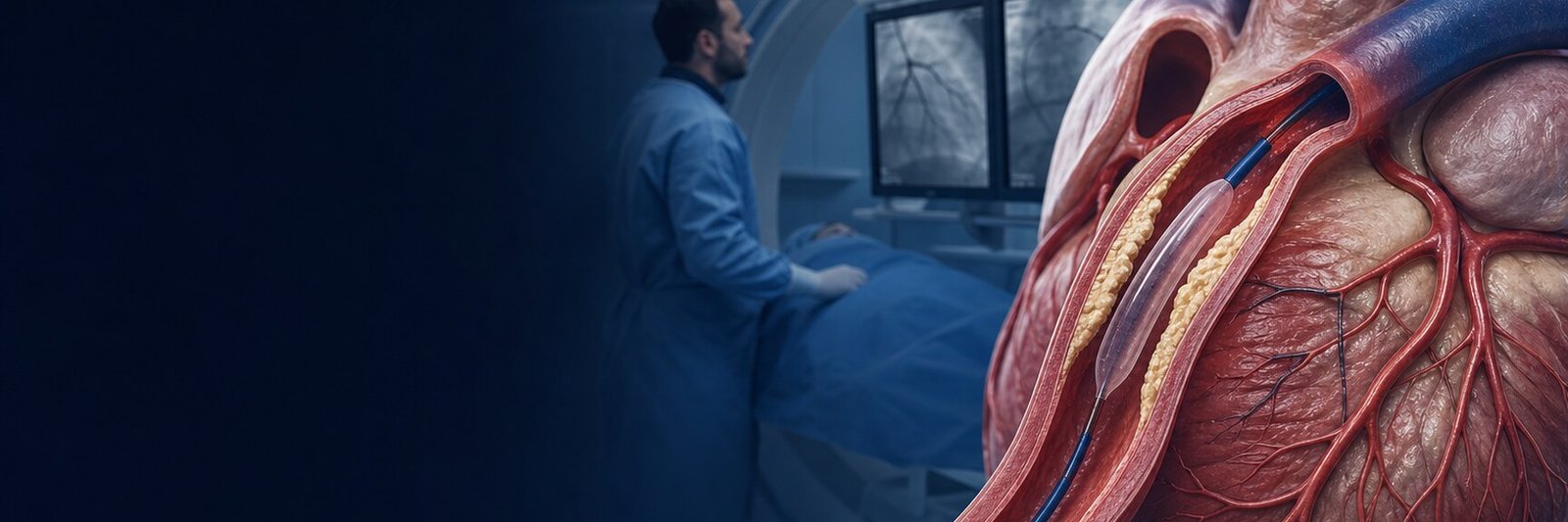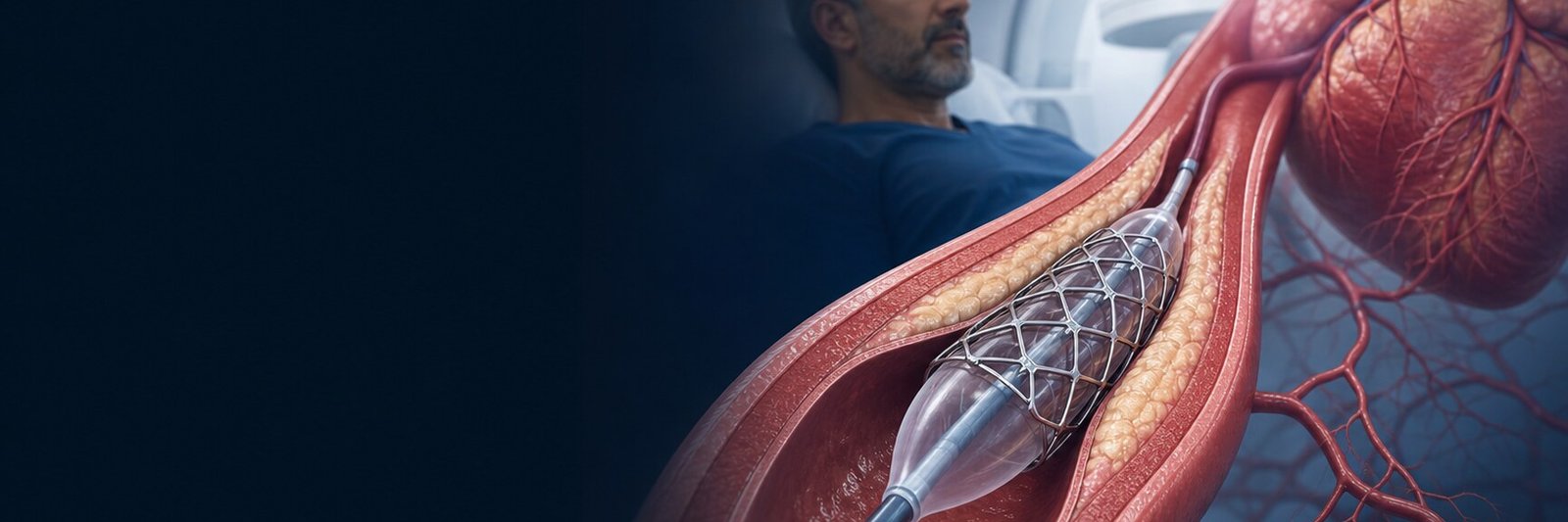
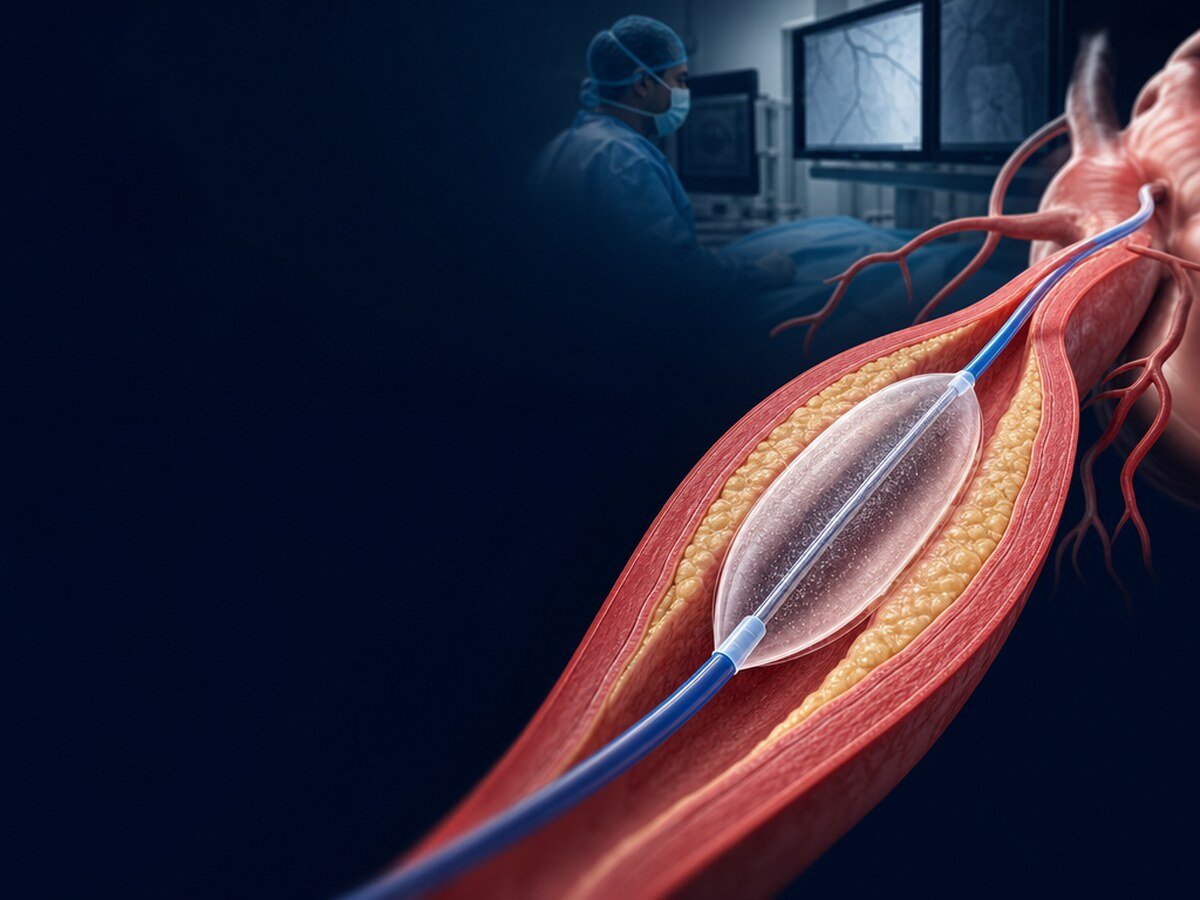
A coronary drug-coated balloon is a specialised angioplasty balloon that is briefly inflated at an appropriate coronary narrowing to transfer antiproliferative drug into the vessel wall and is then removed from the body. It is also called a drug-coated balloon (DCB).[3–5]
A drug-coated balloon is not the same as a drug-eluting stent. A stent leaves metal support inside the artery. A DCB delivers drug to the wall over a short contact time and is removed. If the vessel does not stay adequately open, a flow-limiting dissection develops, or abrupt closure risk is high, a bailout stent may be required.[3–5]
How does a drug-coated balloon work?
The DCB surface usually carries an antiproliferative drug intended to limit excessive cell growth in the vessel wall, plus a carrier coating that helps the drug transfer into tissue. When the balloon is inflated for an appropriate duration, drug is transferred; the balloon is then deflated and removed with the catheter.[3–5]
Two effects operate:
- Mechanical effect: The narrowing is dilated by preparation balloons and DCB inflation.
- Biological effect: Drug on the DCB surface aims to limit excessive tissue growth during healing.
A DCB does not hold a vessel open with a metal scaffold. Procedural success therefore depends not only on the drug but also on proper lesion preparation and the vessel appearance after balloon treatment. Different DCBs are not interchangeable in drug type, dose, coating and transfer characteristics; results with one device must not be generalised to all DCBs.[3–5]

How does a drug-coated balloon differ from a stent?
Both are part of percutaneous coronary intervention via catheter, but they leave different structures and serve different purposes.
| Feature | Drug-coated balloon (DCB) | Drug-eluting stent (DES) | Plain balloon (POBA) |
|---|---|---|---|
| Structure left in the vessel | DCB is removed; no implant if bailout stent is not needed | Metal scaffold and coating remain | Balloon is removed; no drug left behind |
| Primary effect | Dilatation + short-contact drug transfer | Mechanical support + timed drug elution | Mechanical dilatation only |
| Established coronary use | Especially in-stent restenosis; selected small-vessel lesions | Standard PCI option for most de novo lesions | More limited as standalone lasting therapy |
| Strength | May avoid adding a new metal layer | Provides mechanical support against recoil and severe dissection | Simple platform for preparation and comparison |
| Key limitation | Result depends on lesion preparation and post-balloon integrity | Leaves a permanent implant; thrombosis and restenosis risk are not zero | Restenosis may be more common than with DCB or DES |
In the AGENT IDE randomised trial of 600 patients with in-stent restenosis, a paclitaxel-coated DCB reduced one-year target-lesion failure versus a plain balloon. That supports DCB superiority over plain balloon; it does not show that DCB is superior to modern DES in all patients.[8]

When might a coronary drug-coated balloon be considered?
When restenosis develops inside a stent
Growth of tissue inside a stent that again narrows the lumen is called in-stent restenosis (ISR). Drug-coated balloons are among the main options for restenosis in both bare-metal and drug-eluting stents.[1–3,6,7]
There is no rule that “ISR always means DCB”. The cause of restenosis is assessed first:
- Was the stent under-expanded?
- Is there dense calcium beneath the stent?
- Is there stent fracture or edge disease?
- Has neoatherosclerosis developed inside the stent?
- How many metal layers are present?
- Is this first-time or recurrent restenosis?
IVUS or OCT can help separate mechanisms and plan preparation. Applying DCB alone without correcting a mechanical problem may be inadequate.[1,2]
In the DAEDALUS patient-level meta-analysis of 1,976 patients from 10 randomised trials, three-year repeat revascularisation was somewhat higher with DCB than modern DES overall, while the composite safety outcome was similar. In subgroup analysis, results were similar for bare-metal stent restenosis, whereas repeat DES was more effective for drug-eluting stent restenosis.[7] The balance between avoiding a new metal layer and restenosis risk must therefore be individualised.
In de novo small-vessel disease
In small coronary arteries the stent lumen is also small, so restenosis matters clinically. In well-prepared de novo small-vessel lesions, DCB may be considered in selected patients.[3–5,9–12]
In BASKET-SMALL 2, after successful pre-dilatation in vessels <3 mm, DCB was not worse than second-generation DES for one-year major cardiac events (7.5% vs 7.3%). At three years both groups had a 15% major-event rate.[9,10]
PICCOLETO II and its three-year follow-up reported favourable angiographic and clinical outcomes with a specific DCB in small vessels.[11,12] The sample was smaller and results must not be generalised to every DCB device.
In large vessels, acute coronary syndromes and complex lesions
Evidence is evolving, but DCB must not be presented as a universal “stent-free substitute” for modern DES.[4,5,13]
REC-CAGEFREE I randomised 2,272 patients with de novo, relatively non-complex lesions to a DCB-first strategy versus planned DES. Bailout stenting was allowed in the DCB arm. At two years the device-oriented composite was 6.4% with DCB versus 3.4% with DES; DCB did not meet the pre-specified non-inferiority margin. The difference was clearest in vessels ≥3 mm. Three-year follow-up showed the DES advantage persisted.[13,14]
In acute coronary syndrome, bifurcation, large-vessel, heavy calcification, chronic total occlusion and left-main disease, decisions weigh lesion features, thrombus burden, preparation, imaging and bailout need, and are made by an experienced team. No single approach applies to every patient.[1–5]

How is a drug-coated balloon procedure performed?
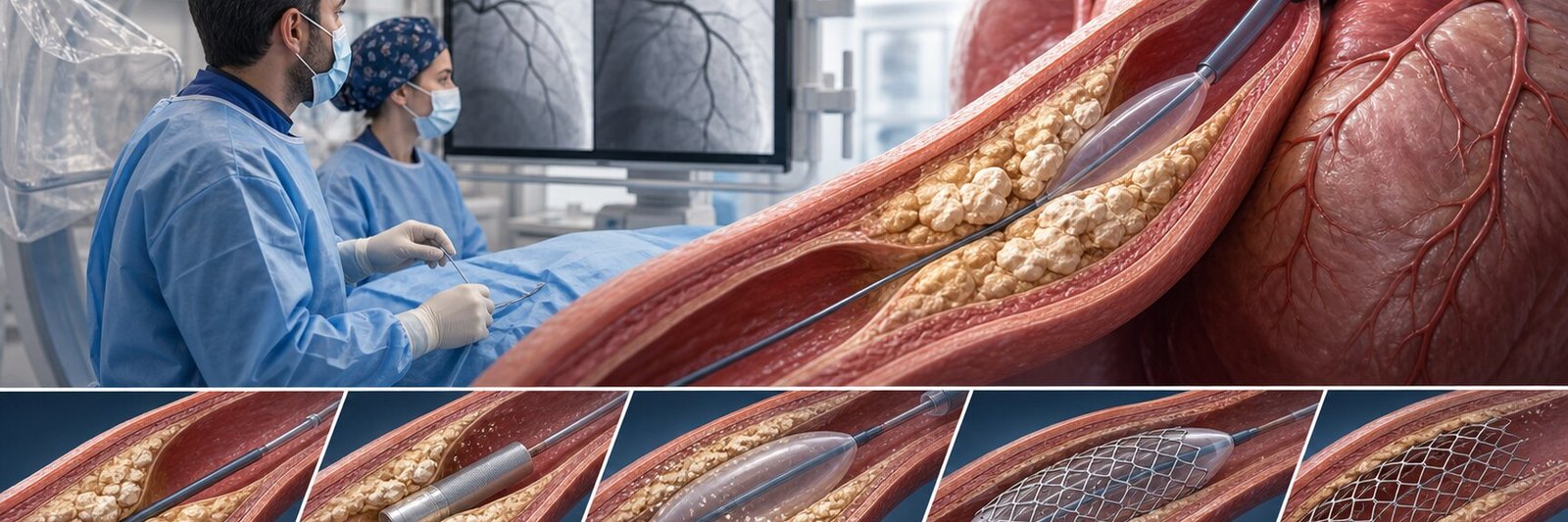
The procedure is done in a catheter laboratory that performs coronary angiography and PCI. Typical steps:
- Preparation: Rhythm, blood pressure and oxygen are monitored; blood tests, kidney function and medicines are reviewed.
- Vascular access: The radial or femoral artery is prepared under local anaesthesia.
- Angiography and guidewire: The coronary artery is imaged; a fine wire is advanced beyond the lesion.
- Mechanism assessment: Especially in ISR, IVUS/OCT can help assess stent expansion, calcium and tissue.[1,2]
- Lesion preparation: Plain, non-compliant, scoring or cutting balloons may be used. Calcified lesions may need selected adjuncts such as calcified lesion treatment. The aim is an acceptable lumen and flow before DCB.[2–5]
- Result check: Severe flow-limiting dissection, important recoil or unacceptable residual stenosis may make DCB-alone unsuitable.
- DCB application: A size-matched DCB is delivered, inflated at the planned pressure and duration for drug transfer.
- Final check: Flow and integrity are checked; bailout stenting is used if needed.
- Access-site closure: A wrist band or groin compression/closure device is applied.
Duration differs for a short single lesion versus recurrent restenosis, multilayer stents or heavy calcium. Most patients remain awake and should report pain or discomfort immediately.

How is suitability for a drug-coated balloon assessed?
Suitability is not based on vessel diameter or percent stenosis alone. Clinicians weigh together:
- Acute coronary syndrome versus chronic coronary syndrome,
- Symptom burden and ischaemia,
- Whether the lesion is de novo or in-stent,
- Prior stent type, expansion and metal layers,
- Vessel diameter, lesion length and side-branch relationship,
- Calcium, thrombus, chronic occlusion or dissection risk,
- Residual stenosis and flow after preparation,
- Intravascular imaging findings,
- Bleeding and thrombosis risk,
- Ability to take antiplatelet therapy,
- Expected benefits and limits of DES, DCB or bypass.
A preference to “avoid metal in the body” alone is not enough to choose DCB. If mechanical support is needed for a safe open lumen, a stent may be more appropriate.
What are the potential advantages of a drug-coated balloon?
In suitable patients after a successful procedure without stenting, potential advantages include:
- Avoiding a new metal layer,
- Preserving future options in recurrent restenosis,
- Avoiding a permanent scaffold in a small vessel,
- Avoiding permanent stent struts covering a side branch,
- Allowing consideration of shorter or less intensive antiplatelet strategies in some settings.
These advantages are not guaranteed. Antiplatelet duration is not decided solely because “no stent was left”; ACS, bleeding risk, prior stents, bailout stenting and other medicines change the plan.[1,3,15]
What are the risks and limitations of a drug-coated balloon?
Coronary DCB is an invasive catheter procedure. Possible risks include:
- Vessel-wall tear or dissection,
- Recoil or abrupt closure,
- Need for bailout stenting,
- Restenosis at the treated site,
- Thrombosis or myocardial infarction,
- Vessel perforation,
- Arrhythmia,
- Access-site bleeding, bruising or vascular complication,
- Contrast allergy or kidney impairment,
- Rarely emergency surgery, stroke or death.
Absolute risk varies with age, kidney function, clinical setting, anatomy, lesion complexity and adjuncts. A single online “success rate” does not describe personal risk.
How long are medicines used after a drug-coated balloon?
Most patients receive dual antiplatelet therapy (DAPT) for a period, but drug choice and duration are not the same for everyone.
Key factors include:
- Chronic versus acute coronary presentation,
- DCB alone versus bailout stenting,
- Prior stents,
- Bleeding and re-thrombosis risk,
- Oral anticoagulation,
- Upcoming surgery or procedures.
REC-CAGEFREE II reported that, in selected ACS patients treated with DCB alone, a stepwise de-escalation after one month of DAPT was not worse than 12-month DAPT for net clinical events and reduced major bleeding.[15] That does not mean every DCB patient can stop medicines after one month. The cardiology team decides changes.
Recovery and daily life after the procedure
Observation time depends on radial versus femoral access, acute myocardial infarction, comorbidities and whether a stent was needed. Discharge advice must be personal and written.
In general:
- Keep the access site clean and dry; follow bandage and shower instructions.
- Follow local guidance on heavy lifting and intense effort in the first days.
- Take prescribed medicines on schedule; do not stop on your own.
- Ask about interactions before starting new medicines, herbal products or painkillers.
- Smoking cessation and control of LDL cholesterol, blood pressure and diabetes are core to treatment. Hyperlipidemia/cholesterol treatment is part of secondary prevention.
- Report chest pain, breathlessness and changes in exercise capacity at follow-up.
- Base return to work, sport, driving, flying and sexual activity on personal discharge advice.
Which symptoms need emergency help?
Do not wait for a routine appointment — call emergency services — if any of the following occur:
- Chest pain that does not settle with rest or keeps worsening,
- Cold sweat, marked breathlessness, fainting or severe weakness,
- Pressure/pain radiating to arm, back, shoulder or jaw,
- Bleeding from the access site that does not stop with pressure,
- Rapidly increasing swelling, coldness, pallor, bluish colour or numbness in the wrist, hand, leg or foot,
- Sudden speech difficulty, facial droop or one-sided weakness.
A small bruise at the access site can occur; rapidly enlarging swelling, severe pain or active bleeding is not normal.

Prof. Dr. Hakan Uçar’s scientific work on drug-coated balloons
A 2026 paper co-authored by Prof. Dr. Hakan Uçar is a single-centre, retrospective real-world cohort of 92 consecutive patients treated with coronary DCB, reporting two-year outcomes.[16]
Sixty patients received a sirolimus-coated and 32 a paclitaxel-coated balloon. At two years, restenosis was 13%, target-lesion revascularisation 7.6% and major cardiac events 9.8% in the whole group. Numerically lower event rates in the sirolimus group were not statistically significant. The study therefore does not prove superiority of either balloon type. The authors also called for larger prospective studies.[16]
The publication documents related clinical experience with DCB but must not be used alone for patient selection or treatment decisions; it should be read alongside randomised trials and guidelines.

Frequently asked questions
No. A DCB transfers drug briefly and is removed. A drug-eluting stent leaves a metal scaffold and drug coating inside the artery.
Neither method is better in every situation. DCB may avoid a new metal layer; a stent provides mechanical support. Choice depends on the clinical picture, lesion anatomy and the result after balloon preparation.
Only if no stent is placed at the end of the procedure. If the vessel does not stay adequately open or a flow-limiting dissection develops, bailout stenting may be required.
The access site is numbed with local anaesthesia and most patients remain awake. Brief chest discomfort can occur during balloon inflation. Report any symptom to the team immediately.
Duration depends on elective versus urgent presentation, wrist/groin access, heart function, complications and bailout stenting. Same-day discharge may be considered only for selected uncomplicated patients under local protocol.
Yes. DCB aims to reduce restenosis risk but does not eliminate it. Diabetes, lesion features, restenosis mechanism and technical result can affect risk.
Pharmacologic and technical features differ by product. In the 92-patient retrospective study co-authored by Hakan Uçar, sirolimus-group rates were numerically lower but differences were not significant; superiority cannot be concluded.[16]
If pain does not settle with rest, worsens or resembles prior cardiac pain — especially with breathlessness, cold sweat or a fainting feeling — call emergency services.
Assessment and decision
A coronary drug-coated balloon is an important PCI option that can treat in-stent restenosis without adding a new metal layer. Selected well-prepared small-vessel lesions may also be treated. In large vessels, acute presentations or complex anatomy, DCB should not be described as routinely replacing stents.
The right decision is not driven by a preference to “avoid metal” or by a single percent stenosis, but by clinical setting, restenosis mechanism, vessel size, calcium, intravascular imaging, the result after preparation, bleeding risk and other revascularisation options assessed together.
Literature
References
Vrints C, Andreotti F, Koskinas KC, et al. 2024 ESC Guidelines for the management of chronic coronary syndromes. Eur Heart J. 2024;45:3415-3537. DOI: 10.1093/eurheartj/ehae177.
Klein LW, Nathan S, Maehara A, et al. SCAI Expert Consensus Statement on Management of In-Stent Restenosis and Stent Thrombosis. J Soc Cardiovasc Angiogr Interv. 2023;2:100971. DOI: 10.1016/j.jscai.2023.100971.
Jeger RV, Eccleshall S, Wan Ahmad WA, et al. Drug-Coated Balloons for Coronary Artery Disease: Third Report of the International DCB Consensus Group. JACC Cardiovasc Interv. 2020;13:1391-1402. DOI: 10.1016/j.jcin.2020.02.043.
Fezzi S, Scheller B, Cortese B, et al. Definitions and standardized endpoints for the use of drug-coated balloon in coronary artery disease: DCB-ARC consensus document. Eur Heart J. 2025;46:2498-2519. DOI: 10.1093/eurheartj/ehaf029.
Fezzi S, Serruys PW, Cortese B, et al. Indications for Use of Drug-Coated Balloons in Coronary Intervention: Academic Research Consortium Position Statement. J Am Coll Cardiol. 2025;86:1170-1202. DOI: 10.1016/j.jacc.2025.07.049.
Giacoppo D, Alfonso F, Xu B, et al. Paclitaxel-coated balloon angioplasty vs drug-eluting stenting for coronary in-stent restenosis: individual patient data meta-analysis of 10 randomized trials (DAEDALUS). Eur Heart J. 2020;41:3715-3728. DOI: 10.1093/eurheartj/ehz594.
Giacoppo D, Alfonso F, Xu B, et al. Drug-Coated Balloon Angioplasty Versus Drug-Eluting Stent Implantation in Patients With Coronary Stent Restenosis. J Am Coll Cardiol. 2020;75:2664-2678. DOI: 10.1016/j.jacc.2020.04.006.
Yeh RW, Shlofmitz R, Moses J, et al; AGENT IDE Investigators. Paclitaxel-Coated Balloon vs Uncoated Balloon for Coronary In-Stent Restenosis: The AGENT IDE Randomized Clinical Trial. JAMA. 2024;331:1015-1024. DOI: 10.1001/jama.2024.1361.
Jeger RV, Farah A, Ohlow MA, et al; BASKET-SMALL 2 Investigators. Drug-coated balloons for small coronary artery disease: an open-label randomised non-inferiority trial. Lancet. 2018;392:849-856. DOI: 10.1016/S0140-6736(18)31719-7.
Jeger RV, Farah A, Ohlow MA, et al. Long-term efficacy and safety of drug-coated balloons versus drug-eluting stents for small coronary artery disease: BASKET-SMALL 2 three-year follow-up. Lancet. 2020;396:1504-1510. DOI: 10.1016/S0140-6736(20)32173-5.
Cortese B, Di Palma G, Guimaraes MG, et al. Drug-Coated Balloon Versus Drug-Eluting Stent for Small Coronary Vessel Disease: PICCOLETO II Randomized Clinical Trial. JACC Cardiovasc Interv. 2020;13:2840-2849. DOI: 10.1016/j.jcin.2020.08.035.
Cortese B, Testa G, Rivero F, Erriquez A, Alfonso F. Long-Term Outcome of Drug-Coated Balloon vs Drug-Eluting Stent for Small Coronary Vessels: PICCOLETO-II 3-Year Follow-Up. JACC Cardiovasc Interv. 2023;16:1054-1061. DOI: 10.1016/j.jcin.2023.02.011.
Gao C, He X, Ouyang F, et al; REC-CAGEFREE I Investigators. Drug-coated balloon angioplasty with rescue stenting versus intended stenting for de novo coronary artery lesions: REC-CAGEFREE I. Lancet. 2024;404:1040-1050. DOI: 10.1016/S0140-6736(24)01594-0.
Tao L, He XK, Shen G, et al. Drug-Coated Balloon Angioplasty vs Up-Front Stenting for De Novo CAD: 3-Year Follow-Up of REC-CAGEFREE I Trial. J Am Coll Cardiol. 2026;87:312-329. DOI: 10.1016/j.jacc.2025.10.027.
Gao C, Zhu B, Ouyang F, et al; REC-CAGEFREE II Investigators. Stepwise dual antiplatelet therapy de-escalation in patients after drug coated balloon angioplasty. BMJ. 2025;388:e082945. DOI: 10.1136/bmj-2024-082945.
Alıç E, Niang M, Tüner H, Onaç M, Kashur A, Ermiş E, Özbay Özyılmaz S, Uçar H. Two-year real-world outcomes of coronary drug-coated balloon therapy: a retrospective comparative study of sirolimus- and paclitaxel-coated devices. Ther Adv Cardiovasc Dis. 2026;20:17539447261463654. DOI: 10.1177/17539447261463654.
Continue